Visible pores are normal anatomy, not a defect and not an opening
that can be permanently erased. Yet pores can look more prominent when
they contain compacted oil and dead cells, when the surrounding surface
is rough or dehydrated, when acne or chronic sun exposure has affected
skin structure, or when age-related changes reduce support around the
follicular opening. That is why a useful plan for enlarged pores
treatment in Istanbul begins with diagnosis of the visual pattern rather
than a promise to “close” pores.
This guide explains how to separate congestion from texture, how home
care and professional options address different causes, what evidence
does and does not show, and how to prepare for a responsible
consultation in Istanbul. It is educational rather than a diagnosis or a
promise of a particular result. A qualified clinician should assess
persistent acne, painful lesions, sudden skin changes, scarring, pigment
problems, or any condition that may need medical treatment.
A
quick answer: what can realistically improve the appearance of enlarged
pores?
Pore visibility can often be reduced, but the strategy depends on why
the pores look large. Gentle cleansing and correctly selected leave-on
products can reduce surface oil, follicular plugs and uneven light
reflection. A consistent broad-spectrum sunscreen helps limit
ultraviolet damage that may weaken the supporting tissue around
follicles. Professional cleansing can temporarily remove accessible
congestion. Controlled resurfacing, microneedling or selected
energy-based procedures may improve texture and structural support in
appropriate candidates. None of these changes the fact that
pilosebaceous follicles are part of healthy skin.
The most realistic treatment goals are to keep follicles clear,
reduce excessive shine without stripping the barrier, smooth the
surrounding surface, support collagen over time and prevent avoidable
irritation. Improvement is usually gradual. A treatment that makes skin
look polished for several days and a treatment intended to remodel
texture over months are not interchangeable, even if both are advertised
for “pores.”
For visitors comparing options in Istanbul, the safest order is
assessment, cause-based planning, conservative test decisions when
appropriate, and review of recovery requirements before paying for a
package. The name of a machine or facial is less important than whether
the chosen method matches the visible problem and your medical
history.
What a facial pore actually
is
Most of the facial openings people call pores are the visible outlets
of pilosebaceous units: a hair follicle connected to a sebaceous gland.
Sebum travels through that unit to the surface and contributes to
lubrication. The face, particularly the nose, central cheeks, forehead
and chin, contains many active sebaceous follicles, so these areas
commonly show more visible openings.
A pore is not a tiny door with a muscle that opens in steam and
closes in cold water. Heat may soften surface material and change blood
flow; cold can temporarily change how the surface feels. Neither process
permanently changes follicular anatomy. The appearance of a pore depends
on several interacting features: the diameter and depth of the
follicular opening, how much sebum and keratin are present, the contour
of the surrounding skin, pigmentation and shadow, hydration, and the
direction and intensity of light.
Published research on sebum output and facial pore size has linked greater facial pore visibility with
higher sebum output, age and sex, while reviews also discuss genetics,
acne history, chronic ultraviolet exposure, reduced elasticity and
follicular plugging. These are associations, not a universal formula.
Two people with the same oiliness can have very different pore patterns,
and the same person can look different across seasons, photographs or
stages of a skincare routine.
Enlarged
pores, blackheads and sebaceous filaments are not the same thing
The first practical distinction is whether you are seeing a
structural opening, material inside it, or an acne lesion.
Sebaceous filaments are normal columns of sebum and
cells lining follicles. They are often pale, grey, tan or skin-coloured,
appear in a regular pattern on the nose and refill after extraction
because the follicle continues to function. Their visibility can be
managed, but repeatedly squeezing them is not a permanent solution.
Blackheads, or open comedones, are acne lesions in
which a plug of keratin and sebum is exposed at the opening. Oxidation
contributes to the dark surface; dirt is not the explanation. Blackheads
are usually more discrete and irregular than sebaceous filaments. A
detailed comparison is available in the clinic’s guide to blackheads
versus sebaceous filaments.
Visible pores without a plug may reflect natural
follicle size, oil production, reduced support around the opening, acne
scarring, photoageing or simply high-contrast lighting. A pore-focused
treatment cannot correct a true depressed acne scar in the same way it
addresses a sebaceous filament. When scars are part of the pattern, the
broader acne
scar treatment options in Istanbul should be considered
separately.
Why
pores may look larger even when their anatomy has not changed
Pores can look more obvious because of optical contrast. Oily
highlights can sit beside darker follicular shadows. A rough, dehydrated
surface scatters light unevenly. Foundation can settle around openings
and make them look ringed. Strong overhead lighting, high-resolution
phone processing and side-lit photographs can exaggerate features that
are barely visible in ordinary conversation.
Short-term changes in sebum, swelling, skin hydration and product
residue also alter visibility. A harsh cleanser may remove shine for an
hour but leave the surface tight and flaky, making texture more obvious
later. A rich occlusive product may improve dehydration yet feel heavy
and increase shine in an oily T-zone. A clay mask can temporarily reduce
surface oil but cannot permanently remodel the follicle.
This explains why standardized photographs matter when evaluating
progress. Compare the same area in similar daylight, without a smoothing
filter, at a consistent distance and at roughly the same time of day.
Daily mirror inspection at magnifying distance is too sensitive to
noise. Monthly comparisons are more useful for a home routine;
professional treatments may require longer intervals because collagen
remodelling is slow.
The major drivers of visible
pores
Sebum output and oily skin
Higher sebum output is one of the most consistently discussed
factors. Oil can make openings look more reflective and can mix with
shed cells within follicles. The goal is not to eliminate sebum, which
is part of normal skin function, but to reduce excess shine and prevent
compacted material without damaging the barrier.
Follicular congestion
When keratin and oil accumulate, the opening can look darker or
wider. Congestion may include sebaceous filaments, microcomedones,
blackheads or whiteheads. The appropriate plan may include a keratolytic
ingredient, a retinoid, acne management or professional extraction.
Forceful home extraction can cause inflammation, post-inflammatory
pigment change or scarring.
Loss of structural support
Ageing and cumulative ultraviolet exposure can reduce collagen and
elastic support around follicles. The surrounding surface may become
less firm, and openings may appear more elongated or irregular. This
pattern is different from a nose full of compacted filaments and may
respond better to a texture-remodelling plan than to repeated
deep-cleansing facials.
Acne and scarring
Active acne can produce comedones and inflammation; previous acne can
leave atrophic scars that cast larger shadows than ordinary pores.
Treating active inflammatory acne before aggressive cosmetic resurfacing
is often more sensible than attempting to polish over an unstable
condition.
Dehydration and barrier
disruption
Dehydration does not create new pores, but it can make the
surrounding surface less smooth. Over-cleansing, frequent scrubs,
multiple acids and unsuitable alcohol-heavy products can produce
tightness and flaking. A simpler routine may improve the overall visual
texture even if follicular anatomy is unchanged.
Genetics and normal
variation
Baseline follicle size and distribution vary between individuals and
populations. A completely poreless target is neither anatomically
realistic nor necessary for healthy skin. Treatment should respect this
limit rather than escalating procedures indefinitely.
A useful
way to classify the pattern before treatment
Instead of asking only “Which treatment shrinks pores?”, ask which of
these descriptions is closest to your skin:
- Congestion-dominant: blackheads, sebaceous
filaments, rough plugs and oily shine are prominent, especially on the
nose and central face. - Texture-dominant: openings are visible across the
cheeks with irregular texture, fine lines or evidence of sun damage, but
little active congestion. - Acne-dominant: comedones, inflamed lesions or
post-acne marks coexist with the pore concern. - Scar-dominant: depressions, rolling shadows or
sharp-edged pits are being called pores, although they are more
consistent with atrophic acne scars. - Sensitivity-dominant: the skin stings, flushes,
peels or reacts to products, and “pore treatment” attempts have worsened
the surface. - Mixed: more than one of the above is present, which
is common.
This classification is not a medical diagnosis. It is a way to avoid
mismatched expectations. A person with sensitivity-dominant roughness
may need barrier recovery before exfoliation. A person with
scar-dominant texture needs a scar discussion. A person with
uncomplicated congestion may not need an energy device at all.
What an Istanbul
consultation should include
A thorough consultation should begin with history, not a sales list.
Relevant questions include how long the concern has been present;
whether the skin is oily, dry, acne-prone or reactive; current
cleansers, acids, retinoids and prescription products; previous
procedures; healing and pigmentation history; cold sores; allergies;
pregnancy or breastfeeding; medicines; recent tanning; upcoming travel
or events; and the amount of downtime that is acceptable.
The clinician or trained professional should examine the skin in
ordinary and directional light, distinguish comedones from filaments and
scars, and note active inflammation or infection. Standardized
photographs or a reproducible skin analysis can be useful for tracking,
but a device-generated score should not replace clinical judgment. The
plan should state the target, what the treatment can plausibly change,
what it cannot change, expected recovery, home-care requirements and the
point at which the result will be reviewed.
For international visitors, the calendar matters. A procedure with
several days of redness, peeling or strict sun avoidance may be a poor
fit immediately before sightseeing, a flight, a wedding, a hammam visit
or a beach holiday. A responsible plan leaves room for delayed reactions
and a route to follow-up after leaving Istanbul.
Home care is
the foundation, not an afterthought
Professional procedures cannot compensate for daily irritation,
unprotected sun exposure or constant picking. A pore-focused routine is
usually more effective when it is simple enough to maintain for
months.
Gentle cleansing
Cleanse in the evening to remove sunscreen, makeup, oil and
environmental residue. A second cleanse may be useful after heavy or
water-resistant makeup, but it is not automatically necessary for
everyone. In the morning, some people prefer a gentle cleanse and others
tolerate a water rinse. The correct approach leaves skin clean without
persistent tightness or burning.
Hot water and abrasive brushes are not required. Friction does not
reach deeply into a follicle; it can instead inflame the surface. If
skin feels squeaky, taut or visibly flaky after washing, the routine may
be too aggressive.
Salicylic acid
for a congestion-dominant pattern
Salicylic acid is oil-soluble and is widely used in acne and
comedonal care. In a leave-on formula it can help loosen compacted cells
and reduce the appearance of clogged follicles. Strength, frequency,
formulation and the rest of the routine influence tolerability. More is
not always better. Introducing it a few times per week may be more
sustainable than daily use for reactive or dry skin.
Do not stack a strong salicylic product, another acid, a retinoid and
a scrub on the same night unless a qualified clinician has specifically
designed that plan. Irritation can make texture and pigmentation look
worse.
Retinoids for cell
turnover, acne and texture
Topical retinoids can normalize follicular keratinization and are
central to comedonal acne management. Over time, selected retinoids may
also improve aspects of photoageing and surface texture. Prescription
and over-the-counter products differ, and suitability varies. Dryness
and irritation are common early issues, so slow introduction and
moisturizer support matter.
Retinoids require pregnancy-related precautions and may not be
appropriate in every situation. A person using a prescription retinoid
should tell the treating professional before a peel, waxing or
resurfacing procedure. Do not stop a prescribed medicine merely because
a spa instruction sheet says so; coordinate with the prescriber.
Niacinamide and oil-control
claims
Niacinamide is used in many barrier-support and oil-focused
formulations. Some people find it helpful for overall balance and
redness, but the concentration and complete formula matter more than a
dramatic percentage printed on the front. High-strength products can
sting. It should be viewed as one possible supporting ingredient, not a
permanent pore eraser.
Moisturizer for
smoother light reflection
Even oily skin can be dehydrated. A non-comedogenic moisturizer may
reduce tightness and help the surface look smoother. Gel, lotion and
cream textures offer different levels of occlusion. The best choice is
the one that supports comfort without creating persistent heaviness or
breakouts.
Broad-spectrum sun
protection
Daily sun protection is part of pore management because ultraviolet
exposure contributes to photoageing and can complicate recovery from
procedures. Use a broad-spectrum product with an appropriate protection
factor, apply enough, and reapply when exposure warrants it. Hats, shade
and timing are important in Istanbul’s bright months. Sunscreen does not
shrink a pore overnight; it protects the conditions needed for long-term
structural support and reduces avoidable pigment risk.
What not to do at home
Repeated squeezing is one of the fastest ways to convert a cosmetic
concern into inflammation. Fingernails, metal tools and suction gadgets
can bruise tissue, rupture follicular walls or leave marks. A pore strip
may remove superficial material and create temporary smoothness, but it
does not stop a sebaceous filament from refilling.
Baking soda, undiluted lemon juice, toothpaste and harsh alcohol
applications are not evidence-based pore treatments. Their alkalinity,
acidity or irritancy can damage the barrier. Granular scrubs do not
“sand pores closed.” Home dermarolling is not equivalent to a
professionally selected procedure and raises questions about needle
quality, depth, disinfection and suitability.
Avoid changing several active products at once. When irritation
develops, it becomes difficult to identify the cause. Introduce one
change, use it consistently, and evaluate over a realistic interval.
Persistent acne, dermatitis, pain, crusting or pigment change warrants
professional assessment rather than another online hack.

Professional cleansing
and extraction
Professional cleansing can be useful when the dominant problem is
surface residue and accessible congestion. A well-performed session may
soften material, remove selected comedones with controlled technique and
improve short-term smoothness. It is not a structural collagen treatment
and does not permanently close pores.
The value of extraction depends on case selection and technique. Not
every visible dot should be extracted. Sebaceous filaments refill,
immature lesions may be traumatized, and inflamed acne should not be
aggressively squeezed. The practitioner should use hygienic methods,
stop when material does not release easily and provide aftercare that
avoids unnecessary acids or friction.
At Nexja, options that emphasize cleansing and hydration can be
reviewed within the Hydrafacial protocol and the more pore-focused Hydrafacial + Glow Care protocol. These links describe the clinic’s service protocols;
they are not evidence that every visible-pore pattern needs a
Hydrafacial. The assessment should decide whether the immediate goal is
decongestion, hydration, texture remodelling or medical acne care.
Hydradermabrasion-style
care: where it fits and where it does not
Hydradermabrasion-style treatments combine controlled surface
cleansing, exfoliation, suction and serum application in varying
sequences. For suitable skin, the appeal is limited downtime and an
immediately cleaner, more hydrated appearance. They can be particularly
relevant before an event when the goal is polish rather than deep
remodelling.
The limitation is equally important: removing surface debris does not
change genetics or permanently narrow a follicular opening. Results can
fade as sebum and cells accumulate again. Aggressive passes or
unsuitable acids can irritate reactive skin. Active dermatitis, open
lesions, infection or significant inflammatory acne may require a
different plan.
The Hydrafacial
Nexja Premium protocol is positioned as a more comprehensive
personalized option including detailed pore cleansing. A higher-tier
protocol is not automatically better. The correct choice depends on how
much congestion is present, skin tolerance, the desired outcome and
whether the person would benefit more from a medical or
collagen-remodelling pathway.
Chemical
exfoliation and professional peels
Professional peels use controlled chemical injury at a selected
depth. Superficial formulas may help with comedonal congestion, surface
roughness or uneven tone. Medium and deeper peels involve greater risks
and recovery and belong in appropriately qualified medical hands. The
word “peel” covers very different substances, strengths, pH values,
contact times and clinical endpoints.
For a pore concern, a clinician should explain whether the chosen
peel targets oil and plugging, pigment, acne, or general texture. A
salicylic peel may be considered for oily, comedonal skin; other acids
may be selected for different goals. Combining peels with retinoids,
recent sun exposure or another procedure can increase irritation and
pigment risk.
People with a history of post-inflammatory hyperpigmentation,
sensitive skin, eczema, active infection or poor healing need extra
caution. Pretreatment and aftercare may be as important as the session.
A peel should never be sold as proof that visible shedding equals
effectiveness. Excessive peeling is an injury, not a quality badge.
Microneedling for
texture-dominant pores
Microneedling uses controlled needle penetration to create a
wound-healing response. In appropriate candidates, a series may improve
aspects of texture and make pores look less prominent as the surrounding
surface remodels. It is not a method for vacuuming sebum from follicles,
so it should not replace congestion management.
The US Food and Drug Administration’s microneedling-device guidance explains that legally marketed
microneedling devices have specific authorized indications and that
risks can include redness, tightness, discomfort, bleeding, pigment
changes, infection and other complications. It also advises trained
providers, a new cartridge for every patient and session, and attention
to contraindications. The FDA does not authorize microneedling devices
to deliver cosmetics, vitamins, drugs or blood products into the skin.
Those distinctions are useful even outside the United States because
they challenge casual claims that any cocktail can be “infused”
safely.
Nexja’s microneedling
treatment details describe the clinic’s Dermapen-based service.
Before choosing it for pores, ask which device and cartridge are used,
how depth is selected by area, who performs the procedure, how infection
control is managed, and whether your pigment and scar history changes
the plan.
Radiofrequency
microneedling requires a separate risk conversation
Radiofrequency microneedling is not simply ordinary microneedling
with a stronger name. It places electrodes in or under the skin and
delivers heat. Depth, energy, pulse characteristics, tissue contact and
anatomy all matter. In October 2025, the FDA issued a safety communication on RF microneedling after reports of serious complications with certain uses,
including burns, scarring, fat loss, disfigurement and nerve damage.
That warning does not mean every RF microneedling procedure causes
harm, but it does mean the treatment deserves a device-specific,
anatomy-aware medical discussion. Ask for the exact model, legal status,
operator training, treatment depth and energy rationale, complication
plan and realistic alternatives. RF microneedling should not be
presented as an ordinary facial or a casual upgrade for anyone who
dislikes pores.
This clinic guide does not claim that Nexja offers RF microneedling.
It is included because consumers comparing enlarged pores treatment in
Istanbul often encounter the term in search results. Do not infer a
service from an educational comparison.
Fractional
lasers and other energy-based resurfacing
Fractional lasers create columns of controlled thermal injury while
leaving intervening tissue. Ablative and non-ablative systems differ
substantially in wavelength, depth, intensity, recovery and risk. They
may improve texture in selected patients, including people whose pore
appearance is associated with photoageing or acne scarring. They are not
interchangeable with a cleansing facial.
Device choice should account for skin phototype, tanning, pigment
history, active acne, herpes history, medications and the operator’s
experience. Risks may include prolonged redness, burns, infection,
post-inflammatory hyperpigmentation, hypopigmentation and scarring.
Conservative settings, sun planning and aftercare are particularly
important for skin prone to pigment change.
If the texture is actually scar-dominant, review the scar morphology
rather than booking a generic “pore laser.” The clinic’s article
comparing microneedling
and fractional CO2 laser for acne scars explains why depth of
scarring, downtime and risk tolerance influence the choice. That
comparison belongs to the scar pathway; D08 remains the general pore and
texture guide.
Non-ablative
lasers, light devices and evidence limits
Clinical reviews of enlarged facial pore treatments include a range of lasers
and light-based systems. Some studies report reductions in measured pore
count or area, but treatment protocols, devices, participants,
photography and scoring methods vary. A positive small study does not
establish that every device marketed with the same broad category will
produce the same result.
Ask whether the treatment is intended to reduce sebum, heat dermal
collagen, treat redness or pigment, or create resurfacing. Those
mechanisms have different benefits and risks. Light alone cannot remove
a compacted blackhead, and a device that improves redness may not
meaningfully change a deep atrophic scar. Evidence should be connected
to the exact device and indication, not borrowed from a neighboring
technology.
Be cautious with guaranteed percentages and “one session forever”
claims. Pore visibility is influenced by ongoing ageing, oil production,
sun exposure and home care. Even a successful structural treatment may
require maintenance and cannot create poreless skin.
A staged
treatment model that prevents overtreatment
A conservative plan can be organized in stages:
Stage 1: stabilize. Stop picking and harsh scrubs.
Establish a gentle cleanser, moisturizer and daily sun protection.
Address dermatitis or medical acne when present.
Stage 2: clear. For congestion-dominant skin,
introduce an appropriate salicylic acid or retinoid strategy and
consider selective professional cleansing. Reassess after enough time
for the routine to work.
Stage 3: remodel. If pores remain prominent because
of texture, photoageing or scars, discuss microneedling, a professional
peel or an energy-based option based on candidacy and evidence.
Stage 4: maintain. Continue the simplest effective
home routine, protect from ultraviolet exposure and space procedures
according to skin response rather than a sales calendar.
This sequence is not mandatory for every person, but it reduces the
temptation to use a high-intensity procedure on irritated or untreated
acne-prone skin. It also makes results easier to interpret: when
everything changes at once, no one knows what helped or what caused a
reaction.
Choosing
between cleansing, peeling and collagen-remodelling procedures
If the main concern is visible plugs, oil and blackheads, a
decongesting plan is the logical first step. If the main concern is a
dull, rough surface with mild comedones, a carefully selected
superficial peel may be considered. If the concern is persistent cheek
texture, fine lines or scar-like depressions, a collagen-remodelling
procedure may be more relevant. If redness, burning or flaking
dominates, stabilization comes first.
Some people benefit from a sequence rather than a single category.
For example, controlled congestion care may precede microneedling so
that active inflammation is minimized. The timing should protect the
barrier and avoid overlapping irritation. More modalities in one visit
do not automatically produce a better result.
The useful consultation question is not “Which machine is strongest?”
but “Which visible feature are we treating, and how will we measure
whether it improved?” A plan without a defined target encourages endless
escalation.
How many sessions are needed?
There is no universal number. A cleansing treatment can improve
surface appearance after one visit but may require maintenance because
follicles continue to produce sebum. A superficial peel is often planned
as a series, with interval and strength determined by recovery.
Microneedling and laser protocols also commonly use multiple sessions,
but device, depth, indication and individual healing determine
timing.
Any package that promises a fixed result for every skin type is
simplifying too far. Start with a plan that has a review point.
Standardized photographs, symptom notes and tolerance should guide
continuation. If there is no meaningful improvement after an adequate
course, reassess the diagnosis and strategy rather than automatically
buying more sessions.
Results also have different clocks. Surface hydration can look better
immediately. Congestion may improve over weeks with consistent home
care. Collagen-related changes take longer and can continue after
visible redness resolves. Comparing these on day three creates
unrealistic conclusions.
Downtime and aftercare
“No downtime” should mean more than being able to leave the clinic.
Ask about redness, tightness, swelling, sensitivity, shedding, makeup
restrictions, exercise, heat, swimming, hammam use, sun exposure and
when usual active products can restart. Even low-downtime treatments can
be inconvenient before a major event.
After professional cleansing, a gentle routine and avoidance of
picking are usually sensible. After a peel, microneedling or laser,
follow the written instructions specific to the procedure. Do not add
acids or retinoids early because social media says they accelerate
results. Avoid unapproved topical mixtures on freshly treated skin. Seek
prompt advice for worsening pain, blisters, pus, spreading redness,
fever, eye symptoms or an unexpected colour change.
Istanbul’s seasons and travel patterns matter. Summer sun, long
outdoor days, wind, indoor heating, flights and hotel products can
affect comfort. Bring familiar gentle skincare rather than testing
several new products after a procedure.
People
who need medical assessment before cosmetic pore treatment
Seek assessment when there is severe or scarring acne, recurrent
cysts, a sudden eruption, painful or bleeding lesions, suspected
infection, eczema or psoriasis in the treatment area, recurrent cold
sores, a history of keloids, uncontrolled medical conditions, immune
suppression, bleeding disorders, use of anticoagulants, recent
isotretinoin, pregnancy or breastfeeding, or a history of unusual
pigment changes after procedures.
This list is not exhaustive and does not declare that every condition
permanently excludes treatment. It shows why a standard online booking
form is not enough. The relevance depends on the procedure. A gentle
facial, a superficial peel, a motorized microneedling device and an
ablative laser have different screening requirements.
When a medical condition or prescription is involved, coordination
with a dermatologist or prescribing clinician is safer than improvised
advice. Cosmetic goals should never outrank control of active
disease.
Skin
tone, pigmentation and Istanbul’s diverse patient population
People with darker skin tones can undergo many procedures, but
post-inflammatory hyperpigmentation and hypopigmentation deserve
deliberate planning. Risk depends on the procedure, settings,
inflammation, sun exposure, previous reactions and aftercare—not on a
simplistic label alone.
A clinic serving local and international patients should be able to
discuss experience across skin tones, show how settings are selected,
and explain pigment-prevention strategies without promising zero risk.
Recent tanning can change candidacy. Strong procedures immediately
before a sunny holiday are often poorly timed.
Photographs used for marketing should not substitute for a personal
risk assessment. Lighting, camera settings and image selection can make
texture change look larger than it is. Ask for unfiltered, standardized
examples relevant to your skin and the exact treatment, while respecting
patient privacy.
Cost and
value: what to compare besides the price
Prices vary by treatment type, device, operator, area, session
length, consumables and aftercare. A low headline price may exclude
consultation, numbing, a single-use tip, post-treatment products or
follow-up. A high price is not proof of expertise.
Compare what is included, who assesses and performs the treatment,
the exact device or product, whether consumables are single-use, how
complications are handled, and whether a follow-up review is available.
If you are visiting Istanbul, also consider the cost of changing flights
or activities if recovery is longer than expected.
Avoid purchasing a long package before the skin has been assessed or
before the response to the first session is known. A written plan with
review criteria is more valuable than a large discount tied to an
uncertain diagnosis.
How to evaluate
evidence for pore treatments
Research on visible facial pores is challenging because there is no
single universally accepted definition or measurement. Studies may count
visible openings, calculate pore area from photographs, use
three-dimensional imaging, rely on investigator grades or ask
participants whether the skin looks smoother. Lighting, makeup,
hydration and image-processing software can change the apparent
result.
Treatment reviews report improvement with topical retinoids, chemical
peels, lasers and energy-based devices, but the strength of evidence
varies. Many studies are small, lack a control group, use short
follow-up or evaluate a specific population and device. A review can
show that a category is promising without proving that a local clinic’s
protocol will reproduce the same outcome.
When reading a claim, ask five questions: Was the exact device or
ingredient studied? Were participants similar to me? Was the change
measured objectively and by blinded reviewers? How long did benefit
last? What adverse events occurred? The answer may still support
treatment, but it should influence the certainty of the promise.
The 2023 systematic review indexed in PubMed concluded that several
modalities can reduce pore count or area, while also documenting adverse
effects and differences between protocols. Earlier reviews similarly
list multiple approaches rather than a single gold standard. That is a
reason for individualized planning, not for combining every available
technique.
Measuring
improvement without chasing perfection
Define success before treatment. A useful goal could be fewer
blackheads on the nose, less midday shine, smoother makeup application,
reduced cheek shadowing in normal light, or better overall texture at a
three-month review. “No pores” is not measurable or anatomically
attainable.
Use the same camera, distance, lighting, facial position and
product-free interval for comparison. Avoid portrait mode, beauty
filters, sharpening and images taken immediately after hydration,
extraction or swelling. Record comfort and breakouts as well as
appearance; a routine that produces a slightly smoother photograph but
constant burning is not a successful plan.
Professional imaging can support consistency, especially when the
device stores parameters and original files. It should not create false
precision. A percentage score is only meaningful if the acquisition
conditions and algorithm are repeatable. Clinical judgment and patient
experience remain important.
An
eight-to-twelve-week home-care trial before escalation
Many people can clarify how much congestion contributes by following
a stable routine before choosing an invasive procedure. A typical
framework—adjusted for tolerance and medical advice—might include a
gentle cleanser, a non-comedogenic moisturizer, daily broad-spectrum
sunscreen and one targeted active.
For oily, congestion-prone skin, that active might be a salicylic
acid product used on selected evenings. For comedonal acne or
photoageing, a suitable retinoid may be discussed. Sensitive skin may
need several weeks of barrier support before either. The purpose is not
to prescribe a universal routine but to isolate variables.
Take baseline photographs, introduce one active gradually, and avoid
adding masks, scrubs and devices during the test. Reassess after eight
to twelve weeks unless irritation or worsening acne requires earlier
help. If plugs and shine improve but cheek pores remain visible, a
structural component is more likely. If little changes and the lesions
are truly acne, medical treatment may be more important than a
facial.
Planning
professional treatment around travel and events
For a wedding, conference or holiday, work backwards from the date.
Low-downtime cleansing and hydration should still be tested early enough
to identify reactions. Peels, microneedling and lasers need longer
buffers that reflect the actual protocol, not a generic promise. Redness
may settle before dryness, pigment change or acne flare becomes
apparent.
Do not schedule an unfamiliar resurfacing procedure on arrival day.
Jet lag, dehydration, sun exposure and an incomplete medical history do
not improve decision-making. Allow time for consultation and for
deciding not to proceed. If the safest option is postponement, that is a
successful consultation.
After treatment, avoid activities specifically restricted by the
provider. Istanbul itineraries can include hammams, saunas, vigorous
walking, rooftop sun, swimming and long flights; each can be relevant
after a procedure. Ask for instructions in a language you understand and
a contact method for concerns after departure.
Myths vs Facts about
enlarged pores
Myth 1: Steam
opens pores and ice closes them
Fact: Follicular openings do not have little muscles
that open and shut on command. Warmth may soften oil and make cleansing
more comfortable; cold may temporarily reduce surface redness or
swelling. Neither permanently changes the follicular structure.
Excessive heat or ice applied directly can injure skin.
Myth 2: Black dots
mean the skin is dirty
Fact: A blackhead’s colour is related to oxidation
of material at an open comedone, not poor hygiene. Sebaceous filaments
are normal structures and can also look grey. Harsh washing does not
solve either and may worsen irritation.
Myth 3: Pores can be
erased permanently
Fact: Pores are part of the pilosebaceous apparatus.
Their appearance may be reduced through congestion control, better
surface texture and structural support, but a poreless face is not a
biologically realistic endpoint.
Myth 4:
The strongest peel gives the best pore result
Fact: Greater injury brings greater risk and is not
automatically better matched to the cause. A superficial congestion
problem may not require a deep peel. Strength should be selected
according to indication, skin characteristics, recovery and operator
qualifications.
Myth 5: Every
visible dot should be extracted
Fact: Many dots are sebaceous filaments that refill.
Forceful extraction can cause bruising, inflammation, pigment change or
scarring. Selective removal of appropriate comedones is different from
chasing every follicle.
Myth 6: Oily skin
does not need moisturizer
Fact: Oil and water are different. Oily skin can be
dehydrated or barrier-impaired. A suitable lightweight moisturizer may
improve comfort and surface smoothness without causing congestion.
Myth 7: Scrubbing
removes deep congestion
Fact: Abrasive particles act mainly on the surface.
They cannot safely grind material out of a follicle. Repeated friction
can inflame the surrounding skin and make texture more noticeable.
Myth 8:
A facial and microneedling achieve the same goal
Fact: A cleansing facial targets surface residue,
hydration and accessible congestion. Microneedling creates controlled
injury intended to stimulate remodelling. Their indications, downtime
and risks are different.
Myth
9: Home dermarolling is a cheaper version of professional
microneedling
Fact: Needle quality, depth control, sterility,
technique, anatomical knowledge and screening all influence safety. The
FDA states that it has not authorized microneedling medical devices for
over-the-counter sale. A home roller should not be treated as an
equivalent substitute.
Myth
10: If one treatment helps, stacking three will help faster
Fact: Combining exfoliation, needling and energy can
exceed the skin’s recovery capacity. More inflammation can mean
prolonged redness, barrier damage or pigment change. Combination plans
require a clear rationale and careful timing.
Myth 11: A high pore
score proves disease
Fact: Imaging scores can document appearance under
specific conditions; they do not automatically diagnose acne,
sebaceous-gland disease or structural damage. Interpretation belongs in
the context of history and examination.
Myth
12: Men and women need entirely different pore treatments
Fact: Average sebum patterns and skin
characteristics may differ, but treatment is based on the individual
pattern, medical history, products and goals—not a marketing
category.
Myth 13: Makeup
permanently stretches pores
Fact: Makeup can settle around follicles or
contribute to congestion if a formula is unsuitable or not removed, but
ordinary use does not mechanically hold a pore open forever.
Non-comedogenic products and gentle removal are reasonable
strategies.
Myth 14: Sun tanning
hides pores safely
Fact: A tan may temporarily alter contrast, but
ultraviolet exposure contributes to photoageing and pigment risk. It
also complicates candidacy for many procedures. Sun protection supports,
rather than undermines, a texture plan.
Myth
15: A treatment is proven because before-and-after photos look
dramatic
Fact: Lighting, angle, focal length, skin hydration
and editing can transform texture. Look for standardized, unfiltered
images and evidence tied to the exact treatment. Photographs should
support—not replace—an honest discussion of limitations.
A
practical decision guide for enlarged pores treatment in Istanbul
If
your main concern is blackheads and sebaceous filaments
Begin with gentle cleansing, a suitable leave-on keratolytic or
retinoid discussion, non-comedogenic moisturization and sunscreen.
Consider selective professional cleansing for accessible congestion. Do
not book a collagen device merely because the marketing uses the word
“pores.” Review active acne if present.
If your main
concern is rough surface texture
Check for dehydration, over-exfoliation and dermatitis first. Once
stable, a superficial peel or hydradermabrasion-style treatment may help
the surface. Persistent irregularity associated with photoageing may
justify a medical resurfacing consultation.
If
your main concern is cheek pores with reduced firmness
Sun protection and a suitable retinoid can form the long-term base.
Discuss microneedling or an evidence-based energy procedure only after
candidacy review. Expect gradual change and maintenance, not
closure.
If your main concern is acne
scars
Ask for scar typing. Ice-pick, boxcar and rolling scars do not
respond identically, and what looks like a pore may be a shallow scar.
Use the acne-scar pathway rather than a generic facial package.
If your skin burns, flakes
or flushes
Pause the escalation. Simplify the routine and seek assessment.
Procedures and acids applied to an unstable barrier can deepen
discomfort and pigment problems.
Questions to ask before
booking
- What do you think is making my pores look prominent: oil,
congestion, surface roughness, structural change, scarring or a
mixture? - Which part of that cause does the proposed treatment address?
- What is the exact product, peel or device name?
- Who will perform the procedure and what training do they have?
- Which contraindications are relevant to me?
- What are common and serious adverse effects?
- What should I stop before treatment, and who should approve changes
to prescriptions? - How many sessions are suggested, and when is the first objective
review? - What happens if my skin becomes darker, lighter, infected or
persistently inflamed? - Are tips, cartridges and other contact parts single-use?
- What does the quoted price include?
- What activities and products must I avoid during recovery?
- How will photographs be standardized?
- Is the treatment being used for an authorized or supported
indication? - What simpler alternative could reasonably meet my goal?
A trustworthy provider should be comfortable explaining why a less
aggressive option may be appropriate. Pressure to purchase immediately
is not a clinical advantage.
Red flags in
pore-treatment marketing
Be cautious when a provider guarantees permanent pore closure, claims
one device suits every skin, refuses to name the device or peel,
dismisses pigment risk, treats active infection, reuses cartridges,
recommends injecting or needling unapproved mixtures without a clear
medical basis, or cannot provide written aftercare.
Other red flags include identical treatment plans for every client,
edited before-and-after photos, claims that pain or excessive peeling
proves effectiveness, and package sales before examination. Terms such
as “detox,” “deep oxygenation,” “stem cell,” “exosome” or “medical
grade” need specific definitions and evidence; the words alone do not
establish benefit.
The safest clinic is not necessarily the one with the longest menu.
It is the one that defines the problem, screens appropriately, chooses a
proportionate intervention and has a plan for complications.
Frequently Asked Questions
1. Can enlarged
pores be permanently closed?
No treatment can remove the normal follicular openings from healthy
skin. Pore appearance can be reduced by managing congestion and oil,
improving the surrounding surface and supporting dermal structure.
Results vary and maintenance may be needed because sebum production,
ageing and environmental exposure continue. For the full anatomy,
expectations and option-by-option explanation, read can
enlarged pores be permanently closed.
2. What is the
best treatment for enlarged pores?
There is no single best treatment. Congested pores may respond to
salicylic acid, retinoids and professional cleansing. Texture-dominant
pores may be assessed for peels, microneedling or selected energy
devices. Scar-like depressions require a scar-focused plan. The “best”
option is the least intensive method that appropriately targets the
identified cause.
3. Does Hydrafacial shrink
pores?
A Hydrafacial-style protocol can remove surface residue, improve
hydration and reduce visible congestion, so pores may look cleaner and
less prominent temporarily. It does not permanently change genetic
follicle size. Its role is strongest when the goal is decongestion and
polish rather than deep structural remodelling.
4. Is microneedling
good for enlarged pores?
Microneedling may improve texture and the appearance of pores in
suitable candidates through a controlled wound-healing response. It is
not primarily a cleansing treatment and has risks, including redness,
bleeding, pigment change and infection. Device, depth, technique,
hygiene and screening matter.
5. Is laser
better than microneedling for pores?
Not universally. Laser categories differ, and suitability depends on
the pattern, skin tone, tanning, downtime and risk tolerance.
Microneedling and laser also have different mechanisms. A clinician
should connect the exact technology to the specific texture problem
rather than rank broad categories in isolation.
6. Does salicylic acid
make pores smaller?
Salicylic acid can help clear oil and compacted cells from follicles,
making congested pores look less obvious. It does not erase follicular
anatomy. Results depend on formulation, consistency and tolerance.
Overuse may cause irritation that makes surface texture look worse.
7. Do retinoids help pore
appearance?
Retinoids can help normalize follicular cell turnover, treat
comedonal acne and, over time, improve aspects of photoaged texture.
They can cause dryness and irritation and are not appropriate for
everyone. Pregnancy-related precautions and coordination around
procedures are important.
8. Can niacinamide reduce
pores?
Niacinamide may support the barrier and help some people with oil
balance, which can improve the overall appearance of pores. It is not a
permanent pore-closing ingredient. A well-formulated, tolerable product
is more useful than chasing the highest percentage.
9. Why do my pores
look worse after cleansing?
Harsh cleansing can dehydrate and irritate the surface, increasing
contrast and flaking around follicles. Very hot water or scrubbing may
also cause temporary redness. Switch to a gentler technique and assess
the whole routine if tightness persists.
10. Why do pores
look larger with foundation?
Foundation can collect around openings or cling to dehydrated
patches. Heavy powder, incompatible primer, excess product and
magnifying lighting can emphasize texture. Better skin preparation,
thinner layers and a compatible non-comedogenic formula may improve
appearance without any procedure.
11. Are pore strips harmful?
Occasional use may remove superficial material, but pore strips do
not prevent refilling. Frequent or aggressive use can irritate skin,
especially if there is sensitivity, dermatitis or use of strong actives.
They are not a substitute for acne care.
12. Should sebaceous
filaments be extracted?
They are normal and will refill. Gentle management of oil and
follicular turnover is usually more sustainable than repeated
extraction. A professional may selectively remove material, but
attempting to empty every filament is unnecessary and can injure
skin.
13. Can dry skin have
enlarged pores?
Yes. Baseline follicle size, ageing, sun exposure and previous acne
can make pores visible even when surface skin is dry. Dryness can also
make surrounding texture rougher. Treatment should avoid assuming that
every visible pore requires oil-stripping products.
14. Can dehydration
cause enlarged pores?
Dehydration does not create new follicles, but it can make the
surface less smooth and increase shadows around openings. Restoring
barrier comfort may improve overall texture. Persistent visible pores
may still have congestion or structural contributors.
15. Does collagen loss
affect pore size?
Reduced dermal support with ageing and ultraviolet exposure can make
follicular openings appear more prominent or elongated. Sun protection,
suitable topical retinoids and selected professional remodelling
procedures may be considered, with realistic expectations.
16. Can
professional extraction scar the skin?
Any forceful manipulation can cause inflammation, broken capillaries,
pigment change or scarring. Risk is reduced by correct lesion selection,
hygiene and controlled technique, but it is not zero. Inflamed or deep
lesions should not be aggressively squeezed.
17.
How soon before an event should I have a pore treatment?
It depends on the procedure and your previous experience. A familiar
low-downtime facial may need a modest buffer; a peel, microneedling or
laser needs more. Test unfamiliar treatments well in advance and ask
about delayed dryness, acne flare and pigment change, not just next-day
redness.
18. Can
I have a pore treatment while I have active acne?
It depends on acne type and severity. Gentle acne management may be
appropriate, while aggressive extraction or resurfacing can worsen
inflamed lesions. Painful, widespread or scarring acne deserves medical
assessment before a cosmetic procedure.
19. Can I combine a
peel and microneedling?
Combination protocols exist, but overlapping injury can increase
irritation and pigment risk. The rationale, timing, strengths and
candidacy should be determined by an appropriately qualified
professional. More treatments in one visit are not automatically more
effective.
20. Is RF microneedling
safe for pores?
RF microneedling can affect texture but has device- and
technique-dependent risks. The FDA’s October 2025 communication noted
reports of serious complications with certain uses, including burns,
scarring, fat loss and nerve damage. Seek a medical, device-specific
consultation and do not treat it as an ordinary facial.
21. Are at-home
microneedling rollers safe?
Home tools raise concerns about sterility, needle quality,
uncontrolled depth and suitability. The FDA states that microneedling
medical devices are not authorized for over-the-counter sale. Do not use
home needling to treat acne scars or push products into skin.
22. Will one session be
enough?
A cleansing session may produce a visible short-term improvement, but
congestion can return. Remodelling procedures are commonly planned as a
series and evaluated over months. The right number depends on the
treatment, target, response and risk—not a universal package.
23. Why
did my pores look larger after a laser or peel?
Temporary swelling, dryness, crusting or altered light reflection can
make texture look worse during healing. Persistent worsening, severe
pain, blisters, infection signs or pigment change requires prompt
professional review. Do not self-treat aggressively during recovery.
24. Can sunscreen really
help pores?
Sunscreen does not instantly shrink pores, but it helps reduce
cumulative ultraviolet damage that contributes to loss of structural
support and pigment irregularity. It is also important before and after
many procedures. Use it as long-term prevention, not a quick fix.
25. Does diet cause enlarged
pores?
Pore size is not determined by one food. Diet can influence acne in
some people, but visible pores also relate to sebum, genetics, age, sun
exposure and texture. Avoid restrictive diets marketed as pore cures;
discuss persistent acne with a qualified clinician.
26. Can Botox reduce pores?
Small studies and off-label techniques have examined intradermal
botulinum toxin for oil and pore appearance, but this is not a basic
facial and carries medical considerations. Evidence, dosing, anatomy,
provider qualifications and legal context need a physician-led
discussion. It is not necessary for most congestion-dominant
concerns.
27. Do clay masks shrink
pores?
Clay masks can absorb surface oil and reduce shine temporarily,
making pores look less obvious. They do not permanently alter the
follicle. Overuse may cause dryness or irritation, so frequency should
reflect skin tolerance.
28. Is a
pore vacuum a good alternative to extraction?
Suction can cause bruising, broken capillaries and irritation,
especially at high settings or on sensitive skin. It may remove
superficial material but does not solve ongoing sebum production.
Professional lesion selection and gentle long-term care are safer than
repeated force.
29. How do I
know whether a “pore” is actually a scar?
A pore follows follicular distribution and may contain a filament or
plug. Atrophic scars can be broader depressions with rolling, box-like
or sharp-edged contours and may change shape when the skin is stretched.
A clinician can examine directional shadows and acne history to
distinguish them.
30. Where
should I start if I am visiting Istanbul?
Start with a consultation that separates congestion, texture, acne
and scarring. Bring your product list, medicine history, allergy
information and travel schedule. Choose the least disruptive option that
fits your goal and leave adequate recovery time. A consultation does not
obligate you to proceed.
31. Are enlarged pores
a medical problem?
Usually they are a normal cosmetic variation. However, pores may
coexist with acne, rosacea-like sensitivity, dermatitis or scars that
deserve medical assessment. Seek help when there is pain, inflammation,
rapid change, bleeding, infection or significant distress.
32. Can men use the same
treatments?
Yes, although shaving, beard distribution, oil production and product
preferences may affect planning. The same principles apply: identify the
pattern, protect the barrier, manage congestion and select professional
procedures according to candidacy rather than gendered marketing.
33. How long do results last?
Hydration and surface cleansing effects may last days to weeks.
Congestion control lasts only while the routine remains effective.
Structural improvements from remodelling can persist longer but continue
to interact with ageing, ultraviolet exposure and new acne. Maintenance
is individualized.
34. What should I
bring to a consultation?
Bring a list or photographs of current skincare, prescriptions and
supplements; dates and names of previous procedures; details of
allergies, cold sores and pigment reactions; and unfiltered baseline
photos if the problem fluctuates. Tell the provider about travel and
major events.
35. What is a realistic
endpoint?
A realistic endpoint is clearer follicles, more even texture, less
visible shadowing and a routine that the skin tolerates. Healthy skin
will still have pores. The result should look like improved skin, not
digitally blurred skin.
A sample conservative
pathway
Consider a person with an oily T-zone, visible nasal filaments,
occasional blackheads and mild cheek texture but no inflamed acne. The
first month might focus on gentle cleansing, moisturizer, sunscreen and
gradual use of one congestion-targeting active. Picking stops.
Photographs are standardized.
At the first review, if nasal congestion has improved but cheek
texture remains, a low-downtime cleansing treatment could be used for
maintenance while a separate texture discussion considers microneedling
or a peel. The procedures are not stacked impulsively. If sensitivity
develops, the active is adjusted and remodelling is postponed.
Now consider a second person with shallow rolling acne scars, ongoing
cysts and a history of post-inflammatory hyperpigmentation. A “pore
facial” would not address the main problem. Medical acne control, scar
classification and pigment-aware procedure planning take priority. The
visual word “pore” has led to two entirely different pathways.
Why
clinic products should be part of a protocol, not proof of a result
Professional brands can contribute cleansers, exfoliants, masks,
serums and aftercare. Authenticity, storage, expiry and correct use
matter. A recognized label does not guarantee that the protocol suits
every person, and a product cannot compensate for poor screening or
unsafe technique.
For a congestion-focused service, the clinic may select products from
its verified professional ranges. The decision should be explained in
terms of skin condition and ingredients rather than prestige alone.
Clients should know what was applied, especially when allergies or
future reactions are possible.
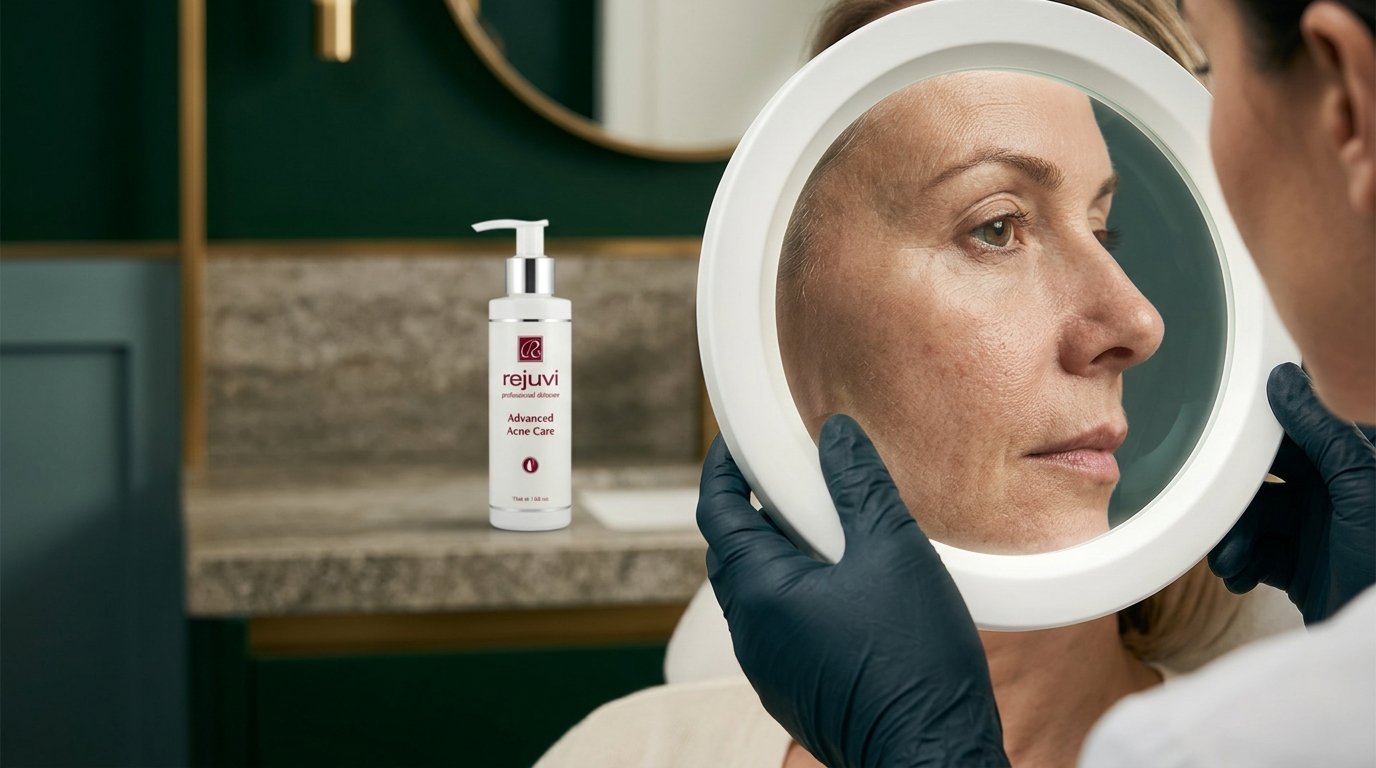
Marketing images in this article are editorial AI representations
that place verified clinic brands within a pore-assessment scene; they
are not documentary photographs of a patient, clinic room or treatment
result. No visual should be interpreted as proof that a particular
product or device was used on a real person.
When a
dermatology referral is the best pore treatment
Cosmetic care has limits. Persistent inflammatory acne, nodules,
scarring, suspected folliculitis, changing lesions, severe sensitivity,
recurrent infection or significant pigment disorder can require medical
diagnosis and prescription treatment. A dermatologist can also clarify
whether a retinoid, hormonal therapy or another medical intervention is
appropriate.
Referral is not a failure of a skincare clinic. It is evidence that
the practitioner recognizes scope and prioritizes safety. Once a medical
condition is controlled, cosmetic texture options can be
reconsidered.
Final
perspective: clearer decisions, not poreless promises
Enlarged pores are best approached as a visible pattern with several
possible drivers. Oil and congestion call for one strategy; roughness,
photoageing and scars call for others; sensitivity may require
postponement. Professional cleansing, Hydrafacial-style care, peels,
microneedling and lasers are tools with different purposes, evidence and
recovery—not levels in a universal ladder.
For enlarged pores treatment in Istanbul, choose a consultation that
names the pattern, sets a realistic target, documents baseline
appearance, explains alternatives and screens for risk. Build a
tolerable home routine, protect the skin from ultraviolet exposure and
evaluate results in consistent conditions. Improvement can be meaningful
without pretending that normal skin should become poreless.
Additional planning details
Ingredient
and procedure timing: avoiding the irritation loop
Many disappointing pore journeys are not caused by a lack of potent
products; they are caused by an excess of them. A person may use a
foaming cleanser, an acid toner, a salicylic serum, a retinoid, a clay
mask and a granular scrub while also booking peels. The resulting
tightness, flaking and low-grade inflammation produce uneven light
reflection and can make the original concern look worse.
Create an active-product calendar instead of layering by impulse.
Keep cleansing, moisturizer and sun protection stable. Introduce one
targeted active at a low frequency and increase only when the skin
remains comfortable. If a clinician plans a procedure, provide the
complete routine—including prescription acne treatments, hair-removal
products used near the face and supplements that affect bleeding. The
stop and restart interval must be tailored to the procedure and
prescriber advice; there is no universal social-media rule.
After a procedure, “gentle” is a functional description, not a
marketing word. Fragrance, essential oils, exfoliating acids and
high-strength serums can sting compromised skin even when they are
normally tolerated. Use the written aftercare, avoid experimenting, and
contact the provider if discomfort is increasing instead of settling.
The aim is controlled recovery, not proof of toughness.
Seasonal planning in
Istanbul
Istanbul has bright summers, humid periods, cold wind and indoor
heating, so the same routine may not feel identical all year. In summer,
ultraviolet exposure, sweating and outdoor travel can complicate
resurfacing aftercare. In winter, dryness and barrier sensitivity may
become more relevant. Neither season automatically forbids treatment,
but timing and intensity should reflect real exposure and the person’s
ability to follow aftercare.
Someone arriving for a short summer visit may gain more from
conservative cleansing, hydration and a long-term home plan than from a
high-downtime procedure before sightseeing. A local resident with
flexible follow-up may have more options for a staged series. Recent
tanning, an upcoming beach trip or inability to reapply sunscreen should
be disclosed before treatment.
Seasonal oil changes also affect pore visibility. Increased shine in
warm weather may exaggerate congestion; cold-weather dehydration may
exaggerate roughness. Do not assume that a temporary seasonal change
proves permanent structural enlargement. Compare photographs across
similar conditions and adjust the routine rather than replacing it
entirely.
Ethical use of
photography and AI skin analysis
Digital skin analysis can help map oil, texture and pigmentation
under standardized capture. Artificial intelligence may support pattern
recognition or repeatable scoring, but it does not independently
diagnose every condition or choose a safe procedure. A score should be
explained in ordinary language and interpreted alongside examination,
history and the client’s goals.
Ask whether the system stores identifiable facial images, how consent
works, who can access the files and whether the data may be used for
marketing or model training. Clinical documentation and promotional
permission are separate decisions. Declining public use of photographs
should not reduce the quality of care.
Before-and-after images should preserve lighting, distance, camera,
expression and skin preparation. Immediate post-treatment swelling, oil
removal or reflective serum can create a misleading “after.” The most
useful comparison is taken at a clinically meaningful follow-up, not at
the moment when presentation is most flattering.
Building a
maintenance plan after improvement
Once the skin looks clearer, maintenance should become simpler rather
than progressively more aggressive. Continue the core routine and use
the lowest frequency of targeted active that maintains benefit. Schedule
professional cleansing according to recurrent congestion, not a belief
that every follicle must be empty. Space remodelling procedures
according to documented response and recovery.
Watch for drift: people often add products when they are pleased with
progress, then lose the stable routine that produced it. If shine
returns during summer or dryness appears in winter, adjust texture and
frequency before introducing another strong active. Review new acne,
medication changes and pregnancy status because these can change what is
appropriate.
Long-term photographs should be taken months apart. Normal day-to-day
variation should not trigger a new procedure. The best maintenance plan
protects skin function, controls the dominant driver and leaves room to
stop when the goal has been met.
Common mistakes that can undo a good pore-treatment plan
The first mistake is judging a structural treatment too early. Redness and swelling can temporarily blur texture, creating an impressive same-day photograph that is not the final result. As swelling settles, pores may appear to “return,” even though collagen remodelling has only begun. The opposite can also happen: dryness and micro-crusting make texture look worse during healing. Review the skin at the interval appropriate to the procedure rather than declaring success or failure in the first week.
The second mistake is restarting strong actives by habit instead of by instruction. A person who normally tolerates a retinoid or acid may not tolerate it on recently treated skin. The barrier needs to recover before routine exfoliation resumes. The date is not determined solely by the calendar; persistent redness, stinging or peeling are reasons to contact the provider and delay escalation.
The third mistake is confusing temporary oil removal with permanent change. A clean, matte T-zone after extraction or a clay mask can look dramatically refined under bright light. As normal sebum returns, visible filaments may reappear. This does not automatically mean the treatment failed. The durable result should be assessed through easier congestion control, fewer comedones, smoother texture and a sustainable maintenance interval.
The fourth mistake is abandoning sunscreen once redness settles. Ultraviolet exposure is relevant to long-term structural support and post-procedure pigment risk. Protection includes product, quantity, reapplication, shade, hats and sensible timing. It is especially important when sightseeing in Istanbul for many hours, sitting beside windows or travelling to a sunny destination after the appointment.
The fifth mistake is picking at flaking skin or emerging plugs. Manual removal can turn a minor recovery feature into inflammation. Do not peel loose skin, use a scrub or attempt extraction unless the treating professional specifically advises it. If crusting, pus, severe tenderness or blistering appears, seek advice rather than hiding it with makeup.
The sixth mistake is adding a second clinic procedure before the first result is interpretable. Clinics and clients may be tempted to “boost” an uncertain response with a peel, laser or needling session. Without a clear interval, this creates cumulative irritation and makes adverse events difficult to attribute. A staged plan documents what was done, how the skin responded and why the next step is justified.
The seventh mistake is treating every part of the face identically. The nose, central cheeks, forehead and jaw can differ in sebum, sensitivity, thickness, hair and scar pattern. A skilled practitioner may change passes, depth, suction or product placement by area. Uniform intensity is simple for the operator but may not be appropriate for the skin.
The eighth mistake is measuring success only through magnification. Skin is viewed socially at ordinary distance and in moving light. A high-resolution macro image is useful for documentation but can exaggerate normal anatomy. If the skin is comfortable, clearer and smoother in daily life, that improvement matters even when a magnified photograph still shows follicles.
Finally, do not let a maintenance plan become an endless treatment subscription. Review whether the original goal was achieved, whether the benefit justifies cost and recovery, and whether a simpler routine can now maintain it. Good aesthetic care includes a stopping point.
If pore-focused skin also feels tight, flaky or unexpectedly shiny after cleansing, read the guide to dry vs dehydrated skin before adding stronger exfoliation. It explains how surface water loss can coexist with oiliness and why barrier comfort should be assessed separately from pore appearance.
Primary and authoritative
sources
- Lee SJ, Seok J, Jeong SY, et al. Facial Pores: Definition,
Causes, and Treatment Options. Dermatologic Surgery. 2016. PubMed:
https://pubmed.ncbi.nlm.nih.gov/26918966/ - Dong J, Lanoue J, Goldenberg G. Enlarged Facial Pores: An Update
on Treatments. Cutis. 2016. PubMed: https://pubmed.ncbi.nlm.nih.gov/27529707/ - Parvar SY, et al. The efficacy and adverse effects of treatment
options for facial pores: A systematic review. Journal of Cosmetic
Dermatology. 2023. PubMed: https://pubmed.ncbi.nlm.nih.gov/36440737/ - Roh M, et al. Sebum output as a factor contributing to the size
of facial pores. British Journal of Dermatology. 2006. PubMed: https://pubmed.ncbi.nlm.nih.gov/17034515/ - US Food and Drug Administration. Microneedling Devices.
Updated October 15, 2025. https://www.fda.gov/medical-devices/aesthetic-cosmetic-devices/microneedling-devices - US Food and Drug Administration. Microneedling Devices: Getting
to the Point on Benefits, Risks and Safety. https://www.fda.gov/consumers/consumer-updates/microneedling-devices-getting-point-benefits-risks-and-safety - US Food and Drug Administration. Potential Risks with Certain
Uses of Radiofrequency (RF) Microneedling—FDA Safety Communication.
October 15, 2025. https://www.fda.gov/medical-devices/safety-communications/potential-risks-certain-uses-radiofrequency-rf-microneedling-fda-safety-communication