If you are searching for whether enlarged pores can be permanently
closed, the most useful answer is direct: no treatment can
permanently seal normal pores, because pores are functional openings of
hair follicles and oil glands rather than doors that can be
shut. What can change is how visible they look. Oil, compacted
keratin, blackheads, loss of firmness, sun-related surface change, acne
scarring, dehydration and lighting can all make the same pore look
larger or smaller at different times.
That distinction matters because a promise to “close pores forever”
sets the wrong goal. A better plan identifies why pores look prominent,
reduces reversible contributors, protects the skin from further
structural change and chooses professional options only when their
likely benefit is proportionate to their risks and recovery. The result
may be smoother-looking, more even skin, but it is maintenance and
improvement—not anatomical erasure.
This guide explains the biology behind visible pores, the difference
between a pore, a blackhead and a scar, what home care can realistically
do, where professional treatments may help, why results vary and how to
evaluate claims without chasing an impossible permanent closure.
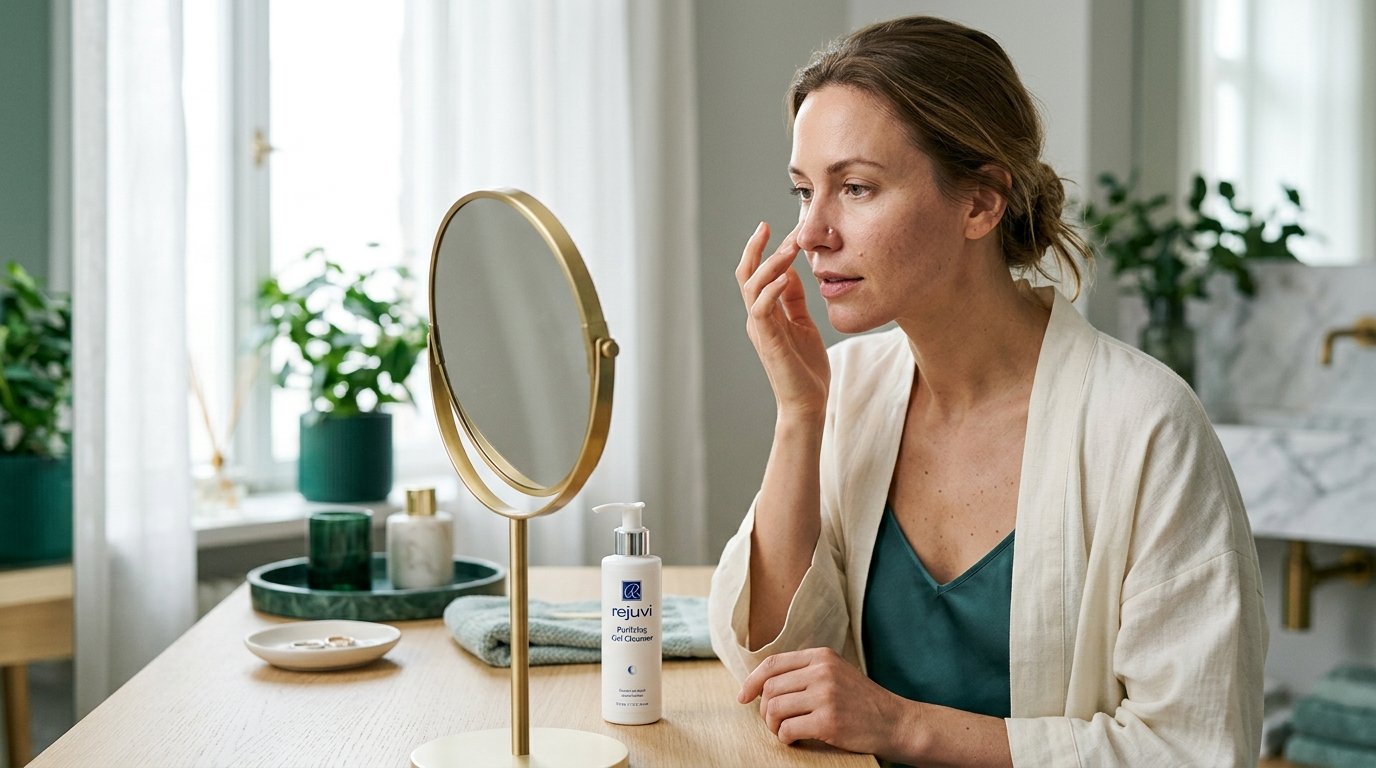
The
short answer: pores do not open and close like doors
A pore is the visible surface opening of a pilosebaceous unit: a hair
follicle connected to a sebaceous gland. Sebum travels through this unit
to the skin surface. The opening is part of normal anatomy. It does not
contain a tiny circular muscle that opens with steam and closes with
cold water.
Heat may soften surface oil and make cleansing feel easier. Cold
water may temporarily change skin colour or sensation. Neither
permanently changes the follicular opening. Likewise, an astringent can
remove oil and create a brief feeling of tightness, but tightness is not
proof that the pore has been structurally closed.
The visible size of a pore is influenced by several overlapping
factors:
- genetically influenced follicle and sebaceous-gland size;
- the amount and flow of sebum;
- retention of keratin and debris within the follicle;
- comedones, including open comedones commonly called blackheads;
- surrounding collagen, elastin and general skin support;
- past inflammation or acne scarring;
- ultraviolet exposure and photoageing;
- temporary swelling, irritation or dehydration;
- camera distance, directional light, makeup and image
processing.
This is why one mirror can suggest dramatic improvement and another
can make the same skin look unchanged. A fair assessment uses similar
lighting, camera distance, skin preparation and timing.
For a contributor-by-contributor explanation, see our guide to the causes
of enlarged pores and treatment planning.
What people usually
mean by “closing pores”
Most people do not literally want their follicles sealed. They want
one or more visible problems to improve:
- Dark dots on the nose or central face.
- Recurrent blackheads or congestion.
- An orange-peel texture on the cheeks.
- Shiny skin that makes openings more obvious.
- Makeup that settles into texture.
- Shallow acne scars mistaken for enlarged pores.
- A sudden change in texture after irritation or
over-exfoliation.
These are not interchangeable. A person with sebaceous filaments may
need expectation-setting and gentle maintenance. Someone with open
comedones may benefit from comedone-focused care. A person with acne
scarring may need a scar assessment. Someone with inflamed acne,
dermatitis or rosacea-like symptoms should not be pushed into aggressive
pore procedures before the active problem is evaluated.
The treatment question therefore changes from “How do I close every
pore?” to “What is making this texture visible, and which part is safely
modifiable?”
Pore anatomy in plain
language
Hair follicles extend below the surface. A sebaceous gland releases
an oily mixture into the follicular canal. This oil supports the skin
surface, although excess oil can contribute to shine and comedonal acne.
The canal also contains shed keratinocytes. When oil and keratin
accumulate, the follicle can look wider and darker.
An open comedone is not dirt trapped because a person failed to wash.
Its dark surface is related to material exposed at the opening, where
oxidation and optical effects contribute to its appearance. Scrubbing
harder does not correct the biology and may produce irritation that
makes texture more conspicuous.
Sebaceous filaments are normal structures that help guide sebum to
the surface. They tend to be numerous, relatively uniform and especially
visible on the nose. They can refill after extraction because the
follicle continues to function. That does not mean a cleansing treatment
failed; it means normal anatomy resumed its work. Our detailed guide to
blackheads
versus sebaceous filaments explains how this distinction changes the
plan.
Why some pores look
larger than others
Oil production and
follicular filling
Oil can make pore openings more visible through both shine and
follicular filling. A routine that removes every trace of oil is not
automatically better. Harsh cleansing may disturb the barrier, trigger
irritation and make consistent treatment harder. The practical target is
controlled cleansing and comedone management without producing
persistent burning, scaling or tightness.
Keratin retention and
comedones
When shed cells and sebum form a plug, the follicular opening can
look more prominent. Ingredients that normalise shedding or help clear
the follicle may reduce that contribution over time. They do not delete
the follicle. Results depend on the type of lesion, product strength,
tolerance and consistency.
Age, support and sun exposure
The tissue around a follicle affects how the opening is perceived.
Changes in collagen organisation, elasticity and surface texture can
reduce the visual support around pores. Ultraviolet exposure contributes
to photoageing pathways, including changes in collagen and elastin.
Daily photoprotection is therefore not a cosmetic afterthought; it helps
protect the support structures that influence texture. A classic human
study linked low-dose ultraviolet exposure with molecular pathways that
increase matrix-degrading enzymes, supporting the logic of long-term sun
protection rather than a one-off “pore closing” fix.
Genetics and hormonal
context
Sebum production, follicle size and acne tendency are partly
influenced by genetics and hormones. Skincare cannot rewrite every
inherited feature. It can often improve modifiable factors, but a plan
should not imply that disciplined care will make all skin look filtered
or poreless.
Acne inflammation and
scarring
Repeated inflammation can leave textural change. Small ice-pick scars
or shallow boxcar scars may be mistaken for enlarged pores. Scar
treatment is a different decision pathway because depth, shape, activity
of acne, skin tone, history of pigment change and downtime matter. If
the concern includes depressed scars, start with the acne
scars versus post-acne marks guide and the broader acne
scar treatment planning guide for Istanbul.
Dehydration,
irritation and temporary texture
Dehydrated or irritated skin can reflect light unevenly. Flaking
around follicular openings can make texture look rougher, even if the
pore itself has not enlarged. When a routine causes stinging, persistent
redness, cracking or worsening sensitivity, adding another exfoliant is
not the sensible next step. Barrier recovery and professional assessment
may be more important than intensified treatment.
Can
enlarged pores be permanently closed with skincare?
No. Skincare can reduce oiliness, clear some follicular material,
improve surface smoothness and support photoageing prevention. Those
effects can make pores less conspicuous. They require ongoing use and
appropriate tolerance. Stopping a helpful routine may allow oil,
congestion or surface irregularity to return.
Salicylic acid
Salicylic acid is oil-soluble and is commonly used in products
designed for acne-prone or congested skin. It can help loosen material
within the follicle and improve the appearance associated with comedonal
congestion. More is not always better. Combining multiple acids, scrubs,
brushes and strong masks can create irritation without delivering
proportionally better results.
People using salicylic acid should follow product directions, avoid
stacking several irritating actives at once and stop if they develop
significant burning, swelling or rash. A leave-on product and a brief
cleanser are not equivalent. The concentration, vehicle and frequency
change the experience.
Topical retinoids and
retinol
Retinoids influence epidermal cell behaviour and are used in acne and
photoageing care. Depending on the specific molecule and regulatory
status, a product may be prescription-only or available cosmetically.
Evidence and potency are not identical across the whole “retinoid”
category.
The American Academy of Dermatology advises starting cautiously
because dryness and irritation can occur, and it advises avoiding
retinoids during pregnancy. People with deeper skin tones should be
particularly mindful that irritation can be followed by
hyperpigmentation. A moisturiser, gradual introduction and professional
guidance can improve tolerability, but persistent irritation is not a
sign that the product is “working harder.” The
AAD’s retinoid guidance is a useful safety reference.
For visible pores, a retinoid may help by addressing comedonal
tendency and aspects of photoaged texture. It still does not weld the
follicle shut. Benefits develop gradually and are usually maintained
only with continued, tolerated use.
Niacinamide
Niacinamide is used in many barrier-support and oil-control formulas.
It may suit people who cannot tolerate more aggressive routines, but
product concentration and formulation matter. It should not be presented
as a permanent pore eraser. Its role is supportive: improving the
overall condition of the skin may reduce contrast and shine that make
pores stand out.
Moisturiser
A moisturiser does not clog every skin type, and avoiding moisturiser
can backfire when treatment causes dryness. A suitable formula can
reduce flaking, improve comfort and make a routine sustainable. Product
selection should be based on the individual’s acne tendency,
sensitivity, climate and other actives rather than the label
“poreless.”
Sunscreen
Broad-spectrum photoprotection helps reduce further
ultraviolet-related change. It is not an instant pore treatment, but it
protects the long-term plan. Choose a texture that can be applied in an
adequate amount and reapplied when exposure requires it. The best
sunscreen for pore concerns is one the person can use consistently
without unacceptable irritation or congestion.
What
professional treatments can and cannot do
Professional treatment may improve congestion, surface texture or the
support around pores. It cannot guarantee permanent closure. The correct
choice depends on the dominant cause, medical history, skin tone, active
inflammation, recovery tolerance and previous reactions.
Professional cleansing
and extraction
Careful cleansing and selective extraction can remove some open
comedones and compacted material. The result may be immediately
smoother, but normal sebum production continues. Repeated forceful
extraction, especially at home, can cause inflammation, broken skin,
pigment change or scarring.
A professional session is most useful when it is part of a
maintenance strategy rather than sold as a one-time permanent fix. When
the main issue is congestion, a relevant live example is the Hydrafacial protocol, but its cleansing and hydration goals should not
be misrepresented as permanent pore closure.
Chemical exfoliation and
peels
Chemical exfoliation can improve surface smoothness and some forms of
comedonal congestion. Peel depth, acid type, concentration, contact time
and aftercare determine risk. A “stronger” peel is not automatically
better for visible pores. Inappropriately aggressive treatment can lead
to prolonged irritation, post-inflammatory hyperpigmentation or
worsening texture.
People with a history of pigment change, eczema, recent procedures,
isotretinoin exposure or active inflammation need individual assessment.
A consultation should clarify the expected degree of improvement,
recovery and what cannot be promised.
Microneedling
Microneedling creates controlled micro-injury and is used for
selected texture and scar concerns. For pores that look larger because
of surrounding textural or support changes, a series may improve
appearance. Device quality, needle depth, hygiene, practitioner training
and patient selection matter. Active acne, infection, a tendency to form
keloids and other medical factors may change suitability.
Microneedling should not be reduced to a “pore closing” slogan. It is
a treatment decision with benefits, discomfort, downtime and risks. The
service details belong on the verified microneedling service page, while
the current article remains focused on the permanent-closure myth.
Fractional laser
and energy-based treatments
Fractional resurfacing can improve selected texture concerns by
creating controlled zones of injury and remodelling. Different devices
have different wavelengths, depths and risk profiles. Claims should name
the actual device and protocol rather than using “laser” as a generic
promise.
Skin tone, recent tanning, pigment history, medication, scarring type
and downtime tolerance are important. More aggressive treatment may
produce more recovery and more risk; it does not make pores cease to
exist. A provider should explain realistic endpoints and
alternatives.
Hydradermabrasion
and infusion-style facials
These treatments may improve surface cleansing, hydration and
temporary smoothness. They can be helpful when the goal is short-term
polish or congestion management. They do not permanently alter follicle
anatomy. Comparing them with microneedling only makes sense after
deciding whether the goal is cleansing and hydration or remodelling; see our detailed Hydrafacial vs microneedling for texture comparison.
A practical decision
framework
Step 1: describe what you see
Are the dots uniform and concentrated on the nose? Are there
irregular blackheads? Is there shine, flaking, redness, depressed
scarring or active acne? Does the concern appear only under side
lighting or in a magnifying mirror? A precise description prevents a
one-size-fits-all plan.
Step 2: identify the
dominant contributor
Congestion points toward gentle follicular care. Irritation points
toward barrier recovery. Depressed scars require a scar pathway. General
photoaged texture raises the importance of sun protection and possibly
remodelling options. Several contributors can coexist, but they should
be prioritised rather than treated simultaneously with every active.
Step 3: review the current
routine
List cleansers, leave-on acids, retinoids, masks, scrubs, brushes,
spot treatments, moisturisers and sunscreen. Include frequency. Many
“stubborn pore” routines are actually irritation cycles created by
overlapping products.
Step 4: define a measurable
goal
“Poreless skin” is not measurable. Better goals include fewer open
comedones, less midday shine, smoother makeup application, reduced
roughness or improved consistency in standardised photographs. A
realistic endpoint helps judge whether a product or treatment is worth
continuing.
Step 5: change one
major variable at a time
Introducing several actives at once makes it difficult to know what
helped or caused irritation. A staged plan is slower but more
informative. It also reduces the temptation to interpret burning or
peeling as necessary proof of efficacy.
Step 6: reassess
under consistent conditions
Use the same lighting, camera distance and skin state. Avoid
comparing a freshly cleansed, dehydrated face with an edited promotional
image. Professional skin
analysis can help organise observations, but it cannot diagnose
every medical condition or guarantee a treatment outcome.
How to
tell a visible pore from a blackhead, filament or scar
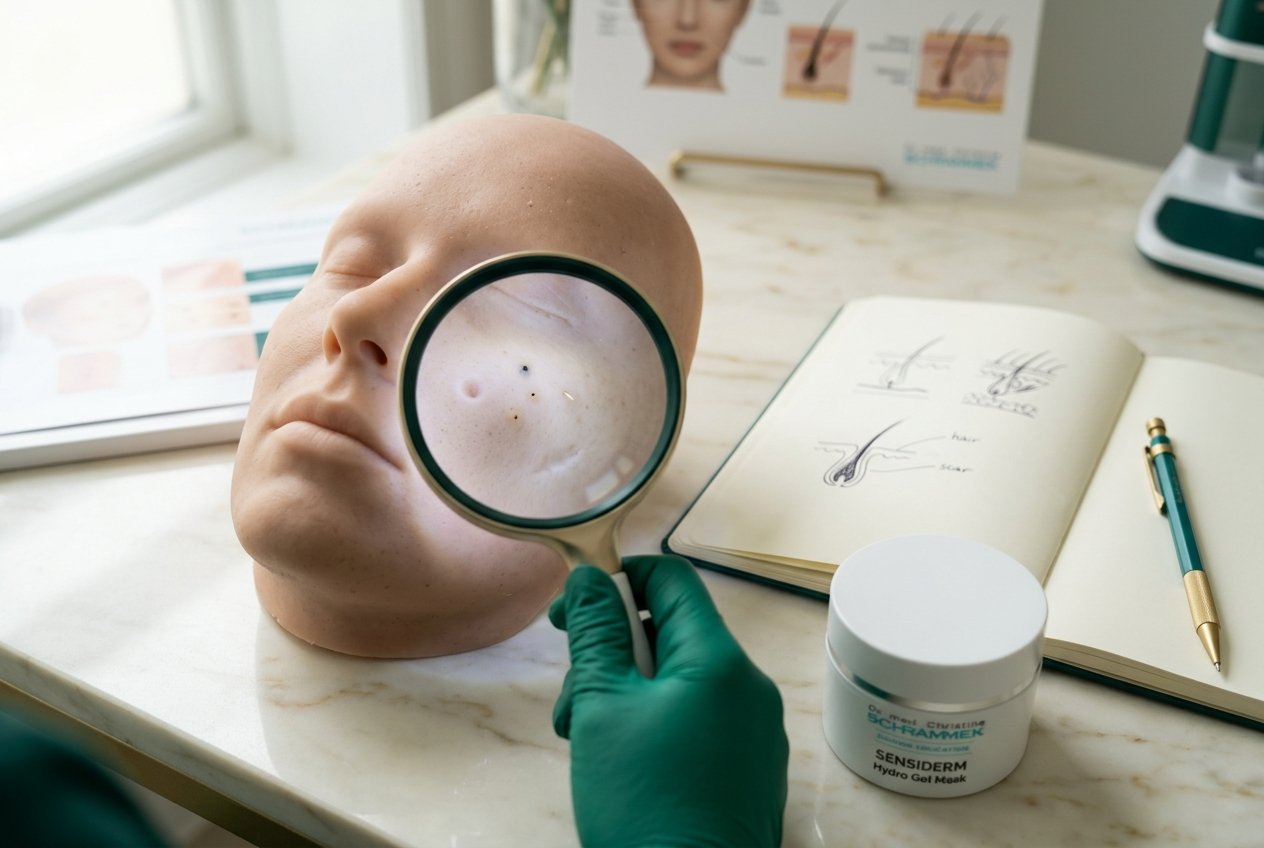
The word “pore” is often used for several different features, and
that creates many disappointing treatment choices. A visible follicular
opening usually follows the regular distribution of follicles and may
look rounder or more obvious where sebaceous glands are active. A
sebaceous filament tends to be small, pale grey, yellowish or
skin-coloured, and arranged in a relatively even pattern across the nose
or central face. An open comedone is usually darker, less uniform and
more distinctly plugged. A depressed acne scar is a loss or alteration
of dermal support; it may cast a shadow, have a sharper edge or remain
visible after the follicle has been cleaned.
These features can coexist. A cheek may have visible follicles, a few
open comedones and shallow scars in the same square centimetre. Treating
the whole area as “dirty pores” invites repeated extraction and
irritation. Treating every dark dot as a blackhead can lead to squeezing
normal sebaceous filaments that promptly refill. Treating scars with a
cleanser cannot rebuild dermal support. The first useful intervention is
therefore classification, not intensity.
At home, look at the overall pattern rather than one magnified dot.
Uniform dots on the nose that return after gentle extraction are often
filaments. A discrete dark plug that becomes inflamed or enlarges may be
a comedone. A depression that changes strongly with side lighting and
does not empty may be a scar. White or flesh-coloured bumps can be
closed comedones, milia or other lesions and should not automatically be
pierced. If the pattern is unclear, photographs in neutral light and an
in-person assessment are safer than experimenting with needles, lancets
or high-strength acids.
Magnifying mirrors are useful for precision tasks, but they can
distort the goal. Normal skin has openings, fine hairs, lines and tonal
variation. Judging success at a distance at which nobody normally sees
the face can make a sensible routine feel like a failure. A better
benchmark is whether congestion, inflammation, shine and texture are
improved in ordinary conversation distance and consistent
photographs.
What “permanent” can
realistically mean
Permanent can refer to different things. A removed comedonal plug is
gone, but the follicle can form another plug. Collagen remodelling after
a procedure may persist for a period, but ageing and ultraviolet
exposure continue. Reduced oiliness from a routine may last while the
routine is used, then change when it is stopped. A scar can improve
without disappearing. None of these outcomes is the same as sealing a
pore forever.
It is more useful to divide results into three time frames. Immediate
effects include removal of surface oil, temporary hydration, swelling
and optical smoothing. Medium-term effects develop over several skin
cycles and may include fewer comedones, better tolerance, more even
shedding and less shine. Longer-term effects may include maintained acne
control, photoprotection and gradual remodelling after an appropriately
selected procedure. Each time frame has different evidence and
maintenance needs.
Immediate smoothness is not meaningless, but it should be labelled
honestly. Hydration can temporarily make the surface reflect light more
evenly. Extraction can make a plugged follicle look clearer. A priming
cosmetic can blur shadows. These benefits may be valuable before an
event, yet they do not predict structural change months later.
Conversely, a treatment that aims at remodelling may not look better
immediately because early redness or dryness masks the eventual
result.
When a clinic or product uses the word permanent, ask four questions:
What exact structure is supposed to change? How was the change measured?
At what follow-up interval? What maintenance was required? If the answer
relies only on a close-up photograph taken under different lighting, the
claim is weak. If the endpoint is reduced pore visibility under
standardised imaging after a defined series, that is more interpretable,
although it still does not mean anatomical closure.
Building
a pore-focused routine without damaging the barrier
A pore routine does not need to feel aggressive. The minimum
effective plan is usually easier to evaluate and more sustainable than a
rotating collection of masks, brushes and acids. Begin with a gentle
cleanser, a suitable moisturiser and broad-spectrum sunscreen. Add one
treatment category only after the baseline routine is tolerated.
Morning routine
In the morning, cleanse according to skin need. Some people with dry
or sensitive skin need only water or a very mild cleanser; oily or
acne-prone skin may prefer a gentle wash. Cleansing should remove excess
oil and overnight product without leaving persistent tightness.
Scrubbing particles and stiff brushes do not reach deep into a follicle
in a controlled way, and friction can increase redness around the
openings.
A niacinamide-containing product can be considered when oil, barrier
comfort or uneven tone are priorities, but it is optional. A light
moisturiser may help prevent compensatory over-treatment and improve
sunscreen application. Finish with a broad-spectrum sunscreen in an
amount and texture that can be used consistently. If sunscreen pills or
settles into texture, changing the formula or layering technique is more
useful than abandoning photoprotection.
Evening routine
Remove makeup and water-resistant sunscreen gently. A single
effective cleanser may be enough; double cleansing is a method, not a
requirement. Follow with the one active selected for the dominant
concern. A salicylic-acid product may suit comedonal congestion. A
retinoid may suit acne tendency and photoaged texture when medically
appropriate. Using both on the same night from the beginning is not
necessary and may reduce adherence through irritation.
Moisturiser can be applied before or after an irritating active
depending on the product and professional advice. The “sandwich”
method—moisturiser, a small amount of retinoid, then moisturiser—may
help some beginners tolerate treatment, though it can modify delivery.
The goal is not to prevent every sensation; it is to avoid persistent
burning, marked scaling and inflammation that interrupt treatment.
Introducing salicylic acid
Start with the product directions and a frequency your skin can
tolerate. A person using a salicylic cleanser every day does not
automatically need a leave-on acid, peel pads and a weekly high-strength
mask. Watch for reduced congestion over time, not an immediate sting. If
the skin becomes shiny-tight, red or flaky, reduce frequency and
simplify the rest of the routine.
Salicylic acid does not suit everyone. Allergy history, pregnancy
considerations, large treatment areas, concurrent medication and skin
disease can affect suitability. Cosmetic products are not a substitute
for medical acne treatment when there are painful nodules, scarring or
widespread inflammation.
Introducing a retinoid
Retinoids vary substantially. Prescription tretinoin, adapalene and
cosmetic retinol are not interchangeable labels for one strength. Use
the actual product instructions and clinical guidance. A small amount
for the whole face is generally different from spot-applying a thick
layer to each pore. Applying to fully dry skin and starting on spaced
nights can reduce irritation for some users.
Retinoid irritation often appears around the mouth, nose and eyes
before the rest of the face. Protect sensitive corners and avoid eyelids
unless the product is intended for that area. Do not combine a new
retinoid with every exfoliant in the cabinet. During pregnancy, avoid
retinoids and seek clinician guidance on alternatives. If eczema,
rosacea or another inflammatory condition is present, individual advice
matters more than a generic pore schedule.
Choosing a moisturiser
“Non-comedogenic” is useful but not an absolute guarantee because
individual responses vary. Gel textures may feel comfortable on oily
skin, while a light cream may better support a person using a retinoid.
Ceramides, glycerin and other humectant or barrier-support ingredients
can improve comfort. A product that leaves the skin calm and allows
consistent sunscreen and treatment use is contributing to the pore plan
even if it does not advertise pore shrinking.
Weekly extras
Clay masks can temporarily absorb surface oil. They may be useful
before an event or as an occasional adjunct, but repeated drying is not
a cure for sebaceous activity. Pore strips can lift superficial material
from the nose and create a satisfying visual result; they do not prevent
refilling and may irritate sensitive skin. Scrubs and cleansing devices
should not be used to chase a perfectly polished surface.
A twelve-week evaluation
window
Weeks one and two are mainly about tolerance. Weeks three to six may
show changes in irritation, oil and the frequency of new plugs. Weeks
seven to twelve provide a fairer view of consistency and comedonal
change. Retinoid-related texture and photoageing goals often require
longer. This timeline is not a guarantee; it is a reason not to change
the entire routine every five days.
Record the products, dates and frequency. Photograph the same clean,
unfiltered area in diffuse daylight every four weeks. Do not take a
“before” image with oily skin under side lighting and an “after”
immediately after a hydrating mask in flat light. If the routine is
comfortable but ineffective after a reasonable interval, reassess the
diagnosis and product rather than simply applying more.
Routine
adjustments for different skin patterns
Oily skin with uniform
nose filaments
The objective is maintenance, not complete removal. Gentle cleansing,
a tolerated salicylic-acid product and lightweight hydration may reduce
contrast and buildup. Repeated squeezing is especially unhelpful because
filaments refill and trauma can leave redness or pigment. An occasional
professional cleansing may improve appearance, but the expected duration
should be discussed honestly.
Oily skin with
blackheads and inflammatory acne
Blackheads rarely exist in isolation when inflammatory acne is
active. A pore-only cosmetic plan may delay effective acne care.
Evidence-based acne treatment can include topical retinoids, benzoyl
peroxide, azelaic acid, antibiotics or systemic options depending on
severity and medical context. These require appropriate clinician
oversight. Controlling inflammation also helps reduce the risk of new
scars that later look like enlarged pores.
Dry or dehydrated
skin with visible texture
When the surface is rough and flaky, strong degreasing products can
make pore shadows more noticeable. Simplify cleansing, pause unnecessary
exfoliation and restore moisturiser use. Reintroduce one active only
after stinging and scaling settle. A “pore tightening” toner that
contains a high alcohol load may create short-lived tightness while
worsening the appearance over days.
Sensitive or redness-prone
skin
Persistent redness around follicles can exaggerate pore visibility.
The priority is identifying triggers and possible dermatitis or rosacea,
not forcing acid tolerance. Fragrance, frequent peels, heat, friction
and aggressive extraction may be problematic. A clinician can help
distinguish acne from rosacea-like papules or folliculitis, because
their management differs.
Mature or photoaged skin
Visible pores may become more apparent as surrounding support and
surface smoothness change. Photoprotection is foundational. A retinoid
may be considered when appropriate, introduced with particular attention
to dryness. Professional options may focus on texture and remodelling
rather than extraction. Expectations should account for skin thickness,
previous sun exposure, healing capacity and recovery time.
Deeper skin tones and
pigment-prone skin
Inflammation can leave post-inflammatory hyperpigmentation, so a
treatment that improves texture but causes avoidable irritation may
trade one concern for another. Procedure parameters, pretreatment, sun
protection and aftercare should be tailored. A history of dark marks
after acne, burns or procedures deserves explicit discussion. “Suitable
for all skin types” is not enough information unless the provider can
explain how risk is managed.
Comparing
professional options by the problem they target
Professional treatments should be compared by mechanism, not by
popularity. A cleansing treatment addresses a different layer of the
problem from a remodelling procedure. Combining them can sometimes be
sensible, but only if each has a defined job.
Matching the option to the
endpoint
If the endpoint is fewer visible plugs, the most direct options are
comedone-directed home care, medical acne care when needed and cautious
extraction. If the endpoint is less shine, oil-compatible cleansing and
appropriate topical management are more relevant than a deep resurfacing
procedure. If the endpoint is smoother scarred cheeks, extraction is
unlikely to address the main structure. If the endpoint is short-term
radiance before an event, a low-downtime hydration or cleansing
treatment may be more proportionate than a procedure with a week of
redness.
This matching exercise also prevents false comparisons. A
hydradermabrasion session can be gentler and deliver faster surface
polish than microneedling, while microneedling may be selected for a
longer-term remodelling goal. Neither is universally “better.” They
solve different problems, and a person can be an appropriate candidate
for one, both at different times or neither.
Treatment names alone are insufficient. “Medical facial,” “pore
laser” and “advanced peel” may describe very different protocols. Obtain
the active ingredients, device model or technique, treatment depth,
expected endpoint and aftercare. When a service cannot be described
precisely, it is difficult to evaluate evidence or compare risk.
Why skin
analysis comes before treatment intensity
An assessment should examine distribution, lesion type, inflammation,
scarring, sensitivity and pigment history. The forehead, nose and cheeks
may have different dominant contributors. A single whole-face protocol
may over-treat a dry cheek while under-treating a congested nose.
Zone-based planning can be more rational than using the strongest
setting everywhere.
Skin analysis can also identify when the pore concern is secondary.
Active acne, dermatitis, rosacea, folliculitis or sun damage may require
a different priority. A cosmetic procedure performed on unstable skin
can obscure the diagnosis, worsen inflammation and delay appropriate
care. “Not today” can be a high-quality treatment decision.
Why maintenance is not
failure
Teeth require ongoing brushing after professional cleaning;
similarly, functioning follicles continue producing sebum and shedding
cells after a facial. Maintenance does not prove dependence or treatment
failure. It reflects the continuing biology. The key is whether the
maintenance burden, cost and side effects are proportionate to the
benefit.
A credible provider should discuss what happens if treatment stops.
Congestion may recur, oiliness may return and photoageing continues.
Remodelling results may persist but are not frozen in time. Knowing this
before starting allows a person to choose a plan they can sustain.
Congestion-focused options
Selective extraction, hydradermabrasion and superficial exfoliation
may reduce visible plugs and surface roughness. Their advantages are
relatively quick cosmetic improvement and limited downtime when
performed appropriately. Their limitations are recurrence and a modest
effect on structural texture. They are not substitutes for medical acne
management when inflammation is present.
Ask how extraction is performed, how the skin is prepared, whether
active lesions will be avoided and what aftercare is recommended. A
provider should be willing to leave a lesion alone if force would be
required. Bruising, broken capillaries and post-inflammatory marks are
not acceptable proof of a thorough extraction.
Oil- and
comedone-focused medical care
Prescription topical or systemic treatments may be more relevant than
facials when acne biology is driving the concern. These options require
diagnosis, contraindication review and follow-up. The benefit is that
they address the formation of lesions rather than repeatedly removing
their visible endpoint. The limitations include irritation,
medication-specific risks and the need for ongoing management.
Surface-renewal options
Superficial chemical peels can improve selected forms of dullness and
comedonal congestion. Medium or deeper peels involve a different risk
and recovery profile and should not be grouped with a light lunchtime
treatment. Acid type, concentration, pH, contact time, number of layers
and skin preparation all matter. A percentage alone does not fully
describe peel strength.
The right question is not “Which peel closes pores?” but “Which
concern does this peel address, and what is the expected change after a
defined series?” A responsible plan also states how long to pause
irritating home products, what sun avoidance is needed and which
symptoms require contact with the clinic.
Collagen-remodelling options
Microneedling and fractional energy devices are considered when
surrounding support, scarring or broader texture contributes to pore
visibility. They do not clean out follicles and should not be offered as
a substitute for acne control. Results develop over weeks to months as
healing and remodelling progress. A series is often discussed, but the
number of sessions cannot be guaranteed without assessment.
Microneedling parameters include device quality, needle
configuration, depth, passes and treatment endpoint. Fractional laser
parameters include device type, wavelength, density and energy. Those
details influence benefit, downtime and risk. A generic promise of
“laser pores” reveals less than the name of the device, the indication
and the post-treatment protocol.
Hydration and
optical-smoothing options
Hydrating facials, masks and infusion-style treatments may improve
comfort and light reflection. This can make texture look smoother for an
event. Their value is legitimate when the goal is temporary polish, but
they should not be marketed as collagen remodelling. A person who wants
a low-downtime refresh may prefer this category; a person with scars may
find it insufficient.
Combination plans
A combination plan is not automatically superior. It becomes useful
when each step targets a distinct contributor and the sequence reduces
risk. For example, active acne may be stabilised before remodelling;
congestion may be managed before a planned event; photoprotection and
home care may support a procedure series. Stacking a peel, aggressive
extraction and energy treatment in one visit can increase inflammation
without proving better long-term results.
The plan should identify the primary treatment, optional adjuncts and
stopping rules. It should also define when progress will be evaluated.
If every visit adds a new modality because pores are still visible under
magnification, the endpoint was never realistic.
Safety, downtime and
aftercare questions
Before a procedure, disclose active infections, cold sores, eczema,
psoriasis, rosacea, acne medication, anticoagulants, pregnancy,
breastfeeding, immune conditions, diabetes, abnormal scarring and
previous pigment change. This list is not exhaustive, but it shows why
an online recommendation cannot replace screening.
Ask what the normal recovery looks like on day one, day three and day
seven. Clarify whether makeup, exercise, swimming, sauna, shaving and
active skincare should be paused. Obtain written aftercare and a contact
route for unexpected symptoms. Severe pain, blistering, spreading
redness, pus, fever, eye symptoms or rapidly increasing swelling require
prompt medical advice rather than another layer of soothing serum.
After treatment, more products do not necessarily speed healing.
Gentle cleansing, the recommended moisturiser and strict photoprotection
are common priorities, but follow the actual protocol. Picking flakes or
squeezing newly visible plugs can increase pigment and scarring risk.
Resume acids and retinoids only when advised; a calendar date is less
important than the procedure type and skin recovery.
Sun exposure matters before and after many procedures. Recent tanning
can change candidacy, and inadequate protection can increase pigment
complications. In Istanbul, seasonal ultraviolet exposure, outdoor
commuting and holidays should be included in scheduling. A treatment
that technically fits the calendar but conflicts with unavoidable sun
exposure may not be the best choice.
How to judge
evidence and marketing claims
Pore studies use different measurement methods: clinician grading,
standardised photography, image analysis, surface replicas or
instrument-based measurements. A statistically significant change is not
always a dramatic visible change. Small studies, split-face designs and
short follow-up can be useful, but they do not support universal claims
of permanent closure.
The phrase “clinically proven” should lead to a specific question:
proven for what outcome, compared with what, in how many people and for
how long? A study of sebum reduction is not automatically proof of scar
improvement. A study on acne lesions is not direct proof that every
visible pore shrinks. A manufacturer-sponsored trial is not
automatically invalid, but its design, endpoint and conflicts should be
transparent.
Before-and-after photography is vulnerable to several biases. Side
lighting increases shadows; frontal diffuse light reduces them. A closer
camera changes perspective. Removing surface oil changes shine. Swelling
after a procedure can temporarily obscure depressions. Foundation,
primer, sharpening and compression alter texture. Trustworthy images
state timing, avoid filters and reproduce distance, lighting and
expression.
Reviews and testimonials describe individual experience, not
controlled evidence. They can reveal practical details such as
discomfort and downtime, but they cannot establish that a pore was
permanently closed. Be cautious when every review uses the same language
or when the promised result is incompatible with anatomy.
Reading
ingredient labels without chasing percentages
A higher number on the front of a bottle does not guarantee better
delivery or a better result. Vehicle, pH, stability, contact time and
the rest of the formula affect performance and tolerability. A
well-formulated lower-strength product used consistently may outperform
an irritating high-strength product that is abandoned after a week.
Marketing terms such as “detox,” “purifying,” “tightening” and
“magnetic pore removal” do not identify a medical mechanism. Translate
each claim into an observable endpoint. Does the product remove surface
oil for a few hours, reduce the number of comedones over twelve weeks,
improve hydration, or simply blur texture with powder? Each may have a
role, but they should not be presented as equivalent.
Patch testing can reduce some surprises but cannot predict every
reaction. Apply according to the manufacturer’s guidance, and remember
that tolerating a small test area once does not prove that daily
whole-face use will be comfortable. Introduce one new active at a time
so a reaction can be traced.
Social media trends
that deserve caution
Glue-like masks, household suction devices, pore spatulas, needles
and undiluted acids can create dramatic videos because extracted
material is visible. Visual drama is not a safety measure. Suction can
bruise or break capillaries; picking and needles can introduce infection
or cause scarring; harsh acids can burn. A trend that produces a tray of
debris may still worsen the skin.
Skin cycling, slugging and ingredient rotation are frameworks rather
than universal rules. They can help some people organise a routine, but
they do not replace diagnosis. Occlusive layers may improve dryness for
one person and feel unsuitable for another with active folliculitis or
congestion. The word “cycle” does not make an incompatible product
combination safe.
Professional credentials also require context. Training standards and
scope of practice vary by country and procedure. Ask who will assess,
who will perform the treatment and who can prescribe or manage a
complication. A beautiful clinic and sophisticated camera do not
substitute for appropriate clinical governance.
Istanbul-specific
planning considerations
Istanbul combines seasonal ultraviolet exposure, humid summers,
heated indoor winters, air pollution and variable commuting conditions.
These factors do not create one unique pore type, but they affect
product comfort, sun exposure and scheduling. A rich winter moisturiser
may feel heavy in July; a matte summer sunscreen may be too drying
during a retinoid adjustment in January.
Plan procedures around realistic sun avoidance. A person commuting by
ferry, walking outdoors or travelling to a beach cannot treat sunscreen
as the only control after an intensive resurfacing procedure. Hats,
shade, timing and postponement may be needed. Discuss how long strict
precautions apply and whether the chosen month is practical.
Language and consent matter as much as climate. The consultation
should clearly distinguish permanent closure from reduction in
appearance. Written aftercare should be understandable, and emergency
contact instructions should be specific. International visitors should
consider whether they will remain in Istanbul long enough for review if
an unexpected reaction occurs.
For event planning, work backward. A cleansing or hydrating treatment
may fit closer to an event if previously tolerated, while a new peel,
microneedling session or fractional procedure needs a larger buffer. Do
not schedule a first-ever treatment immediately before a wedding, flight
or important presentation. Normal redness and flaking can last longer
than an average quoted online.
Price comparisons should use like-for-like services. Verify the
device or product, session length, practitioner, included aftercare and
whether taxes or follow-up are included. A package is valuable only if
the diagnosis and modality are appropriate; buying six sessions in
advance does not turn an uncertain indication into a good one.
What success looks like
at three levels
At the basic level, success may mean the skin no longer feels
stripped, fewer blackheads form and the person stops squeezing normal
filaments. This is meaningful because it reduces inflammation and
prevents avoidable marks even if pores remain visible.
At the intermediate level, photographs may show less shine, more even
texture and fewer dark plugs after several months of consistent care.
Makeup may apply more evenly, and periodic professional maintenance may
be needed less often. The result is functional and cosmetic improvement
rather than a poreless surface.
At the advanced level, a carefully selected remodelling plan may
soften scars or broader textural irregularity. Improvement should be
judged after adequate healing, not during temporary swelling. Even an
excellent result retains normal follicular openings, fine lines and skin
texture.
Failure is not simply “I can still see pores.” Failure means the
chosen, realistic endpoint did not improve enough to justify the burden,
or adverse effects outweighed benefit. This definition protects people
from endless escalation in pursuit of an anatomical impossibility.
The final question is therefore not whether enlarged pores can be
permanently closed. It is whether the modifiable causes have been
identified, whether the plan is safe for the individual and whether the
achieved improvement is worth maintaining. That is a more honest and
more useful standard.
A consultation
checklist for visible pores
Bring a complete routine and list of medications. Note which products
sting, peel or trigger breakouts. Describe previous procedures, pigment
reactions, scars and cold-sore history. If the concern fluctuates, bring
standardised photographs rather than a heavily edited social-media
image.
Ask the assessor to name the dominant feature: sebaceous filaments,
open comedones, enlarged follicular openings, scars, irritation or a
mixture. Ask what will not improve with the proposed treatment. A useful
consultation should be able to say that some nose filaments are normal
or that a scar pathway is more appropriate than extraction.
For a procedure, ask:
- What exact device, peel or technique will be used?
- Why is it suitable for this skin tone and history?
- What improvement is realistic after one session and after a
series? - What are the common side effects and important uncommon risks?
- What downtime should be expected?
- Which home products must be paused, and for how long?
- How will photographs or other measurements be standardised?
- What happens if pigmentation, prolonged redness or an acne flare
occurs? - Who performs the treatment and who manages complications?
- What maintenance is likely after the initial series?
Cost should include the expected series, aftercare and maintenance,
not just the promotional price of one session. The most expensive option
is not necessarily the most appropriate. A lower-downtime treatment
repeated frequently may cost more over a year than a carefully selected
series; an aggressive treatment can cost more in recovery and
complication management. Decision quality matters more than novelty.
Tracking
progress without becoming trapped by magnification
Choose three outcomes at most. Examples are the weekly number of new
blackheads, midday shine, makeup settling or a standardised texture
score in photographs. Record them every two to four weeks, not every
morning. Daily variation from sleep, hormones, weather, cleansing and
lighting can obscure the trend.
Use the same phone camera, disable beauty filters, stand at the same
distance and use diffuse daylight. Photograph clean skin after the same
waiting period following cleansing. Include a full-face view and one
closer regional view. Avoid extreme macro images unless a clinician is
using them consistently for a defined measure.
Also record tolerability: burning, redness, scaling, itch and missed
applications. A routine that gives a small visual benefit but causes
frequent inflammation may be a poor trade. Adherence is a clinical
variable, not a character test. The plan should be adjusted to what the
skin and schedule can sustain.
At review, separate three possibilities: improvement, no meaningful
change and harm. Improvement means the chosen outcomes are better under
comparable conditions. No meaningful change means the plan may need more
time, a different diagnosis or another modality. Harm means new
inflammation, pigment, scarring or persistent discomfort; escalating the
same approach is not sensible.
An example twelve-month
strategy
Months one to three can establish a tolerable baseline routine and
control active congestion. The emphasis is cleansing, moisturising,
sunscreen and one appropriate active. If inflammatory acne or a skin
disease is present, medical care takes priority. Baseline photographs
and a clear outcome definition are created.
Months four to six are for reassessment. If blackheads and shine have
improved but scars remain, the question shifts from follicular care to
texture. If irritation dominates, simplify and recover rather than
adding a procedure. If the routine has been inconsistent, identify the
practical barrier before declaring every ingredient ineffective.
Months seven to nine may include a professionally selected treatment
series if indicated. Sessions should be spaced according to the modality
and healing response. Home actives are coordinated rather than layered
blindly. Photoprotection and aftercare remain part of treatment, not
optional extras.
Months ten to twelve evaluate durability and maintenance. The person
may need only the baseline routine, occasional congestion-focused care
or periodic review of a remodelling plan. Normal pores will still be
visible. Success is a stable reduction in the concern that prompted
treatment, achieved without unacceptable side effects.
This example is not a prescription or a promise that everyone needs a
year. It illustrates why permanent closure is the wrong benchmark. A
good plan adapts as the dominant problem changes, and it stops when
additional treatment offers too little benefit for the cost or risk.
Myths vs Facts
Before the myths, it is useful to recognise the most common reasons a
sensible pore plan goes wrong. The first is treating every visible
opening as congestion. Normal follicles and sebaceous filaments cannot
be scrubbed away; repeated attempts create inflammation. The second is
changing several products together. When cleanser, acid, retinoid and
mask all change in one week, improvement and irritation cannot be
attributed accurately. The third is measuring too soon. Surface oil can
change in hours, but comedonal patterns and remodelling require longer
observation.
Another mistake is confusing sensation with effectiveness. Tingling,
tightness and peeling can occur with useful products, but they are not
the therapeutic endpoint. Persistent burning, cracking or bright redness
signals that the plan may be harming the barrier. Similarly, a procedure
that produces dramatic swelling may temporarily hide texture; that early
appearance is not proof of collagen change. Results should be assessed
after the expected recovery interval.
Product quantity matters. Applying a thick layer of a retinoid does
not make it work twice as quickly, and leaving an acid on longer than
instructed does not convert it into a professional peel. More frequent
use can reduce adherence by causing irritation. The lowest effective
frequency is often the one a person can maintain. This is especially
important around the nose, mouth and eyes, where product can collect and
cause disproportionate irritation.
Failure to coordinate home care with procedures is another
preventable problem. Retinoids, acids, scrubs and depilatory methods may
need to be paused before or after certain treatments. The correct timing
depends on the procedure, product and skin response. A clinic should
provide specific written instructions. If instructions are vague, ask
before improvising. Resuming every active as soon as redness fades may
still be too early for a compromised barrier.
People also underestimate environmental exposure. Sitting next to a
sunny window, walking during lunch or commuting on water can add
ultraviolet exposure even when the day does not feel hot. Sunscreen
needs adequate application and appropriate reapplication; shade,
clothing and scheduling add protection. Photoprotection supports every
texture plan because ongoing ultraviolet injury works against collagen
preservation and pigment control.
Finally, pore treatment can become a cycle of surveillance. The
closer a person looks, the more normal texture appears defective. Set an
observation schedule and step away from daily magnification. If
standardised monthly photographs show stability, that can be a
satisfactory maintenance outcome. Skin is a living organ, not a polished
surface. A plan that preserves comfort and function while delivering
modest visible improvement is often more successful than an aggressive
plan chasing an impossible finish.
Myth: Steam
opens pores and cold water closes them
Fact: Temperature can change sensation, surface oil
and temporary blood flow, but pores are not muscular doors. Steam may
soften material before cleansing; it does not permanently enlarge or
close the follicle.
Myth: Black dots mean dirt
Fact: Open comedones and sebaceous filaments are
related to sebum and keratin within the follicle. Their appearance is
not a moral verdict on hygiene. Over-washing may worsen irritation.
Myth: A painful treatment
works better
Fact: Pain and inflammation are not reliable
measures of benefit. Excessive injury can produce prolonged redness,
pigment change or scarring. Treatment intensity should match the
indication and the person’s risk profile.
Myth: One facial
permanently removes pores
Fact: A facial may remove surface debris, hydrate
skin and temporarily improve texture. Normal follicular function
continues. Maintenance expectations should be discussed before
treatment.
Myth: Oily skin
should never use moisturiser
Fact: Acne-prone skin can also be dehydrated or
irritated. A suitable moisturiser can support tolerance of acne-directed
ingredients. The formulation matters more than a blanket rule.
Myth: Makeup
creates permanent enlarged pores
Fact: Occlusive or poorly tolerated products can
contribute to congestion in some people, and makeup can settle into
texture, but permanent enlargement is not simply caused by wearing
makeup. Removal practices, formula and individual acne tendency
matter.
Myth:
Social-media before-and-after photos prove permanent closure
Fact: Lighting, camera angle, lens distance, makeup,
oil removal and editing can dramatically change pore visibility.
Reliable assessment requires consistent photographs and an appropriate
follow-up interval.
When to
pause self-treatment and seek medical advice
Seek assessment when visible pores are accompanied by painful
inflammatory acne, rapidly worsening texture, persistent redness,
burning, swelling, crusting, infection, significant pigment change or
scarring. A dermatologist can assess whether acne, rosacea, dermatitis,
folliculitis or another condition is present.
Pregnancy, breastfeeding, prescription medicines, recent procedures
and a history of abnormal scarring or pigment change should be disclosed
before using strong actives or undergoing procedures. Retinoids require
particular caution in pregnancy. Do not use an online pore guide to
override medication advice from a qualified clinician.
The realistic promise
The honest promise is not “your pores will disappear forever.” It is
that a well-matched plan may make them less visible by reducing
congestion, managing oil, improving surface smoothness, protecting
collagen and addressing relevant texture concerns. The plan should be
tolerable, measurable and sustainable.
For some people, a simple routine and time are enough. Others benefit
from periodic professional cleansing. People with scars or marked
photoageing may consider remodelling treatments after assessment. None
of these paths eliminates normal follicles, and none should be judged
against filtered skin.
Frequently asked questions
1. Can enlarged
pores be permanently closed?
No. Pores are functional follicular openings. Their visibility can
improve, but permanent closure is not a realistic or healthy treatment
endpoint.
2. Can pores shrink
permanently?
Some structural and surface improvements can last, especially when
sun damage or scars are treated, but ongoing ageing, oil production and
follicular function continue. Maintenance is usually needed.
3. Does ice close pores?
Ice may briefly change sensation and blood flow. It does not close
follicular openings, and direct ice can injure skin.
4. Does steam open pores?
Steam can soften surface material, but it does not open pores by
activating a muscle. Excessive heat can irritate sensitive skin.
5. Why do pores look
larger on my nose?
The nose commonly has active sebaceous glands and visible sebaceous
filaments. Shine and close-up lighting can amplify their appearance.
6. Are sebaceous
filaments enlarged pores?
They are normal structures within follicles and can make openings
look dotted. They tend to refill after extraction because they have a
normal function.
7. Are blackheads
caused by poor hygiene?
No. They form when sebum and keratin accumulate in a follicle.
Aggressive washing can irritate skin without preventing them.
8. Can salicylic acid close
pores?
It can help clear follicular material and reduce the appearance
associated with congestion. It does not permanently close the
follicle.
9. Can retinol make pores
smaller?
Retinol and other retinoids may improve comedonal tendency and
photoaged texture over time. They can make pores less noticeable but do
not erase them.
10. Is niacinamide
useful for visible pores?
It may support barrier function and oil control in a suitable
formula. It is not a permanent pore-closing treatment.
11. Will moisturiser make
pores larger?
Not necessarily. A suitable moisturiser can reduce irritation and
flaking. Choose the formula according to skin type and acne
tendency.
12. Can sunscreen improve
pores?
Sunscreen helps prevent further ultraviolet-related structural
change. It is protective rather than an instant pore treatment.
13. Can
professional extraction remove pores?
No. Extraction may remove comedonal material, but the follicle
remains and can refill.
14. Do pore strips work?
They may remove superficial material temporarily. They do not change
follicle anatomy and can irritate some skin.
15. Can
microneedling reduce pore visibility?
It may improve selected texture concerns by supporting remodelling.
Suitability and depth require assessment; results are not permanent
closure.
16. Can fractional laser
reduce pores?
Selected fractional treatments may improve texture and support around
follicles. Device, settings, skin tone and risk profile matter.
17. Is a
Hydrafacial a permanent pore treatment?
No. It may improve cleansing, hydration and temporary smoothness.
Maintenance expectations should be realistic.
18. Why do my
pores look worse after exfoliating?
Over-exfoliation can cause dryness, redness and uneven reflection.
Pause irritating products and seek advice if symptoms persist.
19. Can dehydration enlarge
pores?
Dehydration can make surface texture more obvious, though it does not
necessarily enlarge the follicle itself.
20. Do pores get larger with
age?
Changes in oil production, collagen support, sun exposure and texture
can make them look more visible over time.
21. Can makeup
permanently enlarge pores?
Makeup can settle into texture or contribute to congestion in some
people, but permanent enlargement is not simply caused by makeup
use.
22.
How long should skincare take to improve pore appearance?
It depends on the product and cause. Congestion and retinoid-based
plans usually need consistent use over weeks to months, not days.
23. Should I squeeze pores at
home?
Repeated squeezing can cause inflammation, pigment change and
scarring. Gentle care or professional assessment is safer.
24. Are pore vacuums safe?
Suction can cause bruising or broken vessels, especially on sensitive
skin. They are not permanent pore treatments.
25. When should I see a
dermatologist?
Seek medical assessment for painful acne, scarring, persistent
irritation, pigment change, infection signs or uncertainty about
prescription treatment.
26. Can vitamin C close
enlarged pores?
Vitamin C does not close follicles. A stable, well-tolerated vitamin
C product may support an antioxidant and photoprotection-focused routine
and can help with some aspects of uneven tone, but it is not a
substitute for sunscreen, comedone management or scar treatment.
Strongly acidic formulas may sting sensitive skin. Adding vitamin C is
optional and should have a defined purpose rather than being layered
into an already irritating routine simply because it is popular.
27. Does hyaluronic acid
shrink pores?
Hyaluronic-acid products can improve hydration and temporarily make
the surface look smoother by supporting water content in the outer skin.
That optical improvement may reduce contrast around follicular openings.
It does not shrink the anatomical follicle or control a blackhead. Apply
it within a balanced moisturising routine; in a very dry environment, a
humectant-only product may not be sufficient without an appropriate
moisturiser.
28. Can clay masks make
pores smaller?
Clay can absorb surface oil and reduce shine for a limited time, so
pores may look less conspicuous immediately afterward. The effect is
temporary. Letting a mask crack completely, using it too often or
combining it with strong acids can cause dryness and irritation. Treat
it as an occasional oil-management step, not a permanent pore
treatment.
29.
Is pore appearance different during the menstrual cycle?
Hormonal changes can influence sebum production and acne activity, so
some people notice more shine, congestion or inflammation at particular
times. That can make follicles look more visible without a permanent
change in their anatomy. Tracking the pattern for several cycles is more
informative than aggressively changing products every week. Persistent
or severe hormonally patterned acne deserves medical assessment.
30. Can diet close pores?
No diet closes pores. Diet may influence acne in some individuals,
and overall health matters, but a single “detox” food does not seal
follicles. If a dietary pattern appears to correlate with breakouts,
record it and discuss major restrictions with an appropriate
professional. Extreme elimination diets can create nutritional problems
and should not be used to chase poreless skin.
31. Why
do pores look larger after applying foundation?
Foundation can collect around flakes, mix with oil or settle into
depressions, increasing contrast. Improve skin preparation, allow
sunscreen to set, use thinner layers and choose a compatible formula. A
blurring primer can temporarily soften the appearance by changing light
reflection. This is cosmetic camouflage, not treatment, but it can be a
practical and safe part of the goal.
32.
Should I use an oil cleanser if I have visible pores?
An oil or balm cleanser can remove water-resistant sunscreen and
makeup, but it is not required for everyone. Rinse it thoroughly and
follow with a gentle water-based cleanser only if residue or personal
preference warrants it. If a product consistently causes new bumps, stop
and reassess. “Oil dissolves oil” is an oversimplification; formula,
emulsification and individual response matter.
33.
Can professional photography or skin imaging measure pores
accurately?
Standardised imaging can improve comparison when distance, lighting,
focus, skin preparation and analysis settings are controlled. It is more
useful than casual selfies, but it is not infallible. Oil, makeup,
redness and temporary swelling can influence results. Imaging should
support clinical assessment, not replace it, and the same system and
protocol should be used at follow-up.
34.
Will stopping a successful routine make pores return?
If the routine was controlling oil, comedones or dehydration, those
contributors may gradually return after it stops because the underlying
follicle remains functional. That does not mean the product caused
dependence. It means the effect required maintenance. A clinician can
help simplify a successful intensive routine into the lowest effective
maintenance schedule.
35. How do I know
when to stop treating pores?
Stop escalating when the remaining texture is normal anatomy, when
the benefit has plateaued, or when side effects, cost and downtime
exceed the improvement. A plan can be successful without producing
filtered skin. Continuing to injure the surface to remove the last
visible opening increases the chance of redness, pigment and
scarring—the opposite of the original goal.
Conclusion
Enlarged pores cannot be permanently closed because they are part of
normal skin anatomy. Their appearance can often be reduced by
identifying the correct contributor: congestion, oil, irritation,
photoageing, support loss or scarring. The safest plan uses realistic
goals, consistent home care, sun protection and proportionate
professional treatment when indicated.
The correct endpoint is informed control: fewer plugs, calmer skin,
smoother-looking texture and a maintenance plan that respects normal
anatomy. A responsible consultation explains what can improve, what will
remain visible and how results will be measured. No ethical product or
procedure should promise to erase every pore forever.
Primary
references for editorial verification
- American Academy of Dermatology. Retinoid or retinol? https://www.aad.org/public/everyday-care/skin-care-secrets/anti-aging/retinoid-retinol
- Fisher GJ et al. Molecular basis of sun-induced premature skin
ageing and retinoid antagonism. https://pubmed.ncbi.nlm.nih.gov/8552187/ - Kang S et al. Application of retinol to human skin in vivo. https://pubmed.ncbi.nlm.nih.gov/7561157/
- Kolli SS et al. Topical retinoids in acne vulgaris: a systematic
review. https://pubmed.ncbi.nlm.nih.gov/30674002/