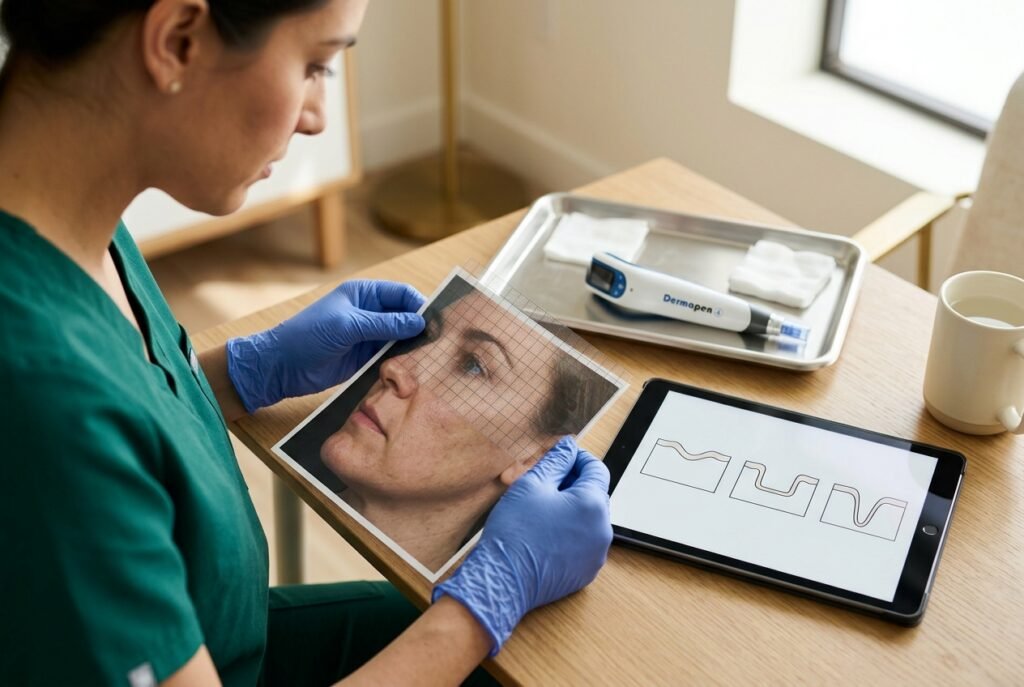
Microneedling
4.500 TL
What is Microneedling?
Microneedling is a professional skin renewal protocol applied at Nexja Skin Clinic using Dermapen technology.
In this application, it is aimed to support the skin’s natural renewal process by creating controlled micro-channels on the skin.
The main purpose of Microneedling is not to aggressively alter the skin.
The goal is to achieve skin quality objectives such as:
- Supporting skin renewal
- Helping to reduce the appearance of acne scars
- Supporting the improvement of pore appearance
- Helping to reduce the appearance of fine lines
- Supporting a more balanced appearance of skin tone
- Creating a more vibrant and radiant skin appearance
Therefore, Microneedling should not be considered merely as a “needling procedure.”
When applied correctly, it is a professional care method that supports the skin renewal process with a controlled micro-needling approach.
How Does Microneedling Work?
In the Microneedling application, very small and controlled micro-channels are created on the skin with the Dermapen device.
This controlled process can help support the skin’s natural healing mechanisms.
Thanks to the professional solutions used during the application, support is provided for the skin’s care needs.
Mesoestetic Mesohyal solutions are used in the standard Microneedling protocol at Nexja Skin Clinic.
The basic approach of this application can be summarized as:
Controlled stimulation + professional ingredient support + skin renewal
For Which Skin Problems is Microneedling Preferred?
Microneedling is one of the professional applications preferred especially by individuals who want to improve their skin quality.
It can be evaluated for the following needs:
Appearance of Acne Scars
The appearance of scars formed after past acne problems is one of the main skin complaints for many people.
Microneedling can help improve the appearance of acne scars by supporting the skin renewal process.
However, not every acne scar is the same.
The type, depth of the scar, and skin structure can affect the results.
Therefore, skin evaluation before the application is important.
Pore Appearance
Pores are a part of the skin’s natural structure.
Microneedling is not a procedure aimed at completely eliminating pores.
However, by supporting skin quality and stimulating the renewal process, it can help the pore appearance become more balanced.
Fine Lines and Signs of Aging
The skin may lose its collagen and elasticity support over time.
Microneedling can be evaluated for fine line appearance and skin quality goals as one of the professional applications that support skin renewal.
It is not a direct wrinkle treatment, but it can be part of anti-aging care programs.
Uneven Skin Tone and Matte Appearance
Irregularities in skin tone and a matte appearance can depend on many different factors.
Microneedling aims to help achieve a more vibrant and balanced-looking skin appearance by supporting the skin renewal process.
How Long Does the Microneedling Procedure Take?
The Microneedling application itself takes about 15 minutes.
However, a local anesthetic cream is applied before the procedure to ensure comfort.
The general process is:
1. Skin Preparation
First, the skin is professionally cleansed and prepared for the application.
2. Local Anesthesia
A local anesthetic cream is applied for about 15 minutes for a comfortable procedure experience.
3. Dermapen Application
Controlled micro-channels are created on the skin with the Dermapen device.
4. Professional Solution Application
A professional solution suitable for the skin’s needs is used during the application.
Mesoestetic Mesohyal is used in the standard Microneedling protocol at Nexja Skin Clinic.
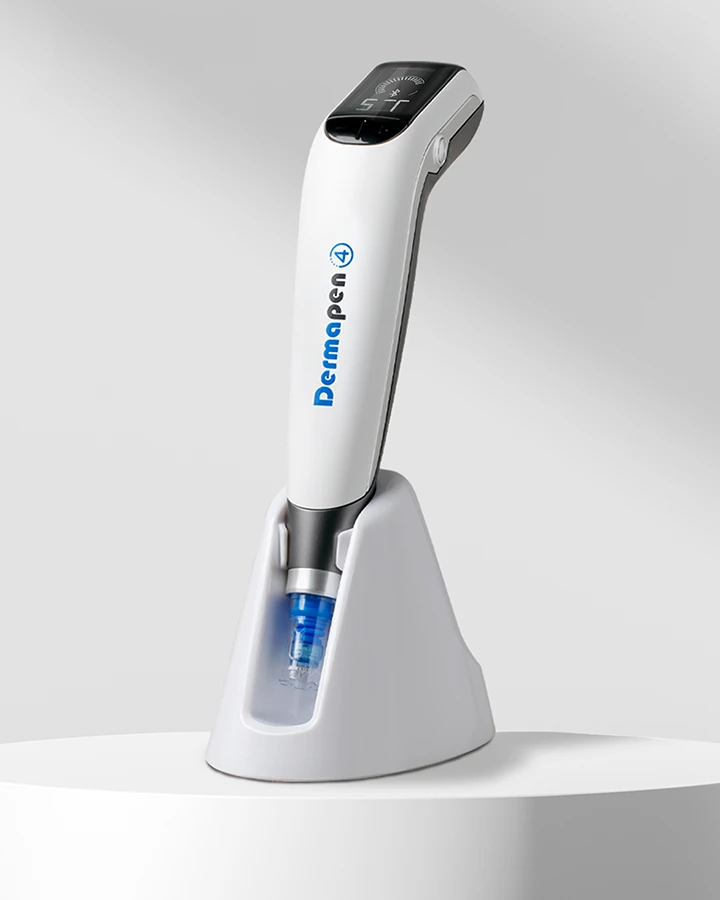
Which Device is Used in Microneedling?
Dermapen technology is used in Microneedling applications at Nexja Skin Clinic.
Dermapen is one of the professional devices used in skin renewal applications with a controlled micro-needling approach.
In the success of the application, not only the device but also the following are important together:
- Correct technique
- Appropriate application depth
- Ingredients used
- Skin analysis
- Professional planning
Which Solution is Used in Microneedling?
Mesoestetic Mesohyal solutions are used in the standard Microneedling application at Nexja Skin Clinic.
Mesoestetic is one of the well-known brands used in the field of professional skincare.
The ingredients to be used are evaluated according to the person’s skin needs and the application plan.
What is the Difference Between Microneedling and Microneedling Exosome?
Microneedling and Microneedling Exosome have the same basic application principle.
In both applications, it is aimed to support the skin renewal process by creating controlled micro-channels with Dermapen technology.
The main difference is the ingredient used.
Standard Microneedling
Professional solution support is used during the Dermapen application.
Mesoestetic Mesohyal solutions are preferred in the standard protocol at Nexja Skin Clinic.
Microneedling Exosome
Medical Exosome support is used in addition to the Dermapen application.
The exosome-containing protocol is evaluated as a different option for individuals who want more advanced skin renewal and regeneration support.
In short:
Microneedling → Dermapen + professional solution
Microneedling Exosome → Dermapen + medical Exosome
When Are the Results of Microneedling Seen?
A final result is not expected immediately after the Microneedling procedure.
Because the purpose of the application is to support the skin’s natural renewal process.
In the first few days, the skin is in the healing process.
Generally, after about 1 week, as the skin begins to recover, a more vibrant and renewed appearance can begin to be noticed.
The effect of Microneedling relies on an increase in skin quality that develops over time rather than a rapid visual change.
Is the Effect of Microneedling Permanent?
Microneedling results depend on many factors of the person, such as:
- Age
- Skin structure
- Lifestyle
- Sun exposure
- Home care routine
- Number of sessions performed
It is not right to expect a miraculous and permanent change with a single application.
However, with regular and correctly planned sessions, supporting skin quality can be targeted.
How Many Sessions of Microneedling Are Done?
Microneedling can be applied as a single session.
However, especially for goals such as:
- Acne scar appearance
- Pore appearance
- Skin renewal
- Uneven skin tone
- Anti-aging care
generally, 3–4 session professional care programs can be evaluated.
The session interval should be determined according to the person’s skin condition and healing process.
The Microneedling Approach at Nexja Skin Clinic
At Nexja Skin Clinic, Microneedling is not considered merely a device application.
Our professional approach is based on:
- Free AI-supported skin analysis
- Personalized care plan
- Dermapen technology
- Mesoestetic Mesohyal solutions
- Professional application process
- Post-procedure care guidance
Our goal is not to apply the same procedure to everyone, but to determine the professional approach suitable for the person’s skin needs.
Free AI-Supported Skin Analysis
At Nexja Skin Clinic, a free AI-supported skin analysis is performed before Microneedling, just like in other professional skincare services.
Thanks to this analysis;
- Skin structure
- Pore appearance
- Tone differences
- Skin needs
can be evaluated in more detail.
The digital report created as a result of the analysis is sent to the client via a QR code.
This way, the person can access the analysis result again later and compare it with evaluations made in future periods.
Microneedling in Istanbul
In a large city like Istanbul, the skin may need renewal support over time due to:
- Air pollution
- Sun
- Stress
- Intense pace of life
- Environmental factors
At Nexja Skin Clinic, Microneedling is one of the applications that can be evaluated for professional skin renewal needs such as Microneedling Istanbul, Dermapen Istanbul, acne scar care Istanbul, pore treatment Istanbul, skin renewal Istanbul, and skin rejuvenation Istanbul.
Our approach is not just to be a local beauty center; it is to offer professional skincare solutions to clients coming from all over Istanbul and from different countries.
Who is Microneedling Suitable For?
Microneedling is a professional skin renewal application that can be evaluated for male and female clients aiming to improve their skin quality, support the renewal process, and achieve improvement in the appearance of certain skin problems.
Specifically, Microneedling can be evaluated for those who:
- Complain about the appearance of acne scars
- Want professional care to help reduce pore appearance
- Aim for a smoother-looking skin texture
- Want care targeting the appearance of fine lines
- Want to support skin renewal
- Aim for vitality in matte and tired-looking skin
- Want a more balanced appearance of skin tone
- Want to add professional support to their anti-aging care program
- Aim for a higher quality skin appearance
However, Microneedling is not applied in the same way for everyone.
The current condition, sensitivity of the skin, and the targeted result must absolutely be evaluated before the procedure.
Who is Microneedling Not Suitable For?
Because Microneedling is a professional application working with the principle of controlled micro-needling, it is not recommended in some situations.
The procedure is not applied or an expert evaluation is required first in the following cases:
- Skin with active acne
- Areas with open wounds
- Skin with an active infection
- People with active cold sores
- People whose skin barrier is severely compromised
- Very sensitive and easily reacting skin types
- People during pregnancy
- People with active irritation in the treatment area
In addition, ongoing dermatological treatments, medications used, or recent skin applications must definitely be shared before the procedure.
The most important point in professional skin renewal:
It is not applying the same procedure to every skin, but choosing the right application for the right skin.
Can Microneedling Be Done on Sensitive Skin?
A more careful evaluation is required for sensitive skin.
Microneedling is not automatically suitable for every sensitive skin type.
If the skin has:
- Intense redness
- Burning sensation
- Barrier weakness
- Tendency to get easily irritated
- Active sensitivity
different professional care options can be evaluated.
The skin evaluation performed before the procedure at Nexja Skin Clinic is important to make this distinction.
Can People with Active Acne Get Microneedling?
Microneedling is generally not recommended for skin with active acne.
Because the active inflammation state of the skin needs to be evaluated before the application.
However, after the active acne period has passed, Microneedling can be evaluated for issues that remain, such as:
- Appearance of acne scars
- Skin texture irregularity
- Pore appearance
Microneedling for Acne Scars
One of the most frequently preferred areas for Microneedling is the appearance of scars formed after acne.
Acne scars vary according to skin structure, depth, and type.
Microneedling aims to:
- Support skin renewal
- Help the skin texture look more balanced
- Support the improvement of scar appearance over time
However, not every scar is the same.
Therefore, it is important to perform a skin analysis before the procedure and establish realistic expectations.
Microneedling for Pore Appearance
Pores are not structures that can be completely eliminated.
However, by supporting skin quality, stimulating the renewal process, and improving skin texture, it can be aimed to make the pore appearance more balanced.
Microneedling can be a part of professional care programs for this purpose.
Preparation Before the Microneedling Procedure
Proper preparation of the skin before Microneedling is important.
Before the procedure, the client must inform the expert team about:
- Products with active ingredients they are using
- Ongoing dermatological treatments
- Peeling or renewal procedures they have previously undergone
- Medications used
- Known sensitivities
Professional guidance must be sought before the procedure, especially if the following are being used:
- Strong acid ingredients
- Retinol derivatives
- Intensive peeling products
Stages of the Microneedling Procedure
The Microneedling process at Nexja Skin Clinic proceeds in a controlled and planned manner.
1. Skin Analysis
First, the current condition of the skin is evaluated.
At this stage, it is determined whether Microneedling is suitable and for which goal it will be applied.
2. Skin Cleansing
Before the procedure, the skin is professionally prepared.
The goal is to create a clean and suitable skin surface during the application.
3. Local Anesthesia
For a comfortable application, a local anesthetic cream is applied for about 15 minutes.
This aims to reduce the feeling of discomfort during the procedure.
4. Dermapen Application
Controlled micro-channels are created on the skin with the Dermapen device.
A professional solution suitable for the skin’s needs is used during the application.
Mesoestetic Mesohyal is used in the standard Microneedling protocol at Nexja Skin Clinic.
5. Post-Procedure Care
After the application, the skin is supported, and post-procedure care recommendations are conveyed to the client.
First Days After Microneedling
After Microneedling, the skin enters a natural healing process.
During the initial period, the following may be seen:
- Mild redness
- Mild sensitivity
- Mild dryness
Although the duration of redness varies from person to person, it generally decreases within about 24–48 hours.
Application depth and skin sensitivity can affect this process.
Will There Be Peeling After Microneedling?
Intense crusting or flaking is not expected after Microneedling.
However, mild dryness can be seen over time during the skin renewal process.
It is important to treat the skin gently and use recommended care products during this process.
How Long Does Redness Last After Microneedling?
Redness can vary from person to person.
It generally decreases within about 24–48 hours.
This duration may differ in deeper applications or sensitive skin types.
Can Makeup Be Applied After Microneedling?
It is important to allow the skin its healing process after the procedure.
It is preferred to avoid heavy makeup applications, especially in the initial period.
Expert recommendations regarding the use of makeup should be followed.
Can I Exercise After Microneedling?
It might be more appropriate to protect the skin from intense sweating, excessive heat, and irritating factors in the initial period.
Regarding exercise, expert advice should be followed according to the person’s skin reaction and the intensity of the application.
Can I Go Out in the Sun After Microneedling?
Sun protection is of great importance after Microneedling.
While the skin is in the renewal process, the following are not recommended:
- Direct sun
- Solarium
- Intense sun exposure
Regular use of sunscreen is one of the important parts of the care process.
How Should Home Care Be After Microneedling?
The goal after the procedure is to support the skin and protect its barrier.
Generally, the following are important:
- Gentle cleansing
- Moisture support
- Sunscreen use
- Compliance with expert recommendations
The following, which can irritate the skin, should not be used in the initial period:
- Strong acids
- Aggressive peelings
- Hard rubbing
- Unnecessary active ingredients
Can Microneedling Be Combined with Other Treatments?
Yes.
Microneedling can be combined with different professional treatments according to the person’s skin needs.
Especially at Nexja Skin Clinic, one of the frequently evaluated combinations is the:
Hydrafacial + Microneedling
protocol.
Professionally preparing the skin with Hydrafacial and subsequently applying Microneedling can create a comprehensive skin renewal approach for suitable individuals.
However, the combination decision should be made taking into account:
- Skin type
- Sensitivity
- Season
- Application frequency
- Skin goal
Can Microneedling and Hydrafacial Be Done Together?
In suitable clients, yes.
Applying Microneedling after cleansing, moisturizing, and preparing the skin with Hydrafacial can be part of a professional care plan.
However, the same combination is not applied to every skin.
First, the skin’s needs must be evaluated.
Free AI-Supported Skin Analysis
At Nexja Skin Clinic, a free AI-supported skin analysis is performed before Microneedling.
With this analysis;
- Skin quality
- Pore appearance
- Uneven skin tone
- Skin needs
are evaluated.
The digital report created as a result of the analysis is sent to the client via a QR code.
In this way, the client can access their own skin analysis again later.
Expert Note
Microneedling is not a quick “instant change” procedure.
The power of this application comes from its support for the skin’s natural renewal process.
Instead of expecting results in the first few days, it is necessary to give time for the skin’s recovery process.
With the correct application, correct ingredients, and regular session planning, the goal is:
To support a higher quality, more balanced, and more renewed-looking skin appearance.
Common Misconceptions About Microneedling
Microneedling is one of the frequently preferred professional applications in the field of skin renewal in recent years.
However, there is a lot of misinformation about the procedure on the internet.
As Nexja Skin Clinic, our goal is not only to introduce the application; it is to ensure that our clients make decisions with the right expectations and correct information.
❌ False: Microneedling pierces and damages the skin.
✅ Truth:
Microneedling is not a procedure that aims to create uncontrolled skin damage.
In professional application, controlled micro-channels are created on the skin with the Dermapen device.
The goal is to support the skin’s natural renewal mechanisms and help the application of professional ingredients.
The basic approach here is:
Controlled application + correct technique + professional ingredient support.
❌ False: Results are seen immediately after the Microneedling procedure.
✅ Truth:
Microneedling is not an application that creates an instant filler or botox effect.
After the procedure, the skin enters a natural healing process.
In the first few days, the skin is in the recovery stage.
Generally, after about 1 week, as the skin renewal process progresses, a more vibrant and higher quality appearance can begin to be noticed.
❌ False: The deeper it is applied, the better the result will be.
✅ Truth:
The goal in Microneedling is not to perform more treatment than necessary.
The application intensity should be determined by factors such as:
- Skin type
- Skin thickness
- Targeted result
- Sensitivity level
- Application area
What is important in professional skin renewal is not more procedures, but correctly planned procedures.
❌ False: Microneedling completely eliminates all acne scars.
✅ Truth:
Acne scars can have many different structures.
Microneedling can support the improvement of acne scar appearance and help the skin texture look more balanced, especially in suitable clients.
However, the type, depth of scars, skin structure, and number of sessions can affect the results.
Establishing realistic expectations is important.
❌ False: Microneedling is only for women.
✅ Truth:
Microneedling can be applied to male and female clients.
Needs such as skin renewal, pore appearance, acne scars, and skin quality are not gender-dependent.
❌ False: Peeling definitely occurs after Microneedling.
✅ Truth:
Intense crusting or distinct peeling is not expected after Microneedling.
Mild dryness can be seen in some people during the healing process.
This situation is part of the skin’s natural recovery process.
❌ False: There is no need for sun protection after Microneedling.
✅ Truth:
Because the skin is in the renewal process after Microneedling, sun protection is important.
Regular use of sunscreen is an important part of both post-procedure care and overall skin health.
❌ False: Microneedling and Exosome are the same procedure.
✅ Truth:
Microneedling and Microneedling Exosome have the same basic Dermapen application principle.
The main difference between them is the ingredient used.
Difference Between Microneedling and Microneedling Exosome
Standard Microneedling
In standard Microneedling application, controlled micro-channels are created with Dermapen, and professional solution support is used.
In the standard Microneedling protocol at Nexja Skin Clinic:
Mesoestetic Mesohyal
solutions are used.
This application is evaluated for goals such as:
- Skin renewal
- Pore appearance
- Acne scar appearance
- Fine line appearance
- Skin quality
Microneedling Exosome
In the Microneedling Exosome application, medical Exosome support is used in addition to the basic Dermapen application.
Exosome content is a different professional option targeting more advanced skin renewal and regeneration support.
In short, it is separated as:
Microneedling → Dermapen + Mesoestetic Mesohyal solution support
Microneedling Exosome → Dermapen + Medical Exosome support
Microneedling or Hydrafacial?
The goals of these two applications are different.
Hydrafacial
It is a professional care protocol taking about 30–40 minutes, focused on:
- Mild cleansing
- Moisture support
- Serum infusion
- Vitality
Microneedling
It mostly focuses on:
- Skin renewal
- Acne scar appearance
- Pore appearance
- Fine lines
- Skin texture
If the goal is basic care and moisture, Hydrafacial can be evaluated;
if more advanced skin quality support is targeted, Microneedling can be evaluated.
Microneedling or Hydrafacial + Glow Care?
Hydrafacial + Glow Care is focused on:
- Detailed cleansing
- Blackhead care
- Comedone cleansing
- Peeling
- Serum
- Mask
Microneedling, on the other hand, focuses on:
- Skin renewal
- Texture improvement
- Pore appearance
- Acne scar appearance
Therefore, the two procedures are not competitors.
They can be evaluated together in suitable planning or at different periods for some clients.
Microneedling or Hydrafacial Nexja Premium?
Hydrafacial Nexja Premium is a comprehensive skincare protocol that takes about 105 minutes.
It especially focuses on:
- Detailed cleansing
- Comedones
- Skincare
- Radiance
- Personalized care
Microneedling, however, offers a different approach focused on skin renewal and texture quality.
A combination of Microneedling after Hydrafacial Premium can be evaluated for some clients.
Microneedling or Pumpkin Peel?
These two applications have different goals.
Pumpkin Peel
It is focused on:
- Mild peeling
- Radiance
- Bright appearance
- Skin surface renewal
Microneedling
It is evaluated for:
- Skin texture
- Pore appearance
- Acne scar appearance
- Fine lines
- More advanced renewal goals
Pumpkin Peel can be preferred for people who want a milder glow and renewal;
Microneedling can be preferred for people who want more comprehensive skin texture support.
Microneedling or Green Peel Energy?
Green Peel Energy and Microneedling are professional applications working with different mechanisms.
Green Peel focuses on:
- Herbal peeling approach
- Skin renewal
- Superficial renewal
Microneedling, on the other hand, supports skin renewal by creating controlled micro-channels with Dermapen technology.
The right choice should be determined according to the person’s skin structure and goals.
Can Microneedling Be Combined With Other Procedures?
Yes.
Microneedling can be combined with different professional treatments according to the person’s needs.
Especially:
Hydrafacial + Microneedling
combination is one of the approaches that can be evaluated in professional skin renewal programs.
Preparing, cleansing, and supporting the skin with Hydrafacial, followed by applying Microneedling, may be preferred by some clients.
However, the combination decision must absolutely be made after a skin analysis.
Why Microneedling at Nexja Skin Clinic?
Microneedling application is performed in many centers in Istanbul.
However, using only the Dermapen device is not enough for a professional result.
What matters is the proper planning of the entire process, such as:
- Performing a skin analysis
- Correct client selection
- Use of appropriate ingredients
- Professional technique
- Post-procedure care guidance
Our Microneedling approach at Nexja Skin Clinic is built upon:
- Dermapen technology
- Mesoestetic Mesohyal solutions
- Free AI-supported skin analysis
- Personalized care plan
- Professional post-procedure guidance
Microneedling in Istanbul
In a large city like Istanbul, the skin may need renewal support over time due to:
- Air pollution
- Sun
- Stress
- Intense pace of life
- Environmental factors
At Nexja Skin Clinic, Microneedling is one of the service options addressing professional skin renewal searches such as Microneedling Istanbul, Dermapen Istanbul, acne scar care Istanbul, pore treatment Istanbul, skin renewal Istanbul, anti-aging skincare Istanbul, and skin rejuvenation Istanbul.
Our goal is not only to be a small center serving our local area; it is to offer professional skincare solutions to individuals coming from all over Istanbul and international clients.
Microneedling Frequently Asked Questions (FAQ)
What is Microneedling?
Microneedling is a professional skin renewal application performed using Dermapen technology.
During the application, controlled micro-channels are created on the skin to support the skin’s natural renewal process.
What does Microneedling do?
Microneedling can be evaluated especially for needs such as:
- Acne scar appearance
- Pore appearance
- Fine line appearance
- Skin texture irregularity
- Uneven tone
- Matte and tired skin appearance
- Skin renewal
Is Microneedling a filler or botox procedure?
No.
Microneedling is not a volume-altering procedure like filler or botox.
It is a professional application aimed at supporting skin quality and the renewal process.
How long does Microneedling take?
The Microneedling application itself takes about 15 minutes.
A local anesthetic cream is applied for about 15 minutes before the procedure for comfort.
The total process, including skin preparation and care stages, may vary from person to person.
Is Microneedling a painful procedure?
Because a local anesthetic cream is used before the procedure, it is aimed to reduce the feeling of discomfort during the application.
The level of comfort felt can vary from person to person.
Which device is used in Microneedling?
Dermapen technology is used in Microneedling applications at Nexja Skin Clinic.
Which solution is used in Microneedling?
Mesoestetic Mesohyal solutions are used in the standard Microneedling protocol.
The ingredient used is one of the important parts of the professional application.
What is the difference between Microneedling and Microneedling Exosome?
The basic principle of the two applications is similar.
In both, controlled micro-channels are created with Dermapen.
The difference is the ingredient used.
Microneedling
Dermapen + professional solution support is used.
Mesoestetic Mesohyal solutions are preferred at Nexja.
Microneedling Exosome
Medical Exosome is used in addition to the Dermapen application.
It is a different protocol targeting more advanced skin renewal and regeneration support.
Does Microneedling completely eliminate acne scars?
No.
Microneedling can support the improvement of acne scar appearance, but the structure of each scar is different.
Results depend on many factors such as:
- Scar depth
- Scar type
- Skin structure
- Number of sessions
- Lifestyle
How many sessions are needed for acne scars?
Although it varies depending on the person’s skin condition, generally 3–4 session professional care programs can be evaluated.
The exact session need is determined after a skin analysis.
Does Microneedling shrink pores?
Pores are not structures that can be completely eliminated.
However, by supporting skin quality and the renewal process, it can be aimed to make the pore appearance more balanced.
Is Microneedling good for fine lines?
Microneedling is one of the applications that support skin renewal.
It can be evaluated in professional anti-aging care programs targeting fine line appearance and skin quality.
Does Microneedling rejuvenate the skin?
Microneedling is not a procedure that directly stops aging.
However, it aims to help achieve a more vibrant, balanced, and higher quality skin appearance by supporting skin renewal.
When are the results of Microneedling seen?
A final result is not expected immediately after the procedure.
In the first few days, the skin is in the healing process.
Generally, after about 1 week, changes can begin to be noticed as the skin starts to recover.
More prominent results can develop over time with regular sessions.
Is the effect of Microneedling permanent?
Results vary from person to person.
Skin structure, age, lifestyle, sun exposure, and home care routine can affect the continuity of the results.
Regular skincare and sun protection are important.
Will there be redness after Microneedling?
Yes, mild redness may be seen in some people.
It generally decreases within about 24–48 hours.
The duration of redness may vary depending on factors such as:
- Application intensity
- Skin sensitivity
- Personal healing process
Will there be crusting after Microneedling?
Intense crusting or distinct peeling is generally not expected.
Mild dryness may be seen during the healing process.
Will there be flaking after Microneedling?
Distinct flaking is not typical.
However, a slight dryness or tight feeling may occur during the skin renewal process.
How should skincare be done after Microneedling?
It is important to support the skin after the procedure.
Generally, the following are recommended:
- Gentle cleansing
- Moisture support
- Sunscreen use
- Compliance with expert recommendations
Can makeup be applied after Microneedling?
It is important to allow the skin to recover after the procedure.
Expert recommendations regarding makeup should be followed.
It may be preferred to avoid heavy makeup applications, especially in the initial period.
Can I exercise after Microneedling?
In the initial period, it might be more appropriate to protect the skin from intense sweating, excessive heat, and irritating factors.
Expert recommendations should be taken into account depending on the intensity of the application.
Can I go out in the sun after Microneedling?
Because the skin is in the renewal process, sun protection is important.
Direct intense sun exposure should be avoided, and sunscreen should be used regularly.
Can Microneedling be done in the summer?
Planning should be made by evaluating the season, sun exposure, and the person’s lifestyle.
Timing must be carefully determined, especially for people heavily exposed to the sun.
Can Microneedling be done in the winter?
Yes.
The winter period is one of the times when skin renewal applications are planned for many people.
However, as in every season, skin evaluation is important.
Who should not get Microneedling?
It may not be suitable to apply in the following situations:
- Active acne
- Open wounds
- Infection
- Active cold sores
- Very sensitive skin
- Pregnancy period
- Active irritation
A definitive evaluation must be made before the procedure.
Can sensitive skin get Microneedling?
It is evaluated according to the sensitivity level.
Different professional care options may be preferred for very sensitive, easily reacting, or barrier-compromised skin types.
Can pregnant women get Microneedling?
It is not recommended to apply during pregnancy.
The special conditions of the person must absolutely be evaluated before the procedure.
Can Microneedling and Hydrafacial be done together?
In suitable clients, yes.
Especially, preparing the skin with Hydrafacial and subsequently applying Microneedling can be evaluated in professional care plans.
However, the combination decision must be made according to a skin analysis.
Can Microneedling and Pumpkin Peel be done together?
Both procedures have skin renewal goals but work with different mechanisms.
Whether they will be applied together should be determined by considering:
- Skin sensitivity
- Season
- Skin goal
- Application plan
Can Microneedling and Green Peel be done together?
Although these two applications are evaluated in the skin renewal category, they are different methods.
A combination plan must absolutely be created after a professional evaluation.
Is a free AI-supported skin analysis performed?
Yes.
At Nexja Skin Clinic, a free AI-supported skin analysis is performed before Microneedling.
Can I get my skin analysis report?
Yes.
The digital report created as a result of the analysis is sent to the client via a QR code.
This way, the person can access their own skin analysis again later.
What is the price of Microneedling?
The Microneedling application at Nexja Skin Clinic is 4,500 TL.
Because prices can change over time, it is recommended to confirm the current price information before an appointment.
What should I pay attention to when getting Microneedling in Istanbul?
Price alone should not be evaluated when choosing Microneedling.
Points to consider should be evaluated as:
- Device used
- Solution used
- Experience of the practitioner
- Whether a skin analysis is performed
- Post-procedure care support
- Hygiene standards
- Personalized planning
What is the difference between Dermapen and Microneedling in Istanbul?
Dermapen is one of the device technologies used in the Microneedling application.
In other words, the controlled micro-needling procedure performed with the Dermapen device is generally called Microneedling.
Why Nexja for Microneedling in Istanbul?
The Microneedling approach at Nexja Skin Clinic does not consist solely of device usage.
The process is evaluated together with:
- Free AI-supported skin analysis
- Dermapen technology
- Mesoestetic Mesohyal solutions
- Procedure planning suitable for the person
- Post-procedure care guidance
Our aim is not to perform the same application on everyone, but to determine the professional approach suitable for the person’s real skin needs.
Microneedling
Istanbul: What a Proper Assessment Should Establish Before
Treatment
Searching for microneedling in Istanbul often begins with a simple
question—“Is this treatment suitable for me?”—but a responsible answer
depends on much more than the name of the procedure. Microneedling is a
technique, not a diagnosis and not a one-size-fits-all package. A sound
plan starts by identifying the concern that is actually present,
deciding whether controlled needling is an appropriate way to address
it, and separating realistic improvement from promises that no ethical
clinic should make.
An assessment should clarify whether the main concern is atrophic
acne scarring, uneven texture, visible pores, fine lines, dullness,
post-acne colour change, active inflammatory acne, or a combination of
problems. These concerns may look similar in photographs but can require
different priorities. For example, a shallow rolling scar and a deep
ice-pick scar are both described as “acne scars,” yet they do not
respond in the same way. Brown marks after acne are pigment, not
indentations. Persistent redness may be vascular or inflammatory rather
than a texture problem. If the concern has been classified incorrectly,
even technically competent treatment can disappoint.
The assessment also needs to consider skin tone, current barrier
condition, sensitivity, medications, recent procedures, history of cold
sores, tendency to form raised scars, pregnancy status, active
infection, sun exposure, travel plans and the amount of recovery time
available. These details influence whether treatment should proceed, be
modified or be postponed. They are not administrative questions; they
are part of risk control.
At Nexja Skin Clinic, the purpose of consultation is to connect the
visible concern with an appropriate care pathway. Microneedling may be
one option in that pathway, but the recommendation should follow the
assessment rather than precede it. A person should leave the
consultation understanding the intended target, the limits of the
method, the expected recovery pattern, the proposed number and spacing
of sessions, home-care restrictions, alternatives and reasons to seek
further medical evaluation.
Start
With the Concern: Texture, Scars, Pores, Fine Lines or Pigment?
“Skin renewal” is a broad phrase. It can describe changes in
smoothness, luminosity, hydration, fine lines, scar appearance or tone,
but those outcomes do not arise from one identical biological problem.
Good treatment planning therefore translates a broad wish—such as
smoother or fresher-looking skin—into observable priorities.
Atrophic acne scars
Atrophic acne scars sit below the surrounding skin surface. Rolling,
boxcar and ice-pick patterns differ in shape, depth and attachment. A
face may contain more than one pattern. Microneedling is commonly
considered for selected atrophic scars because controlled injury can
initiate a repair response, but the degree of improvement varies and
deeper or tethered scars may need a different or combined medical
approach. No single session should be sold as complete scar removal.
Post-acne marks
Flat red, purple or brown marks are not the same as indented scars.
Their colour and behaviour matter. Post-inflammatory hyperpigmentation
can darken after irritation, while persistent redness can have a
different mechanism. Needling may not be the first priority when the
principal concern is colour rather than texture. Assessment should also
consider whether active acne is still creating new lesions and new
marks.
Pore appearance and surface
texture
Pores are normal anatomical structures and cannot be erased or
permanently “closed.” Their visibility may be influenced by oil,
congestion, loss of support, surface roughness and lighting.
Microneedling may be discussed when overall texture and skin quality are
priorities, but a cleansing-focused or hydration-focused treatment can
be more logical when congestion or dehydration dominates the
appearance.
Fine lines and photoageing
Fine lines, roughness and reduced elasticity may be considered within
a rejuvenation plan. The plan should still account for sun exposure,
smoking, skincare, age, sensitivity and expectations. Microneedling does
not stop ageing and cannot reproduce the effect of every laser,
injectable or surgical option. It is one possible tool in a broader
strategy.
Pigment and uneven tone
Pigmentation requires cautious classification. Melasma, sun-related
spots and post-inflammatory marks can behave differently, and irritation
can worsen pigment in susceptible skin. A person with a history of dark
marks after minor inflammation needs an especially careful discussion of
risk, preparation, conservative parameters and sun protection. A
cosmetic consultation must not substitute for dermatological diagnosis
when a lesion is new, changing or clinically uncertain.
How
Mechanical Microneedling Works—and What It Does Not Mean
Mechanical microneedling uses a device with multiple fine needles to
create controlled channels in the skin. These channels are intended to
trigger a regulated wound-healing response. In simplified terms, the
tissue passes through inflammatory, proliferative and remodelling
phases. Signalling molecules, fibroblast activity and extracellular
matrix remodelling are often discussed in relation to the technique.
This process is gradual; the visible endpoint is not created the moment
the needles leave the skin.
The phrase “collagen induction” does not mean that every person
produces the same amount of collagen, that all scars disappear, or that
deeper treatment always creates a better result. Biological response is
influenced by age, genetics, scar type, treatment depth, technique,
session spacing, aftercare, smoking, sun exposure and other factors.
Evidence supports microneedling as a useful option for selected
indications, but studies differ in devices, protocols, participant
groups and outcome measures. That variability is one reason a clinic
should avoid promising a fixed percentage of improvement.
Mechanical microneedling should also be distinguished from
radiofrequency microneedling. In conventional mechanical treatment,
needles create controlled physical channels. Radiofrequency
microneedling uses needle-like electrodes to deliver energy into tissue.
It has different equipment, tissue effects and risk considerations. The
names are similar, but they are not interchangeable services. In October
2025, the US Food and Drug Administration highlighted reports of serious
complications associated with certain uses of radiofrequency
microneedling, including burns, scarring, fat loss, disfigurement and
nerve damage. That safety communication concerns RF microneedling and
should not be casually applied to every mechanical needling treatment,
yet it illustrates why patients should ask exactly which technology is
proposed.
Microneedling is also not the same as injecting a substance. Creating
channels may alter skin permeability, but that does not automatically
establish that any serum, drug, cosmetic or biologic product is safe to
use with the procedure. Products used during treatment should be
selected for professional use, compatibility and hygiene. The FDA notes
that the risks of combining microneedling devices with other products
may not be known for uses that have not been evaluated. Marketing
language such as “infusion” or “delivery” should never replace a
product-specific safety assessment.
Evidence
for Acne Scars: Useful, but Not a Promise of Complete Removal
Acne scarring is one of the most frequently studied uses of
microneedling. A 2024 network meta-analysis of 24 randomized trials
involving 1,546 participants evaluated microneedling alone and in
combination with other approaches for acne scars. The analysis supports
a role for microneedling within acne-scar care, while also showing that
protocols and combinations vary. A later 2025 network meta-analysis
comparing procedural options reported that microneedling ranked
favourably for tolerability. These findings are helpful for treatment
discussions, but they do not turn population-level averages into a
guaranteed individual result.
Scar morphology remains essential. Rolling scars may be tethered
beneath the skin. Narrow ice-pick scars can extend more deeply than
their surface opening suggests. Boxcar scars vary in depth and edge
definition. A needling plan that ignores these differences can produce
an impressive-sounding session count without addressing the limiting
feature. In some cases a dermatologist or appropriately qualified
medical practitioner may discuss subcision, focal chemical
reconstruction, fractional laser, energy-based treatment or a staged
combination. The safest plan is not necessarily the plan with the
longest list of procedures; it is the plan that matches the morphology
and risk profile.
Active acne changes the priority. Needling over inflamed, infected or
open lesions can increase irritation and may spread inflammation across
treated areas. If acne is still uncontrolled, stabilising active disease
may be more important than treating old scars. This principle also
prevents a frustrating cycle in which new scars develop while older
scars are being addressed.
Expectations should be expressed in practical language. Improvement
may mean softer edges, reduced shadowing, more even texture or less
noticeable scars in ordinary light. It does not mean perfectly flat,
poreless or filter-like skin. Serial photography should use consistent
lighting, camera distance and expression. Comparing a harsh side-lit
“before” photograph with a soft front-lit “after” photograph is not
reliable evidence.
For a deeper comparison between methods used for acne scars, see Microneedling
vs Fractional CO2 Laser for Acne Scars. For a broader scar-type
overview, see Acne
Scar Treatment in Istanbul. These guides support this service page
without duplicating its role: this page explains assessment, suitability
and planning for the existing microneedling service.
Skin
Tone, Post-Inflammatory Pigment and Conservative Planning
All skin tones can experience post-inflammatory pigment change, but
the probability and visibility of dark marks can be greater in
pigment-prone skin. This does not automatically rule out microneedling.
It means that the threshold for irritation, previous reactions, recent
tanning, active dermatitis, sun exposure and the planned intensity
deserve careful attention.
The skin should not be treated as a colour category alone. Two people
with a similar visible tone can have different histories of
hyperpigmentation, sensitivity and healing. Useful questions include:
Did previous acne lesions leave brown marks? Did waxing, peels or lasers
trigger long-lasting discoloration? Is there current tanning? Are there
active patches of melasma? Has the person recently used irritating
actives or undergone another procedure? What sun exposure is expected
during the recovery period?
Preparation should prioritise a calm, intact barrier. An aggressive
home routine immediately before needling is not evidence of “better
preparation.” Excessive exfoliation, uncoordinated retinoid use or
multiple acids can increase irritation. The clinic should give
product-specific instructions rather than a generic instruction copied
to every person. Prescription medicines must not be stopped without
guidance from the prescribing clinician.
After treatment, daily photoprotection and avoidance of unnecessary
inflammation are particularly important. Pigment can be worsened by
ultraviolet exposure and visible inflammation. A conservative plan may
use fewer passes, adjusted depth, smaller areas or longer intervals,
depending on professional assessment. Stronger does not automatically
mean more effective, and a patient should not be pressured to accept
maximum intensity.
Read more about risk assessment in How
Skin Tone Affects the Risk of Dark Marks After Skin Treatments. If
pigmentation rather than texture is the dominant concern, Pigmentation
Treatment in Istanbul explains why dark spots and uneven tone
require their own assessment.
Who Should
Pause and Seek Medical Evaluation First?
Microneedling should be postponed or medically reviewed when the risk
cannot be responsibly assessed in a routine cosmetic appointment. Exact
contraindications depend on the device, treatment area, depth and
clinical context, but the following situations require particular
caution:
- active bacterial, viral or fungal infection in the intended
area; - open wounds, significant excoriation or active bleeding;
- inflamed cystic acne in the treatment field;
- an active cold sore or relevant history without an appropriate
prevention plan; - uncontrolled eczema, dermatitis, psoriasis flare or severely
impaired barrier; - unexplained rash, new growth, changing mole or suspicious
lesion; - a history of keloid or problematic raised scarring;
- recent procedures that have not healed;
- current medicines or medical conditions that affect bleeding,
immunity or healing; - pregnancy or breastfeeding when the proposed protocol, anaesthetic
or accompanying products have not been appropriately reviewed; - unrealistic expectations or pressure to treat despite
uncertainty.
This list is a screening framework, not a diagnosis. A qualified
medical professional should decide whether and when treatment is
appropriate where medical factors are present. The FDA advises people
considering microneedling to discuss anticipated benefits and risks with
a trained healthcare provider and to ask about the provider’s training
and experience.
Cold-sore history deserves explicit discussion because procedures
that disrupt the skin can reactivate herpes simplex in susceptible
people. Infection-control standards also matter: cartridges intended for
single use should not be reused, and the treatment field, device
handling and disposal process should follow appropriate hygiene
protocols.
Patients should disclose recent isotretinoin or other acne treatment
rather than relying on old blanket rules found online. Evidence and
clinical practice around procedural timing have evolved, but the
decision must still be individualized. The prescriber or treating
clinician may need to be involved. The safest answer is not an automatic
waiting period quoted without context and not an automatic assurance
that timing never matters.
Device,
Cartridge, Depth and Technique: Why These Details Matter
The word “Dermapen” is often used conversationally for pen-style
microneedling, but device identity, cartridge design and operator
technique matter. Patients can reasonably ask which device will be used,
whether the cartridge is new and single-use, how treatment depth is
selected, who performs the procedure and how hygiene is managed.
Depth should be chosen according to anatomical area, tissue
thickness, concern and professional judgement. The forehead, nose,
cheeks, temples and scar tissue do not necessarily require the same
setting. A single maximum depth across the whole face is not a mark of
quality. Excessive pressure, repeated passes or aggressive endpoints can
increase trauma without guaranteeing a better outcome.
Treatment endpoint should also be considered. Mild, even erythema may
be expected in many protocols, while pinpoint bleeding can occur at
greater depths. Neither dramatic bleeding nor severe swelling should be
used as a marketing measure of effectiveness. The goal is controlled
treatment, not visual spectacle.
The device’s regulatory status and intended use can differ by
jurisdiction. FDA authorization, where relevant, relates to specific
devices, indications and conditions of use; it does not validate every
device sold online or every possible cosmetic combination. The FDA’s
microneedling guidance lists common short-term risks such as dryness,
roughness, tightness, redness, itching, peeling, discomfort, burning,
bruising, bleeding and crusting. Less common risks include pigment
changes, infection and cold-sore reactivation. These risks support
careful consent and aftercare rather than fear-based marketing.
Nexja’s standard service page describes the use of Dermapen
technology and professional solutions selected for the skin’s needs. The
exact plan should still be confirmed during consultation. Brand language
should never replace a check of cartridge hygiene, technique,
suitability and realistic goals.
Treatment
Planning: One Session, a Series or Another Route?
Session count should be proposed as a plan, not sold as a universal
package. A single session may be chosen for a limited goal, an
introduction to recovery or event timing, while a series may be
considered when the aim is gradual texture or scar improvement. The
right interval allows visible recovery and biological remodelling.
Treating too frequently can compound irritation and make it difficult to
judge response.
The first session provides information that no sales script can
supply: how the person’s skin reacts, how long redness lasts, whether
pigment develops, whether aftercare is practical and whether the chosen
intensity was appropriate. The next session should be adjusted using
that evidence.
A review plan should define what will be measured. Possible measures
include standardized photographs, scar grading, texture observations,
patient-reported satisfaction and tolerance. Day-to-day mirror
impressions can fluctuate with lighting, hydration, sleep and
inflammation. Objective comparison is more reliable when photography
conditions remain consistent.
Treatment may need to change if progress plateaus. Repeating the same
session indefinitely is not automatically helpful. If deep scars remain
because their morphology is poorly matched to needling, a medical scar
assessment may be more appropriate. If the dominant issue becomes
dehydration or sensitivity, barrier-supportive care can take priority.
If new acne lesions continue, acne management should be revisited.
Combination planning should be sequential and justified. A cleansing
or hydration treatment might be scheduled separately to prepare the
skin, but same-day combinations can increase irritation. Chemical peels,
lasers, RF devices and strong topical products each have their own
recovery and risk profile. More procedures in one appointment do not
necessarily mean more value.
What to
Expect During a Microneedling Appointment
A well-organized appointment usually includes confirmation of
consent, medical and skincare history, cleansing, assessment of the
treatment area, photography when authorized, selection of parameters and
explanation of the endpoint. If topical anaesthetic is used, the
product, application time and removal method should follow appropriate
professional practice.
During treatment, sensation can vary by area. Bony regions such as
the forehead may feel different from the cheeks. Discomfort should be
monitored; the patient should be able to communicate if an area feels
unusually painful. The operator may adjust depth or passes by zone
rather than treating the face as one uniform surface.
Immediately afterward, redness, warmth, tightness and sensitivity may
occur. The skin can look and feel sunburned. Mild swelling or pinpoint
bleeding may be present depending on the protocol. The clinic should
explain which responses are expected, how long they commonly last, what
products may be used and which symptoms require contact.
The appointment duration is longer than the needling itself because
assessment, preparation, anaesthetic time, cleansing and aftercare
education matter. Choosing a clinic based only on the shortest session
or highest claimed intensity ignores the parts of the process that
protect safety and improve consistency.
Patients should also understand what will not happen. Treatment
should not continue over suspicious lesions or active infection simply
because an appointment was booked. A responsible clinic may reduce the
area, modify the plan or postpone treatment. That decision is a sign of
appropriate assessment, not a failed appointment.
Recovery
Timeline: The First Hours, First Days and Following Weeks
Recovery is individual, but a practical timeline helps people plan
work, travel, makeup, exercise and sun exposure.
First 24 hours
Redness, warmth, tightness and sensitivity are commonly most
noticeable during the first day. The skin should be handled gently.
Avoid rubbing, picking or applying unapproved products. Hands,
pillowcases, phones and anything that touches the face should be clean.
Follow the clinic’s cleansing and moisturising instructions.
24 to 72 hours
Redness often decreases, although some people remain pink or
sensitive for longer. Dryness, roughness or mild swelling can occur. The
skin may feel tighter than usual. Heat, vigorous exercise, steam rooms,
saunas and swimming can increase discomfort or exposure to irritants, so
the return to these activities should follow individualized advice.
Days three to seven
Mild flaking or a rough “sandpaper” feel may appear. This should not
be scrubbed away. Strong acids, retinoids, abrasive devices and
fragranced products can worsen irritation. Makeup timing depends on
recovery, product hygiene and the clinic’s protocol; applying makeup too
early can increase irritation or contamination risk.
Following weeks
Surface recovery is not the same as completion of tissue remodelling.
Gradual changes in texture may continue after visible redness has
resolved. For scar or rejuvenation goals, evaluation should occur over
weeks and across a planned series, not the morning after treatment.
Contact the clinic promptly if symptoms are worsening rather than
improving, or if there is severe pain, expanding redness, pus,
blistering, fever, marked swelling, an unusual rash, persistent bleeding
or other concerning change. Urgent medical care may be appropriate for
severe or systemic symptoms. A social-media message should not be the
only safety route; patients should know how to obtain timely clinical
advice.
Home Care After
Microneedling
Aftercare should be simple, specific and compatible with the actual
treatment intensity. The objective is to protect the barrier, reduce
avoidable irritation and support predictable recovery.
Use a gentle cleanser when advised. Choose a bland moisturiser
recommended for the post-procedure period. Apply broad-spectrum sun
protection when appropriate and reduce direct sun exposure. Do not
introduce new active products while the skin is reactive. Avoid picking
flakes or crusts. Do not use home rollers or other devices to “boost”
the clinic treatment.
The timing of retinoids, exfoliating acids, benzoyl peroxide, vitamin
C products, depigmenting agents and prescription topicals should be
individualized. A product that is useful in an ordinary routine can
sting or irritate freshly treated skin. Restart dates should account for
visible recovery, sensitivity and medical guidance.
Cosmetic products used immediately after needling deserve caution. A
product described as sterile, professional or “growth-factor” based
should still be evaluated for its intended use, formulation and
compatibility. The FDA warns that safety risks associated with combining
microneedling with other products are not always known. Patients should
be told exactly what is applied and why.
Sun protection is essential, but applying any product to very
sensitive skin may sting. The clinic should explain how to balance
protection with comfort, including physical shade, hats and timing.
Travel plans are relevant: a sunny holiday, long flight, beach visit or
hamam shortly after treatment can complicate recovery.
Hydration, sleep and a balanced routine support general wellbeing,
but they should not be marketed as guarantees of collagen production.
Aftercare cannot compensate for an unsuitable procedure or excessive
treatment intensity. Its role is risk reduction and comfort.
Microneedling
Compared With Hydrafacial, Peels and Fractional CO2 Laser
Different procedures can all be described as “skin renewal,” yet
their primary mechanisms and recovery patterns differ.
Hydrafacial-style treatments focus on cleansing, exfoliation,
extraction and hydration using a platform and treatment-specific
solutions. They can suit congestion, immediate smoothness and hydration
goals when the barrier is appropriate. They do not create the same
controlled channels as microneedling. For a detailed comparison, see Hydrafacial
vs Microneedling for Congestion and Texture.
Professional peels use chemical or botanical protocols to influence
the outer skin layers according to their formulation and strength. A
peel may be chosen for surface texture, pigment or renewal goals, but it
has its own suitability and aftercare. Combining or closely sequencing a
peel with needling can increase irritation and should not be
improvised.
Fractional CO2 laser creates thermal columns of injury and can be
considered for selected scar and resurfacing goals. It generally has a
different downtime and risk profile from mechanical microneedling. Skin
tone, scar type, intensity, practitioner expertise and recovery capacity
influence the choice. Neither method is universally “better.”
Radiofrequency microneedling combines needles with RF energy. It is
not simply a stronger version of ordinary needling. The FDA’s 2025
safety communication about serious complications with certain RF
microneedling uses reinforces the importance of identifying the exact
technology and qualified provider.
The right comparison asks: What problem is being treated? How deep or
diffuse is it? What recovery can the person accept? What pigment risk
exists? What evidence and experience support the proposed device? What
happens if the first-line plan is insufficient? A comparison based only
on price or a single “before and after” photograph is incomplete.
Planning
Microneedling Around Work, Travel and Events in Istanbul
Istanbul visitors may want to combine treatment with flights,
sightseeing, business meetings, weddings, photography or other
procedures. Timing should be planned around recovery rather than fitted
into the final hours of a trip.
Schedule consultation early enough to change the plan if the skin is
irritated, sunburned or unsuitable. Do not book a first-ever
microneedling session immediately before an important event. Even if
average redness is brief, an individual can experience longer
sensitivity, swelling, flaking or pigment change. Allow time for
ordinary recovery and for clinical review if the response is
unexpected.
Sun exposure can be substantial during sightseeing, even outside
midsummer. Bosphorus trips, walking tours and outdoor dining increase
cumulative exposure. Physical shade and practical scheduling matter
alongside sunscreen. Hamams, saunas, pools and intense exercise should
not be planned during the initial recovery window without professional
guidance.
Long flights may involve dry cabin air, disrupted sleep and limited
access to a normal skincare routine. A person leaving Istanbul the same
day may also have less access to the treating clinic if concerns arise.
When possible, leave a review window before departure and know how
follow-up will be provided.
If several aesthetic services are planned, share the complete
itinerary with each provider. Injectables, lasers, peels, facials,
waxing and needling should not be stacked without a coordinated plan.
The safest sequence can require spacing or omission. The value of a
consultation is partly its ability to say “not today.”
Myths and Facts About
Microneedling
Myth: More bleeding
means more collagen
Fact: Bleeding is not a reliable measure of outcome.
Treatment endpoint depends on area, depth, technique and indication.
Unnecessary trauma can increase irritation and risk.
Myth: Every acne
scar responds the same way
Fact: Rolling, boxcar and ice-pick scars differ in
structure. Some scars may need other or combined approaches after
medical assessment.
Myth: One session
permanently removes pores
Fact: Pores are normal structures. Treatment may
improve overall texture or the appearance of pores, but it cannot erase
them permanently.
Myth:
Microneedling and RF microneedling are the same
Fact: RF microneedling uses needle electrodes to
deliver radiofrequency energy. Mechanical microneedling does not. The
equipment, tissue effects and risks differ.
Myth:
Any serum is safe because the channels help absorption
Fact: Increased permeability can also increase
exposure to unsuitable ingredients. Products used with needling require
professional selection, hygiene and compatibility.
Myth: Darker skin
cannot have microneedling
Fact: Skin tone alone does not decide suitability.
History of hyperpigmentation, current inflammation, treatment
parameters, sun exposure and aftercare all matter.
Myth: If
redness is gone, remodelling is finished
Fact: Surface recovery can occur before longer
biological remodelling. Results should be assessed over appropriate
intervals.
Myth: Home rollers
provide the same treatment
Fact: Home devices differ in depth, consistency,
hygiene and oversight. Reusing or sharing devices can increase infection
and injury risk.
Myth: A package
of sessions guarantees a result
Fact: Response varies. Each session should be
reviewed and the plan adjusted; treatment should not continue
automatically when the diagnosis or strategy needs reconsideration.
Questions
to Ask Before Booking Microneedling in Istanbul
Before committing to treatment, consider asking:
- What specific concern are you treating, and how was it
identified? - Is this mechanical microneedling or RF microneedling?
- Which device and cartridge will be used?
- Is the cartridge new and single-use?
- Who performs the procedure, and what training do they have?
- How will treatment depth vary by facial area and concern?
- What products will be applied during and after treatment?
- What common and uncommon risks are relevant to my skin history?
- What makes you recommend microneedling instead of a peel, laser,
cleansing treatment or medical referral? - How many sessions are proposed, how far apart, and when will the
plan be reviewed? - What improvement is realistic for my scar or texture pattern?
- How will progress be photographed or measured?
- Which products and activities should I stop, and when can I restart
them? - What should I do if redness, pain or swelling worsens?
- How will follow-up work if I am visiting Istanbul and travelling
home?
Clear answers should be specific to the person rather than copied
from a package description. A clinic should be able to explain why it
proposes a procedure and why it may decide not to proceed.
Evidence Notes
and Responsible Interpretation
Evidence for microneedling includes randomized trials, comparative
studies and systematic reviews, especially for acne scars and
rejuvenation. The literature also has limitations: device types,
treatment depths, number of sessions, combination products, photography,
grading scales and follow-up periods vary. Some studies are small or
split-face designs. Patient satisfaction can be high while objective
changes remain modest. Combination studies do not always show that the
added product is responsible for the difference.
A 2021 systematic review of adverse events found that expected
erythema, pain, oedema and temporary irritation were commonly reported,
while persistent complications were less frequent. The review supports
an overall favourable safety profile when treatment is appropriately
performed, but “relatively safe” does not mean risk-free.
The 2024 network meta-analysis of randomized trials for acne scars
included 24 studies and 1,546 participants. It compared microneedling
alone and combinations. Such analyses are useful for ranking options
across studies, but indirect comparisons and variation between protocols
limit certainty for one individual.
A 2025 systematic review of microneedling for facial rejuvenation
reported high satisfaction and low adverse-event rates across included
studies. Again, study quality and protocol differences matter. These
findings support informed consideration, not guaranteed results.
The FDA’s consumer and device guidance is particularly useful for
safety counselling. It lists common reactions and less common risks,
emphasizes trained providers and notes that risks of off-label uses or
combinations with other products may be unknown. Its 2025 RF
microneedling safety communication should be read specifically as an RF
warning, not as proof that all mechanical microneedling has the same
energy-related complications.
Responsible communication therefore uses phrases such as “may
improve,” “can be considered” and “depends on assessment.” It avoids
claims of permanent pore closure, scar elimination, guaranteed collagen
percentages or zero downtime.
Clinical and Regulatory
Sources
- US Food and Drug Administration. Microneedling
Devices: Getting to the Point on Benefits, Risks and Safety. Updated
October 15, 2025. - US Food and Drug Administration. Microneedling
Devices. Updated October 15, 2025. - US Food and Drug Administration. Potential
Risks with Certain Uses of Radiofrequency Microneedling. October 15,
2025. - Li H, et al. Comparing the efficacy
and safety of microneedling and its combination with other treatments in
patients with acne scars: a network meta-analysis of randomized
controlled trials. 2024. - Gowda A, et al. A Systematic Review
Examining the Potential Adverse Effects of Microneedling. 2021. - Foppiani JA, et al. Microneedling for
Facial Rejuvenation: A Systematic Review. 2025. - Wu B, et al. Optimal treatment
options for acne scars in patients with different skin types: a network
meta-analysis. 2025.
These sources inform general education. They do not replace
examination, diagnosis or individualized medical advice.
Conclusion: Skin Renewal with Professional Microneedling in Istanbul
Microneedling is one of the professional renewal applications aimed at supporting skin quality.
In this application performed using Dermapen technology, controlled micro-channels are created, and it is aimed to support the skin renewal process with Mesoestetic Mesohyal solution support.
It can be evaluated especially for needs such as:
- Acne scar appearance
- Pore appearance
- Fine lines
- Uneven tone
- Skin texture
- More vibrant appearance
Microneedling is not an instant visual change, but an application that develops over time by supporting the skin’s natural renewal process.
At Nexja Skin Clinic, a free AI-supported skin analysis is performed before the application, and a care plan suitable for the person is created.
Microneedling Appointment
If you are researching Microneedling, Dermapen, acne scar care, pore appearance, skin renewal, or anti-aging skincare in Istanbul, the first step is to determine the true needs of your skin.
After the skin analysis at Nexja Skin Clinic, the suitable approach for you is evaluated among:
- Standard Microneedling
- Microneedling Exosome
- Hydrafacial combinations
- Other professional skin renewal protocols
Disclaimer
The information on this page is prepared for general informational purposes and does not replace a personal medical evaluation.
Every skin structure is different. The procedure to be applied, ingredients to be used, number of sessions, and care plan can change depending on the person’s skin condition.
People with active dermatological problems, ongoing treatments, or special health conditions must undergo an appropriate evaluation before the application.
Application results can vary from person to person.