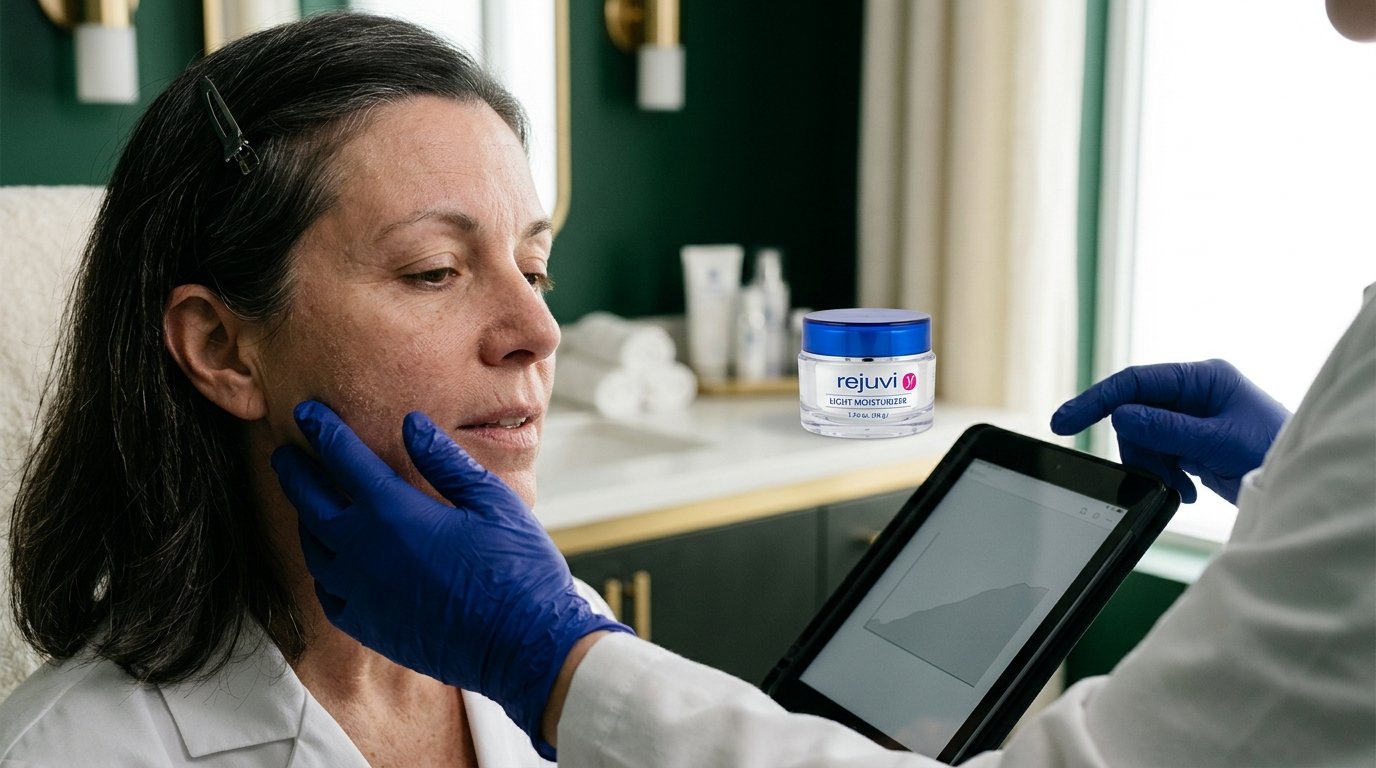
Dry skin usually describes a recurring lack of surface oil; dehydrated skin describes reduced water in the outer skin layer. You can have both, and oily skin can also become dehydrated. Tightness or flaking alone does not establish the cause.
Start by reviewing recent products, cleansing and irritation rather than adding stronger exfoliation. Read what professional skin analysis can and cannot tell you. If the skin is stable and a facial is suitable, compare the published Hydrafacial and Schrammek Sensitive Care options with the clinic.
Persistent itching, burning, cracking or inflamed skin needs medical assessment. This guide does not diagnose eczema, allergy, rosacea or systemic dehydration, and should not replace prescribed care.
Dry vs dehydrated skin: the quick comparison
| Question | Dry pattern | Dehydrated state |
|---|---|---|
| What does the term usually describe? | A recurring tendency toward low surface oil, roughness and scale | Reduced water in the outer skin layer at a particular time |
| Can it occur with oiliness? | Different zones can behave differently | Yes; oily and acne-prone skin can be dehydrated |
| Common context | Climate, age, genetics, eczema tendency, repeated washing | Recent stripping, actives, travel, low humidity or procedures |
| Typical care emphasis | Humectant plus emollient and sufficient occlusion | Remove the trigger, add compatible hydration and reduce water loss |
| Important limit | Persistent itch or inflammation may be a skin condition | No single home or device test confirms the cause |
Why dry and dehydrated are useful clues, not final diagnoses
“Dry” and “dehydrated” are widely used because they give people a starting vocabulary. They are not interchangeable, yet neither word identifies every cause of tightness, flaking or a dull surface. Dry skin usually describes a recurring tendency to produce less surface lipid and to feel rough. Dehydration describes reduced water in the outer layer at a particular time. A person can have both. Oily, acne-prone skin can also become dehydrated after aggressive cleansing, weather exposure or treatment.
The distinction becomes useful when it changes the next decision. A lipid-poor surface may benefit from a richer, more occlusive moisturiser, while a temporarily dehydrated but oily surface may need a lighter formula, less stripping and attention to environmental loss. If the face is burning, cracking, weeping, swollen or persistently itchy, the problem has moved beyond a simple texture label. Those signs justify assessment for dermatitis, infection, allergy or another condition rather than a more elaborate cosmetic routine.
Think of the labels as hypotheses. A professional history, direct examination and a short period of consistent care can test them. A single photograph, “pinch test” or machine number cannot reliably settle the question on its own.
The outer skin barrier in plain language
The stratum corneum is the outermost part of the epidermis. Its flattened cells and surrounding lipids form a flexible barrier that slows water loss and limits the entry of irritants. Ceramides, cholesterol and fatty acids are important components of that lipid system. Natural moisturising factors inside corneocytes help bind water. Healthy shedding, surface oils and an acidic environment also contribute. Hydration therefore depends on more than drinking water or applying a watery serum.
When the barrier is disturbed, transepidermal water loss can rise. Skin may feel tight, sting when products are applied, develop fine scaling or look less smooth. The cause can be environmental, behavioural or inflammatory: cold air, low humidity, repeated hot washing, solvents, strong acids, retinoids, friction and eczema can all affect barrier function in different ways. The visible result may look similar even though the right response differs.
Barrier language is often used as a marketing shortcut. A product cannot be judged only because its label says “repair.” Formula, vehicle, tolerability, frequency and the person’s condition matter. Severe or recurrent barrier symptoms deserve medical evaluation.
Dry skin: the pattern that tends to recur
Dry skin, or xerosis, often behaves like a baseline tendency. The face or body may repeatedly feel rough, look ashy or develop small flakes, especially in winter or after washing. Some people naturally produce less sebum; ageing, climate, occupation and medical conditions can add to the pattern. Dryness can affect the hands and legs even when the T-zone of the face is comfortable. It is therefore more accurate to assess locations separately than to give the whole person one permanent “skin type.”
A useful history asks whether the problem was present before the current routine, whether close relatives have eczema or very dry skin, which seasons are worst, and whether richer creams bring lasting comfort. Persistent fissures, marked itch, sleep disturbance or repeated inflammation are not merely cosmetic inconvenience. They may need a dermatologist or physician.
Dryness still involves water. Low surface lipid reduces the barrier’s ability to retain moisture, so the simple slogan “dry means oil, dehydrated means water” is incomplete. Effective care often combines water-binding ingredients, emollients that smooth gaps and occlusives that reduce evaporation.
Dehydrated skin: a changeable condition
Dehydration is best understood as a state in which the outer skin holds less water than it needs for comfortable function. It can be temporary and can occur in any skin type. A shiny forehead can feel tight after foaming cleanser; acne treatment can reduce tolerance without changing the person’s underlying tendency to oiliness; an overnight flight can make normally comfortable skin feel papery. These examples do not prove a diagnosis, but they show why oil level and water level should not be treated as opposites.
Short-lived dehydration often improves when the trigger is removed and a simple moisturising routine is used consistently. The relevant interval is usually days to weeks, not minutes after a splash of water. If symptoms keep returning, look for repeated exposure: frequent exfoliation, very hot showers, low indoor humidity, long outdoor days, swimming, alcohol-based products or layering several acne actives.
Dehydration is not a medical term with a single home test. Persistent burning, rash or scaling may be irritant or allergic dermatitis, rosacea, seborrhoeic dermatitis or another condition. Labelling all of it “dehydration” can delay appropriate care.
Why skin can be oily and tight at the same time
Sebum and water are measured in different compartments and respond to different influences. A person may have active sebaceous glands while the stratum corneum loses water quickly. Aggressive attempts to remove shine can intensify tightness without stopping oil production. The result is often described as oily but dehydrated skin: shine, congestion and makeup slip alongside fine surface lines or stinging after cleansing.
The practical answer is not automatically to add a heavy cream. First reduce avoidable stripping, use a gentle cleanser where needed, apply a compatible moisturiser, and keep acne treatment within the plan prescribed or recommended for the individual. Non-comedogenic is a useful label but not a guarantee for every person. Introduce one change at a time so that breakouts or irritation can be traced.
Blotting paper shows surface oil, not barrier health. A hydration device may add information, but its number varies with room conditions, timing and measurement site. Decisions should combine symptoms, examination and response over time.
How symptoms overlap—and where they differ
Tightness, roughness, flaking, accentuated fine lines and dullness can occur in both dry and dehydrated skin. Dry skin is more likely to be a repeated background pattern and may benefit from sustained lipid support. Dehydration is often linked to a recent change or exposure and may fluctuate more quickly. Neither pattern is diagnosed by pore size. Large-looking pores can reflect sebum, genetics, texture, lighting or temporary swelling.
Distribution provides clues. Uniform roughness on the legs and hands may support general xerosis. Local scale around the nose, eyebrows or scalp can suggest seborrhoeic dermatitis. Eyelid or neck irritation after a new fragrance may suggest contact dermatitis. Facial flushing and burning triggered by heat may require a rosacea assessment. These examples explain why a complete pattern matters more than a social-media checklist.
Record when symptoms start, what was applied, and what improves them. Photographs in neutral light can help when the condition fluctuates. Do not deliberately provoke the skin to prove a label.
What a careful professional assessment includes
A responsible consultation begins with goals and symptoms rather than a sales menu. The practitioner should ask about onset, duration, itch, pain, burning, medications, prescribed acne care, allergies, eczema, recent procedures, pregnancy where relevant, sun exposure and the full home routine. Cleansers, toners, exfoliants and spot treatments are as important as moisturisers because irritation is often cumulative.
Examination considers scale, fissures, redness or colour change, oil distribution, comedones, lesions and the difference between facial zones. Magnification and standardised photographs can help document the surface. Non-invasive hydration or sebum readings may be used as supporting data if the device and conditions are understood. They do not replace clinical judgement and should not be presented as a medical diagnosis.
The outcome should be a prioritised plan: what to stop, what to keep, what to introduce, how long to observe, and which signs require medical referral. A good plan can be deliberately simple.
At-home observations that are safer than online “tests”
Observe the skin after a normal, lukewarm cleanse rather than intentionally withholding care or pinching the face. Note whether discomfort appears immediately, whether it is limited to certain zones, and whether a bland moisturiser settles it. Track changes across at least several days under similar conditions. One evening after travel or a peel does not define a permanent skin type.
Review the preceding two weeks. New retinoids, benzoyl peroxide, acids, scrubs, clay masks, fragranced oils, hair products and laundry products can all matter. Count frequency, not just product names. A mild active used three times in one layered routine may be more irritating than one stronger product used carefully.
Do not use the “pinch test” as proof of facial dehydration. Skin recoil depends on age, elasticity, body site and technique; clinical assessment of systemic dehydration is a different issue. Thirst, dizziness, reduced urination or illness requires appropriate medical advice, not a facial product.
Cleansing without creating another problem
Cleansing should remove sunscreen, makeup, excess oil and environmental residue without leaving persistent burning or tightness. Lukewarm water and a gentle, fragrance-free cleanser are reasonable starting points for many sensitive or dry conditions. Very hot water, harsh brushes and long contact time increase exposure. Some people need cleanser only once daily on the face; others need more after sweat or heavy sunscreen.
Double cleansing is a method, not a requirement. If a first step dissolves resilient makeup and a second removes residue comfortably, it can be useful. If the second cleanse produces squeaking, stinging or visible scale, the process needs adjustment. Micellar water should be used according to its formula and tolerance; “no rinse” does not mean every residue suits every reactive skin.
A clean feeling is not proof of a healthy barrier. The goal is functional comfort and adequate removal, not maximum degreasing.
Moisturisers: humectants, emollients and occlusives
Humectants such as glycerin, urea at suitable concentrations, hyaluronic acid and certain sugars attract or hold water in the formula and outer skin. Emollients improve smoothness by filling irregular spaces. Occlusives such as petrolatum reduce evaporation. Many effective moisturisers combine all three functions; ingredient categories overlap and performance depends on the complete formulation.
A light lotion or gel-cream can suit an oily, congestion-prone face, while a cream or ointment may better protect very dry areas. Apply after gentle cleansing while the skin is comfortable, following the product directions. If a humectant serum feels tight when used alone, sealing it with a compatible moisturiser may help. More layers are not always better, especially when each layer contains fragrance or active ingredients.
Choose by tolerance, finish and consistent use rather than by trend. Patch testing a cosmetic on a small area can reveal irritation but does not guarantee absence of allergy. Stop and seek advice for swelling, blistering or widespread rash.
Ceramides and barrier-support language
Ceramides are a major class of stratum-corneum lipids, and formulas containing ceramides can support dry or barrier-impaired skin. That does not make every ceramide product interchangeable. Concentration, ratio with cholesterol and fatty acids, delivery system, other ingredients and testing all affect performance. An ingredient list cannot tell the full clinical story.
Niacinamide can support barrier function and is well tolerated by many people, but high-strength formulas or multiple overlapping products may sting. Panthenol, squalane and colloidal oatmeal are other examples used in soothing or moisturising products. “Natural” and “medical grade” do not reliably predict gentleness. Fragrance and botanical extracts can be pleasant yet problematic for some reactive users.
A barrier-support routine should be evaluated by outcomes: less tightness, less scale, better tolerance and no new congestion or rash. Give a simple change enough time before adding another.
Sunscreen belongs in a hydration plan
Ultraviolet exposure contributes to barrier stress and photoageing, and some active routines make sun protection especially important. A broad-spectrum sunscreen that the person applies adequately and reapplies when needed is part of maintaining comfortable skin. The best vehicle is one that fits the skin and daily context: creamier products may suit dryness, while lighter fluids may suit oilier faces.
Sunscreen can also be a source of stinging when the barrier is irritated. That response does not prove an allergy to every filter. Pause unnecessary actives, use a gentle base routine and discuss alternatives if discomfort persists. Eye-area migration, fragrance or a particular vehicle may be the issue.
No sunscreen replaces shade, clothing and timing. Hydration products do not prevent sunburn, and drinking water does not neutralise ultraviolet exposure.
Weather, heating, air conditioning and travel
Cold outdoor air and heated indoor air often reduce ambient humidity, increasing the gradient that encourages water to leave the skin. Air conditioning, wind and long flights can have similar effects. The routine that feels balanced in Istanbul’s humid season may feel insufficient during winter heating or travel. Seasonal adjustment is expected rather than evidence that a product has “stopped working.”
Practical changes include shorter lukewarm washing, prompt moisturiser application, protective clothing for exposed areas and a richer product only where needed. A clean humidifier can help some dry indoor environments, but poorly maintained devices can disperse microbes or minerals.
After travel, return to a familiar simple routine before judging the skin or booking an intensive procedure. Fatigue, climate shift and several new samples make reactions hard to interpret.
Active ingredients: when effective care becomes too much
Retinoids, alpha-hydroxy acids, beta-hydroxy acids, benzoyl peroxide and vitamin C products can serve legitimate goals. Irritation becomes more likely when several are started together, strength rises quickly, or the person continues despite burning and scale. The answer is not to declare all actives harmful; it is to match choice, vehicle, frequency and recovery to the individual. Prescription treatment should be adjusted with the prescriber.
“Skin cycling” can organise a routine, but a calendar does not override symptoms. An irritated barrier may need a longer pause and professional advice. Buffering, reducing frequency or changing vehicle can improve tolerance for some treatments. Never use discomfort as a required sign of efficacy.
Once the skin is calm, reintroduce one variable at a time. This turns the routine into an interpretable experiment instead of a constantly changing mixture.
Professional facials: what hydration care can realistically do
A gentle professional facial may improve surface comfort, remove compatible residue, apply moisturising products and create a structured opportunity to review the routine. Results are generally supportive and temporary; a facial cannot permanently change sebaceous activity, cure eczema or replace treatment for inflammatory disease. Marketing terms such as “infusion” should be translated into the actual steps, ingredients and device settings.
Suitability depends on the skin that day. Active burning, open fissures, weeping, infection, severe dermatitis or an unexplained rash may require postponement and medical review. A calm but dehydrated surface may tolerate a conservative hydrating protocol. Extractions, abrasion and strong acids should not be added simply because they are available.
At Skincare Center, a consultation can use professional skin analysis to organise observations and goals. The assessment has limits and should not be presented as a medical diagnosis.
Where Hydrafacial may fit—and where it may not
A Hydrafacial consultation in Istanbul may be relevant when the goals include gentle cleansing, temporary surface hydration and a polished appearance. Device-assisted cleansing is not automatically appropriate for inflamed or highly reactive skin. Suction, exfoliating solutions and optional boosters should be selected conservatively, and the person should know exactly which steps are planned.
The treatment does not diagnose “dehydration,” replace daily moisturiser or cure chronic xerosis. Immediate plumpness reflects short-term surface conditions and should not be marketed as structural transformation. Someone using prescription retinoids, recovering from another procedure or experiencing dermatitis needs individual timing advice.
If texture or congestion is the main concern, the decision framework differs from pure comfort. The guide to Hydrafacial versus microneedling for texture explains why cleansing and controlled injury are not substitutes.
Sensitive-care services and the need to postpone
A sensitive-skin care consultation can help plan a low-stimulation approach, but a soothing service is not a licence to treat every red or burning face. Allergy, rosacea flare, infection and acute eczema may require medical assessment. The safest professional decision can be to postpone.
Products used in a service should be disclosed. “Botanical” or “herbal” does not mean non-allergenic. Patch history, fragrance sensitivity and prior reactions matter. Massage pressure, heat, steam, towels and adhesive materials also contribute to the total exposure.
The desired endpoint is comfortable, intact skin—not dramatic redness, peeling or a sensation that proves the treatment was active.
A four-week reset for an overcomplicated routine
Week one is about stopping avoidable variables. Keep a gentle cleanser, a tolerated moisturiser and sunscreen, while following medical prescriptions as directed. Record burning, itch and scale by zone. Do not add masks or exfoliants to accelerate recovery. If symptoms are severe or worsening, seek care rather than waiting through a cosmetic challenge.
During weeks two and three, assess whether comfort and texture are improving. Check the amount used and application technique before buying more products. If the skin is stable, one necessary active can be reintroduced at a lower frequency when appropriate. Maintain the rest of the routine so that the response is interpretable.
By week four, decide from evidence. Continued improvement supports the simplified plan. Persistent symptoms, recurrent rash or inability to tolerate basic products calls for professional evaluation. A reset is a method for reducing noise, not a universal cure.
Makeup, shaving and daily friction
Long-wear foundation, repeated powdering and makeup removal can increase surface stress. Choose removal methods that work without prolonged rubbing. Apply makeup only to intact skin, clean tools regularly and avoid sharing applicators. If foundation separates, adding more exfoliation is rarely the first answer; moisturiser amount, drying time and formula compatibility should be checked.
Shaving removes hair and also creates mechanical contact with the stratum corneum. A sharp clean tool, lubrication and fewer passes can reduce irritation. Fragrance-heavy aftershaves may sting compromised skin. Persistent follicular bumps require a different assessment from simple dehydration.
Masks, scarves, pillowcases and habitual touching add friction and occlusion. These details explain why one cheek or the jawline may behave differently from the forehead.
Body dryness is not simply facial dehydration
The legs, hands, elbows and feet have different oil distribution, thickness and exposure. Frequent handwashing and sanitiser can produce irritant dermatitis; lower legs commonly become dry with age and climate; feet may scale because of fungal infection rather than lack of moisturiser. Copying a facial serum to every body site may miss the cause.
For uncomplicated body dryness, brief lukewarm bathing, gentle cleanser where needed and a cream or ointment applied soon afterward are standard practical measures. Urea or lactic-acid body products can smooth roughness but may sting fissured skin.
One-sided swelling, painful cracks, signs of infection or widespread unexplained itch require medical review. Cosmetic care should not disguise a condition that needs diagnosis.
Age, hormones and life-stage changes
Sebum production and barrier recovery change with age. Many people notice increasing dryness later in life, while adolescents may experience oiliness plus irritation from acne treatment. Menopause can alter comfort and resilience; pregnancy can change sensitivity and pigmentation. These shifts call for adjustment, not a rigid lifetime skin-type label.
Medication and health history are relevant. Diuretics, retinoids, cancer treatment, thyroid disease, diabetes and other factors may be associated with dryness or altered healing, but a facial practitioner should not diagnose the cause. New generalised dryness plus systemic symptoms belongs in medical care.
Older skin also bruises and tears more easily. Treatment pressure, adhesive removal and exfoliation should respect fragility rather than chase instant smoothness.
Diet, water intake and supplements
Normal hydration supports health, and systemic dehydration can affect the body. Yet drinking excessive water is not a direct treatment for a damaged facial barrier. For a generally healthy person who already drinks adequately, another bottle of water may not correct tightness caused by hot cleansing, retinoid irritation or eczema. Medical conditions can also require fluid restrictions, so universal intake targets are inappropriate.
A varied diet provides essential fatty acids, protein, vitamins and minerals needed for skin biology. Supplements should not be sold as rapid “internal moisturisers.” Evidence, dose, interactions and deficiency status matter. High-dose biotin can interfere with laboratory tests; other supplements can interact with medication.
Use lifestyle advice proportionately: regular meals, adequate fluids and sleep support wellbeing, while topical and medical decisions address the actual skin problem.
When to see a dermatologist or another clinician
Seek medical assessment for severe or persistent itch, pain, bleeding fissures, blistering, weeping, crusting, spreading redness, swelling, eye involvement, fever or a rapidly worsening reaction. Recurrent eyelid dermatitis, widespread rash or symptoms that disturb sleep also deserve attention. Sudden generalised dryness accompanied by fatigue, weight change or other systemic symptoms should not be managed only at a salon.
Bring a product list and photographs of the reaction. Stop a newly introduced cosmetic if it clearly triggers symptoms, but do not discontinue prescribed medication without guidance. Emergency symptoms such as facial swelling with breathing difficulty require urgent care.
Referral is a sign of responsible scope. A cosmetic service can resume later if the condition is diagnosed, stable and compatible with treatment.
How to judge progress without chasing instant glow
Useful outcomes include less tightness after cleansing, reduced scaling, fewer episodes of stinging and better tolerance of a simple routine. Photographs under the same light can show texture trends, while a short diary connects symptoms with weather and product changes. The mirror immediately after moisturiser mainly shows surface reflectance and cannot prove long-term barrier repair.
Evaluate one to four weeks depending on the issue, sooner if symptoms worsen. Chronic conditions may fluctuate and require maintenance. A product that feels elegant but does not relieve symptoms may not be enough; a rich product that causes congestion may need a different vehicle.
Progress is compatible with an uneventful routine. Tingling, peeling and visible redness are not mandatory milestones.
A consultation checklist for Istanbul visitors and residents
Before booking, describe the main symptom, how long it has been present and any current prescription or recent procedure. Ask what the proposed service actually includes, which products and devices will touch the skin, what downtime is expected and what would make the provider postpone. Visitors should consider flights, sun, heat and the products available after treatment.
Bring your current routine or clear photographs of labels. Do not begin several travel-size products before assessment. If an event is close, choose predictability over intensity. Hydration-focused care can still irritate when exfoliation, fragrance or suction is added.
After the appointment, obtain written aftercare and a contact route. A plan should explain what to use that evening, when to resume actives and which changes require review.
A practical decision tree
Start with safety. Burning, swelling, open skin, infection or an unexplained rash means pause cosmetic treatment and obtain appropriate assessment. If the skin is intact, ask whether the pattern is longstanding or recent. A longstanding rough, low-oil tendency supports sustained emollient and occlusive care. A recent tight, shiny or papery change points toward triggers and temporary water loss.
Next review the routine. Remove avoidable irritation, preserve prescribed treatment, and establish cleanser, moisturiser and sunscreen. Then observe. If comfort returns, add only what is necessary for the original goal. If the condition persists, reassess the label rather than increasing product strength.
Professional treatment comes after this foundation. Select a service for a defined goal and an acceptable recovery profile, not simply because a hydration percentage looks low.
How to run a controlled two-week product trial
A controlled trial is useful when skin is intact and the goal is to understand tolerance, not to test a severe reaction. Begin by writing down the exact products used morning and evening, including cleanser, leave-on treatments, sunscreen, makeup remover and spot products. Keep prescribed treatment unchanged unless the prescriber advises otherwise. Choose one moisturiser with a simple role and use it consistently on the same areas. Changing cleanser, serum, cream and sunscreen together may improve comfort, but it will not show which change mattered or which product caused a new problem.
For days one to three, record tightness ten minutes after cleansing, stinging when moisturiser is applied, visible scale and any itch. Use a simple zero-to-three score rather than a complex percentage: none, mild, moderate or severe. Note weather, exercise, swimming and unusual exposure. The aim is not to inspect every pore. It is to identify a repeatable relationship between routine and comfort. Stop the trial and seek appropriate advice if swelling, blistering, weeping, intense pain or a spreading rash appears.
During days four to seven, check technique before changing formula. Excess cleanser, long washing, rough towels and inadequate moisturiser quantity can make a suitable product seem ineffective. Apply the moisturiser as directed and give it time to settle. If only the eye area or mouth corners sting, keep the product away from those sites while the cause is assessed. Do not cover a reaction with several soothing masks; that introduces more ingredients and occlusion.
In week two, compare the same facial zones under similar light. Improvement means less discomfort and scale without new congestion or redness. If the routine is comfortable but an original goal such as acne still needs treatment, reintroduce only one necessary active at an appropriate frequency. Document the date so that a delayed reaction can be traced. A cosmetic patch test on the jaw or arm can be helpful for obvious irritation, but it cannot rule out allergy and should never be used to challenge a product that previously caused a significant reaction.
At the end, keep the smallest routine that works. Products do not earn a place because they are expensive, fashionable or labelled “barrier.” They earn a place by having a clear function and acceptable tolerance. If there is no meaningful improvement after a careful trial, revisit the diagnosis, environment and medical history. Persistent symptoms are information; they are not a reason to keep adding products.
Reading an ingredient list without overinterpreting it
Ingredient lists help identify known allergens, fragrance, active overlap and the broad type of formula, but they do not reveal exact concentration for every ingredient or predict the finished product’s feel. Ingredients are generally listed in descending order until the low-concentration portion, yet position alone cannot compare two different formulations. A ceramide near the end may still be deliberately formulated; a familiar humectant near the beginning does not guarantee that the product will suit one person.
Look first for function. A cleanser needs an effective but tolerated surfactant system. A moisturiser needs a vehicle that supplies water and reduces roughness or evaporation. Sunscreen must provide labelled broad-spectrum protection and remain wearable in the amount required. Then screen for personal concerns: prior fragrance allergy, a preservative identified by patch testing, acne response or an ingredient that conflicts with medical advice. Avoid public “toxic ingredient” lists that ignore dose, route and formulation.
Marketing terms need translation. “Oil-free” does not mean non-drying, “non-comedogenic” is not an individual guarantee, “dermatologist tested” does not describe the study, and “hypoallergenic” does not eliminate allergy. Ask what the formula is meant to do, how it was tested and how it fits the rest of the routine. If a product repeatedly causes burning or rash, the lived response matters more than a favourable ingredient score.
Bottom line
Dry vs dehydrated skin is a useful comparison when it leads to better questions. Dryness often reflects a recurring low-lipid, rough pattern; dehydration often describes a changeable lack of water in the outer layer. The two overlap, and either can coexist with oiliness, acne or sensitivity.
The safest plan is usually simple: reduce avoidable stripping, cleanse gently, use a suitable moisturiser, protect from sun and track the response. Professional analysis can organise observations and guide a conservative facial, but it does not diagnose dermatitis or guarantee a permanent change.
Choose medical review when symptoms are severe, persistent or unusual. The goal is comfortable, resilient skin and an understandable plan—not a perfect label.
Factors that can change hydration and comfort
Low humidity
Why it matters: winter heating, air conditioning and aircraft cabins. This factor does not prove a permanent skin type, but it can change symptoms or the way a product feels. Look at timing, location and repeated exposure rather than assuming every episode has the same cause.
Practical response: reduce unnecessary washing and support the surface with an appropriate moisturiser. Make one or two controlled changes, keep necessary medical treatment coordinated with the prescriber, and observe comfort over several days. Avoid the misconception that humid weather alone will cure chronic dermatitis. If the reaction is severe, widespread or persistent, obtain individual assessment.
Hot water
Why it matters: heat can remove lipids and increase post-wash tightness. This factor does not prove a permanent skin type, but it can change symptoms or the way a product feels. Look at timing, location and repeated exposure rather than assuming every episode has the same cause.
Practical response: shorten exposure and use lukewarm water. Make one or two controlled changes, keep necessary medical treatment coordinated with the prescriber, and observe comfort over several days. Avoid the misconception that pores need steam to open. If the reaction is severe, widespread or persistent, obtain individual assessment.
Foaming cleanser
Why it matters: surfactant strength, amount and contact time change tolerability. This factor does not prove a permanent skin type, but it can change symptoms or the way a product feels. Look at timing, location and repeated exposure rather than assuming every episode has the same cause.
Practical response: use the minimum effective cleanse and review frequency. Make one or two controlled changes, keep necessary medical treatment coordinated with the prescriber, and observe comfort over several days. Avoid the misconception that foam automatically means deep or better cleansing. If the reaction is severe, widespread or persistent, obtain individual assessment.
Retinoids
Why it matters: early irritation can include scale, burning and increased sensitivity. This factor does not prove a permanent skin type, but it can change symptoms or the way a product feels. Look at timing, location and repeated exposure rather than assuming every episode has the same cause.
Practical response: follow prescribing advice and adjust frequency or vehicle with guidance. Make one or two controlled changes, keep necessary medical treatment coordinated with the prescriber, and observe comfort over several days. Avoid the misconception that peeling proves the retinoid is working better. If the reaction is severe, widespread or persistent, obtain individual assessment.
Benzoyl peroxide
Why it matters: an effective acne treatment can also dry or irritate the surface. This factor does not prove a permanent skin type, but it can change symptoms or the way a product feels. Look at timing, location and repeated exposure rather than assuming every episode has the same cause.
Practical response: coordinate moisturiser and frequency with the acne plan. Make one or two controlled changes, keep necessary medical treatment coordinated with the prescriber, and observe comfort over several days. Avoid the misconception that stop all acne care whenever tightness appears. If the reaction is severe, widespread or persistent, obtain individual assessment.
Exfoliating acids
Why it matters: pH, concentration, vehicle and layering determine exposure. This factor does not prove a permanent skin type, but it can change symptoms or the way a product feels. Look at timing, location and repeated exposure rather than assuming every episode has the same cause.
Practical response: avoid stacking and allow recovery between uses. Make one or two controlled changes, keep necessary medical treatment coordinated with the prescriber, and observe comfort over several days. Avoid the misconception that daily tingling is a required endpoint. If the reaction is severe, widespread or persistent, obtain individual assessment.
Physical scrubs
Why it matters: particles plus pressure create variable friction. This factor does not prove a permanent skin type, but it can change symptoms or the way a product feels. Look at timing, location and repeated exposure rather than assuming every episode has the same cause.
Practical response: avoid use on inflamed or fissured skin. Make one or two controlled changes, keep necessary medical treatment coordinated with the prescriber, and observe comfort over several days. Avoid the misconception that scrubbing removes dehydration. If the reaction is severe, widespread or persistent, obtain individual assessment.
Fragrance and essential oils
Why it matters: pleasant scent does not predict low allergy risk. This factor does not prove a permanent skin type, but it can change symptoms or the way a product feels. Look at timing, location and repeated exposure rather than assuming every episode has the same cause.
Practical response: choose fragrance-free options during a reactive period. Make one or two controlled changes, keep necessary medical treatment coordinated with the prescriber, and observe comfort over several days. Avoid the misconception that natural extracts are always gentler. If the reaction is severe, widespread or persistent, obtain individual assessment.
Swimming
Why it matters: chlorinated or salt water plus repeated showering can increase dryness. This factor does not prove a permanent skin type, but it can change symptoms or the way a product feels. Look at timing, location and repeated exposure rather than assuming every episode has the same cause.
Practical response: rinse, cleanse only as needed and moisturise promptly. Make one or two controlled changes, keep necessary medical treatment coordinated with the prescriber, and observe comfort over several days. Avoid the misconception that the pool hydrates skin because it is water. If the reaction is severe, widespread or persistent, obtain individual assessment.
Exercise and sweat
Why it matters: salt, heat, wiping and occlusive clothing may irritate. This factor does not prove a permanent skin type, but it can change symptoms or the way a product feels. Look at timing, location and repeated exposure rather than assuming every episode has the same cause.
Practical response: rinse gently and change damp fabric. Make one or two controlled changes, keep necessary medical treatment coordinated with the prescriber, and observe comfort over several days. Avoid the misconception that sweat detoxifies the barrier. If the reaction is severe, widespread or persistent, obtain individual assessment.
Face coverings
Why it matters: friction, humidity and product occlusion change local conditions. This factor does not prove a permanent skin type, but it can change symptoms or the way a product feels. Look at timing, location and repeated exposure rather than assuming every episode has the same cause.
Practical response: keep materials clean and simplify products under the covered area. Make one or two controlled changes, keep necessary medical treatment coordinated with the prescriber, and observe comfort over several days. Avoid the misconception that all mask-area bumps are dehydration. If the reaction is severe, widespread or persistent, obtain individual assessment.
Air pollution
Why it matters: particles can add residue and oxidative stress without justifying harsh cleansing. This factor does not prove a permanent skin type, but it can change symptoms or the way a product feels. Look at timing, location and repeated exposure rather than assuming every episode has the same cause.
Practical response: remove daily residue gently and use sunscreen. Make one or two controlled changes, keep necessary medical treatment coordinated with the prescriber, and observe comfort over several days. Avoid the misconception that a gritty scrub is needed after every city day. If the reaction is severe, widespread or persistent, obtain individual assessment.
Sleep
Why it matters: poor sleep can alter perception, inflammation and routine adherence. This factor does not prove a permanent skin type, but it can change symptoms or the way a product feels. Look at timing, location and repeated exposure rather than assuming every episode has the same cause.
Practical response: support regular habits without selling sleep as a cure. Make one or two controlled changes, keep necessary medical treatment coordinated with the prescriber, and observe comfort over several days. Avoid the misconception that one recovery night permanently repairs the barrier. If the reaction is severe, widespread or persistent, obtain individual assessment.
Stress
Why it matters: stress may aggravate itch, picking and inflammatory conditions. This factor does not prove a permanent skin type, but it can change symptoms or the way a product feels. Look at timing, location and repeated exposure rather than assuming every episode has the same cause.
Practical response: address triggers and seek care for persistent disease. Make one or two controlled changes, keep necessary medical treatment coordinated with the prescriber, and observe comfort over several days. Avoid the misconception that stress means symptoms are imaginary. If the reaction is severe, widespread or persistent, obtain individual assessment.
Menstrual and hormonal variation
Why it matters: oil and sensitivity can fluctuate across a cycle. This factor does not prove a permanent skin type, but it can change symptoms or the way a product feels. Look at timing, location and repeated exposure rather than assuming every episode has the same cause.
Practical response: track patterns before changing the whole routine. Make one or two controlled changes, keep necessary medical treatment coordinated with the prescriber, and observe comfort over several days. Avoid the misconception that every monthly breakout needs stronger exfoliation. If the reaction is severe, widespread or persistent, obtain individual assessment.
Medication
Why it matters: topical and systemic medicines can alter dryness or sensitivity. This factor does not prove a permanent skin type, but it can change symptoms or the way a product feels. Look at timing, location and repeated exposure rather than assuming every episode has the same cause.
Practical response: share a complete list with relevant clinicians. Make one or two controlled changes, keep necessary medical treatment coordinated with the prescriber, and observe comfort over several days. Avoid the misconception that a facial provider should change a prescription. If the reaction is severe, widespread or persistent, obtain individual assessment.
Hard water
Why it matters: minerals and cleanser interaction may affect feel for some users. This factor does not prove a permanent skin type, but it can change symptoms or the way a product feels. Look at timing, location and repeated exposure rather than assuming every episode has the same cause.
Practical response: judge by symptoms and gentle technique. Make one or two controlled changes, keep necessary medical treatment coordinated with the prescriber, and observe comfort over several days. Avoid the misconception that a shower filter is a guaranteed eczema treatment. If the reaction is severe, widespread or persistent, obtain individual assessment.
Occlusive products
Why it matters: they reduce evaporation but may feel heavy or worsen follicular problems in some users. This factor does not prove a permanent skin type, but it can change symptoms or the way a product feels. Look at timing, location and repeated exposure rather than assuming every episode has the same cause.
Practical response: apply selectively and assess tolerance. Make one or two controlled changes, keep necessary medical treatment coordinated with the prescriber, and observe comfort over several days. Avoid the misconception that petrolatum adds water by itself. If the reaction is severe, widespread or persistent, obtain individual assessment.
Hyaluronic acid
Why it matters: it is a humectant used in many vehicles, not a universal standalone cure. This factor does not prove a permanent skin type, but it can change symptoms or the way a product feels. Look at timing, location and repeated exposure rather than assuming every episode has the same cause.
Practical response: use within a balanced moisturising formula. Make one or two controlled changes, keep necessary medical treatment coordinated with the prescriber, and observe comfort over several days. Avoid the misconception that higher molecular-weight claims identify the best product. If the reaction is severe, widespread or persistent, obtain individual assessment.
Facial mists
Why it matters: evaporation can leave skin no better if nothing retains the water. This factor does not prove a permanent skin type, but it can change symptoms or the way a product feels. Look at timing, location and repeated exposure rather than assuming every episode has the same cause.
Practical response: follow with a compatible moisturiser when useful. Make one or two controlled changes, keep necessary medical treatment coordinated with the prescriber, and observe comfort over several days. Avoid the misconception that repeated spraying replaces a moisturiser. If the reaction is severe, widespread or persistent, obtain individual assessment.
Clay masks
Why it matters: oil absorption can help a specific oily goal yet increase tightness. This factor does not prove a permanent skin type, but it can change symptoms or the way a product feels. Look at timing, location and repeated exposure rather than assuming every episode has the same cause.
Practical response: limit area and frequency or avoid during irritation. Make one or two controlled changes, keep necessary medical treatment coordinated with the prescriber, and observe comfort over several days. Avoid the misconception that tightness after clay proves pores are clean. If the reaction is severe, widespread or persistent, obtain individual assessment.
Sheet masks
Why it matters: occlusion may temporarily increase surface hydration while fragrance or preservatives can irritate. This factor does not prove a permanent skin type, but it can change symptoms or the way a product feels. Look at timing, location and repeated exposure rather than assuming every episode has the same cause.
Practical response: use only on intact, tolerant skin. Make one or two controlled changes, keep necessary medical treatment coordinated with the prescriber, and observe comfort over several days. Avoid the misconception that a twenty-minute mask repairs chronic barrier disease. If the reaction is severe, widespread or persistent, obtain individual assessment.
Facial oils
Why it matters: oils can soften and reduce water loss but do not supply all moisturiser functions. This factor does not prove a permanent skin type, but it can change symptoms or the way a product feels. Look at timing, location and repeated exposure rather than assuming every episode has the same cause.
Practical response: layer or choose them according to tolerance. Make one or two controlled changes, keep necessary medical treatment coordinated with the prescriber, and observe comfort over several days. Avoid the misconception that oil alone hydrates every dehydrated skin. If the reaction is severe, widespread or persistent, obtain individual assessment.
Slugging
Why it matters: a strong occlusive layer reduces evaporation but changes the exposure to products underneath. This factor does not prove a permanent skin type, but it can change symptoms or the way a product feels. Look at timing, location and repeated exposure rather than assuming every episode has the same cause.
Practical response: use cautiously and never trap irritating actives. Make one or two controlled changes, keep necessary medical treatment coordinated with the prescriber, and observe comfort over several days. Avoid the misconception that more occlusion is always better. If the reaction is severe, widespread or persistent, obtain individual assessment.
Indoor humidifiers
Why it matters: raising low room humidity may reduce environmental stress. This factor does not prove a permanent skin type, but it can change symptoms or the way a product feels. Look at timing, location and repeated exposure rather than assuming every episode has the same cause.
Practical response: clean the unit exactly as directed. Make one or two controlled changes, keep necessary medical treatment coordinated with the prescriber, and observe comfort over several days. Avoid the misconception that visible mist guarantees healthy air. If the reaction is severe, widespread or persistent, obtain individual assessment.
Sun and wind
Why it matters: combined exposure increases dryness, irritation and burn risk. This factor does not prove a permanent skin type, but it can change symptoms or the way a product feels. Look at timing, location and repeated exposure rather than assuming every episode has the same cause.
Practical response: use shade, clothing, sunscreen and barrier support. Make one or two controlled changes, keep necessary medical treatment coordinated with the prescriber, and observe comfort over several days. Avoid the misconception that moisturiser alone prevents ultraviolet damage. If the reaction is severe, widespread or persistent, obtain individual assessment.
Myths vs facts about dry vs dehydrated skin
Myth: Dry skin never gets acne
Fact: Dryness and acne can coexist. Richness, occlusion, follicular tendency and acne treatment all influence product choice. The useful decision comes from the full pattern, recent exposures and response to a simple routine—not from a slogan or a single product category.
Myth: Oily skin does not need moisturiser
Fact: Oil does not guarantee adequate water retention. A light compatible moisturiser may improve comfort and treatment tolerance. The useful decision comes from the full pattern, recent exposures and response to a simple routine—not from a slogan or a single product category.
Myth: Tightness means the cleanser worked
Fact: Persistent tightness usually signals that cleansing or the current barrier state needs review. The useful decision comes from the full pattern, recent exposures and response to a simple routine—not from a slogan or a single product category.
Myth: The pinch test diagnoses facial dehydration
Fact: Recoil depends on age, elasticity, body site and technique; it is not a reliable cosmetic diagnosis. The useful decision comes from the full pattern, recent exposures and response to a simple routine—not from a slogan or a single product category.
Myth: Eight glasses of water cure dehydrated skin
Fact: Adequate fluids support health, but topical barrier stress needs topical and behavioural changes. The useful decision comes from the full pattern, recent exposures and response to a simple routine—not from a slogan or a single product category.
Myth: Hyaluronic acid pulls all moisture out in dry weather
Fact: Humectant performance depends on the complete formula and what is layered with it; the slogan is too absolute. The useful decision comes from the full pattern, recent exposures and response to a simple routine—not from a slogan or a single product category.
Myth: Natural skincare is safer for reactive skin
Fact: Botanicals and essential oils can irritate or cause allergy. Natural origin does not establish tolerability. The useful decision comes from the full pattern, recent exposures and response to a simple routine—not from a slogan or a single product category.
Myth: Peeling removes dry skin permanently
Fact: Repeated exfoliation can intensify barrier disruption and inflammation. The useful decision comes from the full pattern, recent exposures and response to a simple routine—not from a slogan or a single product category.
Myth: A facial hydration reading is a diagnosis
Fact: Device values are context-dependent supporting measurements, not a medical diagnosis. The useful decision comes from the full pattern, recent exposures and response to a simple routine—not from a slogan or a single product category.
Myth: Burning means an active is effective
Fact: Burning is a reason to assess irritation, not proof of better results. The useful decision comes from the full pattern, recent exposures and response to a simple routine—not from a slogan or a single product category.
Myth: Pores open with steam and close with cold water
Fact: Pores do not operate like doors. Heat may soften surface material but can aggravate reactive skin. The useful decision comes from the full pattern, recent exposures and response to a simple routine—not from a slogan or a single product category.
Myth: More products repair the barrier faster
Fact: A crowded routine adds variables and potential irritants; a small consistent routine is easier to judge. The useful decision comes from the full pattern, recent exposures and response to a simple routine—not from a slogan or a single product category.
Frequently asked questions
Can dry skin also be dehydrated?
Yes. A naturally low-lipid surface can also lose additional water through weather, cleansing or treatment. Care often needs both water-binding ingredients and sufficient emollient or occlusive support. When symptoms are intense, unusual or do not settle, seek a personalised assessment rather than escalating products.
Can oily skin be dehydrated?
Yes. Sebum and water balance are different. Shine can coexist with tightness, stinging or fine surface scale, especially after aggressive acne care. When symptoms are intense, unusual or do not settle, seek a personalised assessment rather than escalating products.
How can I tell the difference at home?
Look at history, distribution, triggers and response to a simple routine. Home observations can guide questions, but no single visual or pinch test confirms the cause. When symptoms are intense, unusual or do not settle, seek a personalised assessment rather than escalating products.
How quickly should dehydration improve?
Mild trigger-related tightness may improve over days when the trigger is removed. Persistent or worsening symptoms need reassessment rather than stronger layering. When symptoms are intense, unusual or do not settle, seek a personalised assessment rather than escalating products.
Does drinking water hydrate facial skin?
Correcting true systemic dehydration is important, but extra water does not directly repair a disrupted stratum corneum in someone already drinking adequately. When symptoms are intense, unusual or do not settle, seek a personalised assessment rather than escalating products.
Should I wash my face in the morning?
It depends on oil, products, sweat and tolerance. Some people do well with water or a gentle cleanse; others need cleanser. Comfort and adequate removal guide the choice. When symptoms are intense, unusual or do not settle, seek a personalised assessment rather than escalating products.
Is micellar water enough?
It can remove light residue for some people. Heavy sunscreen or makeup may need a different method, and some reactive users prefer rinsing. When symptoms are intense, unusual or do not settle, seek a personalised assessment rather than escalating products.
Are cleansing oils suitable for dry skin?
They can be, when emulsifiers and fragrance are tolerated and residue is removed comfortably. Product type alone does not guarantee gentleness. When symptoms are intense, unusual or do not settle, seek a personalised assessment rather than escalating products.
What ingredients should I look for?
Glycerin, ceramides, compatible emollients and occlusives are common options. Choose the complete formula and vehicle by tolerance rather than collecting every headline ingredient. When symptoms are intense, unusual or do not settle, seek a personalised assessment rather than escalating products.
Is hyaluronic acid necessary?
No. It is one useful humectant among many. A well-formulated moisturiser can work without it. When symptoms are intense, unusual or do not settle, seek a personalised assessment rather than escalating products.
Can niacinamide repair the barrier?
Niacinamide may support barrier function, but concentration and formula matter. It can sting compromised skin, especially when several strong products are layered. When symptoms are intense, unusual or do not settle, seek a personalised assessment rather than escalating products.
Is petrolatum safe on the face?
It is an effective occlusive and is well tolerated by many people. It may feel too heavy or worsen follicular problems for some, and it should not trap irritating actives. When symptoms are intense, unusual or do not settle, seek a personalised assessment rather than escalating products.
Should I apply moisturiser to damp skin?
Applying soon after cleansing can help retain water. Damp should mean comfortable, not dripping or irritated, and product directions still apply. When symptoms are intense, unusual or do not settle, seek a personalised assessment rather than escalating products.
Why does moisturiser sting?
A compromised barrier, fragrance, preservatives, active ingredients or allergy can be responsible. Persistent burning, rash or swelling needs review. When symptoms are intense, unusual or do not settle, seek a personalised assessment rather than escalating products.
Can I exfoliate flakes away?
Not aggressively. Flakes can reflect barrier disruption or dermatitis. Repeated acids or scrubs may worsen the cause. When symptoms are intense, unusual or do not settle, seek a personalised assessment rather than escalating products.
How often should I exfoliate?
There is no universal schedule. Some dry or reactive skin needs none during recovery; other stable skin may tolerate occasional use for a defined goal. When symptoms are intense, unusual or do not settle, seek a personalised assessment rather than escalating products.
Do facial oils replace moisturiser?
Usually not completely. Oils can provide emollient or occlusive effects but do not necessarily provide the humectant and water phase of a balanced moisturiser. When symptoms are intense, unusual or do not settle, seek a personalised assessment rather than escalating products.
What is transepidermal water loss?
TEWL is the passive movement of water through the epidermis to the environment. It is a useful research and assessment concept, not a direct synonym for dry skin. When symptoms are intense, unusual or do not settle, seek a personalised assessment rather than escalating products.
Can a skin scanner diagnose dehydration?
It can supply contextual measurements or images, but readings vary with conditions and do not diagnose dermatitis or systemic dehydration. When symptoms are intense, unusual or do not settle, seek a personalised assessment rather than escalating products.
Will a hydrating facial fix my barrier?
A gentle facial may improve temporary surface comfort. Long-term improvement depends on daily routine, trigger control and medical care where indicated. When symptoms are intense, unusual or do not settle, seek a personalised assessment rather than escalating products.
Is Hydrafacial good for dehydrated skin?
It may suit selected, intact skin when steps are conservative. Active irritation, dermatitis or recent aggressive treatment may make postponement safer. When symptoms are intense, unusual or do not settle, seek a personalised assessment rather than escalating products.
Can I have a facial while using tretinoin?
Timing depends on the prescription, skin response and proposed steps. Tell both prescriber and provider; do not stop prescription treatment on a generic article’s advice. When symptoms are intense, unusual or do not settle, seek a personalised assessment rather than escalating products.
Why is my skin tight but not flaky?
Early water loss, cleanser residue, low humidity or irritation can create tightness before visible scale. Persistent discomfort still deserves investigation. When symptoms are intense, unusual or do not settle, seek a personalised assessment rather than escalating products.
Why does makeup look cracked?
Surface roughness, product incompatibility, excessive powder, low humidity or application technique can contribute. Repair comfort before adding more exfoliation. When symptoms are intense, unusual or do not settle, seek a personalised assessment rather than escalating products.
Can acne products cause dehydration?
Yes. Retinoids, benzoyl peroxide and acids can reduce tolerance, particularly when introduced quickly or combined. They may still be appropriate with a better schedule and moisturiser. When symptoms are intense, unusual or do not settle, seek a personalised assessment rather than escalating products.
Is fragrance-free the same as unscented?
Not always. Unscented products may use masking fragrance. Check labelling and the ingredient list when fragrance sensitivity matters. When symptoms are intense, unusual or do not settle, seek a personalised assessment rather than escalating products.
Do I need a night cream?
A separate labelled night cream is optional. Use a vehicle that provides enough comfort for the evening routine without causing problems. When symptoms are intense, unusual or do not settle, seek a personalised assessment rather than escalating products.
Should winter and summer routines differ?
Often. Humidity, heating, sweat, sunscreen and activity change. Adjust texture or frequency while keeping changes easy to evaluate. When symptoms are intense, unusual or do not settle, seek a personalised assessment rather than escalating products.
Can stress dehydrate skin?
Stress may influence inflammation, habits and perception, but it is not a stand-alone diagnosis. Treat the observed condition and broader triggers. When symptoms are intense, unusual or do not settle, seek a personalised assessment rather than escalating products.
When is dryness an emergency?
Breathing difficulty with facial swelling is urgent. Severe pain, blistering, infection signs, eye involvement or rapidly spreading reaction also needs prompt care. When symptoms are intense, unusual or do not settle, seek a personalised assessment rather than escalating products.
Can children use adult moisturisers?
Children have different needs and common inflammatory conditions. Use age-appropriate, simple products and seek paediatric advice for persistent rash. When symptoms are intense, unusual or do not settle, seek a personalised assessment rather than escalating products.
What should I bring to a skin consultation?
Bring product names or photos, medication and allergy information, a timeline, prior reaction photos and the goal you want addressed. When symptoms are intense, unusual or do not settle, seek a personalised assessment rather than escalating products.
Evidence and further reading
- American Academy of Dermatology. Dermatologists’ tips for relieving dry skin. Accessed 22 October 2026.
- American Academy of Dermatology. How to pick the right moisturizer. Accessed 22 October 2026.
- American Academy of Dermatology. Dry skin: diagnosis and treatment. Accessed 22 October 2026.
- DermNet. Dry skin. Accessed 22 October 2026.
- DermNet. Skin barrier function. Accessed 22 October 2026.
- DermNet. Emollients and moisturisers. Accessed 22 October 2026.
- Lodén et al.. A double-blind study comparing moisturisers in atopic dermatitis. Accessed 22 October 2026.
- Draelos. The science behind skin care: moisturizers. Accessed 22 October 2026.
- Spada et al.. Moisturising formulations and skin barrier: systematic review. Accessed 22 October 2026.
- Purnamawati et al.. Role of moisturizers in addressing dermatitis. Accessed 22 October 2026.
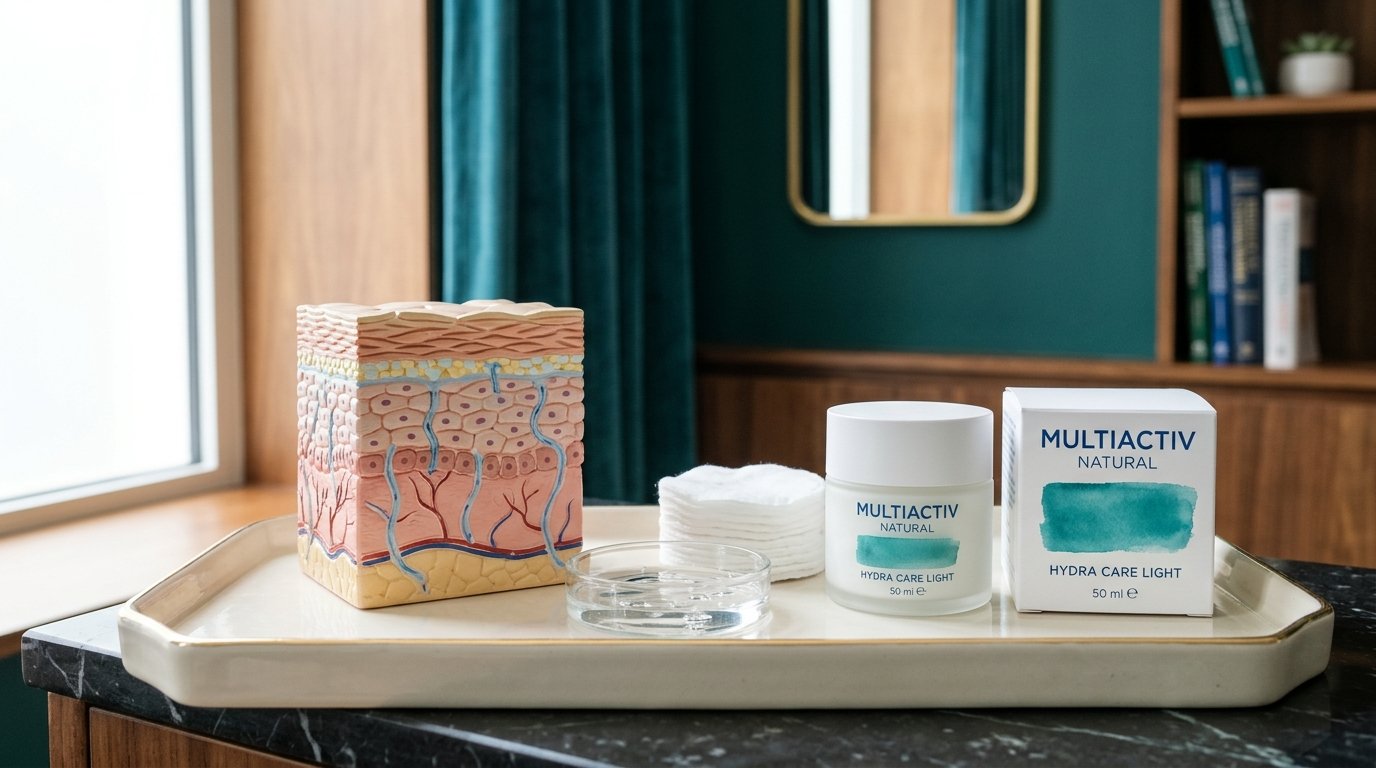
Editorial disclosure: the two skincare scenes are original AI editorial representations, not photographs of a real Skincare Center patient, employee, treatment room or outcome. Product packaging was visually checked against official or authorised brand references.