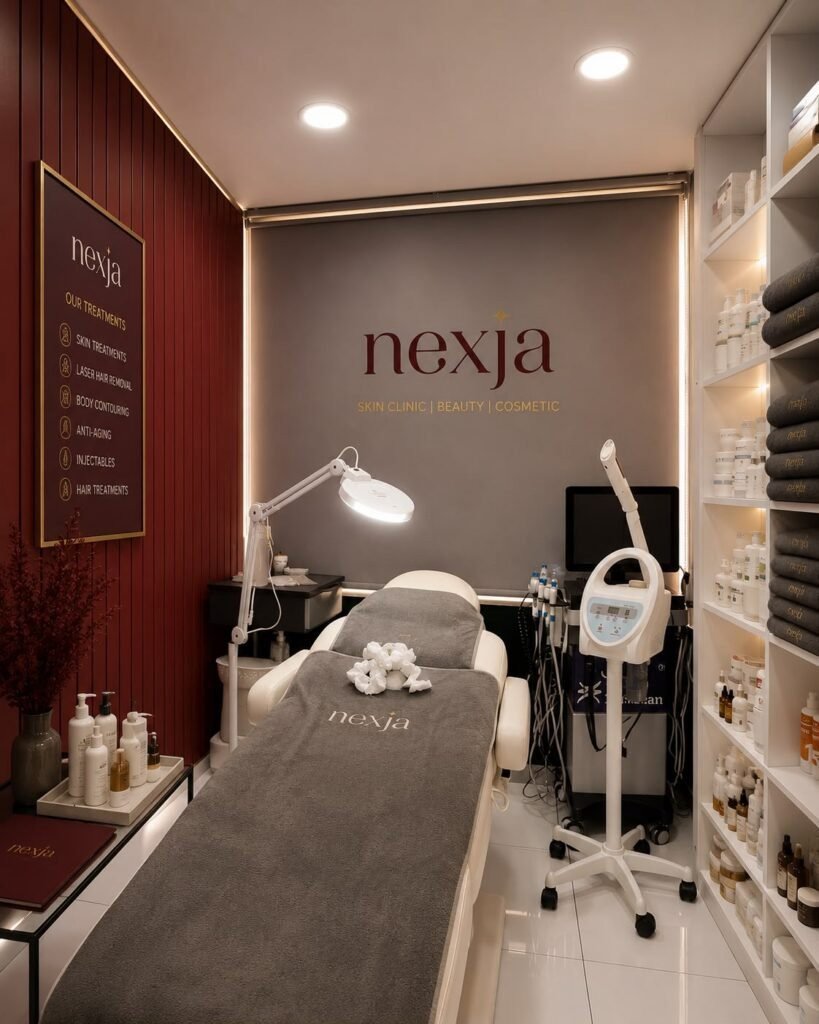
Direct answer: A person who describes their skin as sensitive may still be able to have a professional facial for sensitive skin, but “sensitive” is not a diagnosis and it is not permission to use every gentle-sounding protocol. The useful first step is a calm assessment of current symptoms, previous reactions, known conditions, medicines, recent procedures, sun exposure and the purpose of the appointment. A suitable outcome may be a simplified facial, a shorter contact time, fewer products, postponement, or referral for medical advice. If skin is actively burning, blistering, weeping, crusted, infected-looking, very swollen, newly painful, or accompanied by eye symptoms or feeling unwell, a routine cosmetic facial should not be used as a substitute for healthcare.
This guide is for residents and visitors comparing a facial for sensitive skin in Istanbul. It explains how to prepare for a useful consultation, how to distinguish ordinary sensitivity language from warning signs, and how to judge a proposed facial without assuming that “natural,” “hypoallergenic,” “professional,” or “barrier repair” guarantees safety. It does not diagnose rosacea, eczema, contact dermatitis, acne, allergy or infection. It also does not confirm that a named product, peel or device is suitable for you. Those decisions depend on the person, the product, the procedure and the condition of the skin on the day.
What “Sensitive Skin” Can Mean—and Why the Distinction Matters
“Sensitive skin” is a useful description of experience, but it can refer to several different patterns. One person means that fragranced cosmetics sting. Another means persistent facial redness. Someone else has a diagnosed inflammatory condition, while another has temporary dryness after a flight, cold weather or excessive exfoliation. A fifth person may be developing allergic contact dermatitis to an ingredient used for years. These situations do not have the same cause and should not automatically receive the same facial.
The practical question is not simply, “Is your skin sensitive?” It is: “What happens, where does it happen, how quickly, how long does it last, and what was applied or done before it started?” Stinging without visible change, itching with a rash, flushing after heat, scaling around the nose, deep tenderness, hives, and swelling are different reports. A provider should not diagnose them from a cosmetic consultation, but should recognize that the differences affect whether a routine facial is reasonable.
A stable history is also different from an active flare. A person whose skin has been comfortable for weeks and who can identify tolerated products may have a clearer baseline. A person who woke with a new rash, changed prescription treatment yesterday, or has worsening burning does not. “I usually tolerate facials” does not override a changed condition today. The day-of-treatment check is therefore not bureaucracy; it is part of selecting or postponing the service.
Barrier language is often used in beauty marketing. The skin barrier is real, but no single sensation or camera score proves that it is “damaged,” and no facial can be assumed to repair every underlying problem. A barrier-aware plan is more modest: reduce avoidable irritation, avoid unnecessary layers, use products whose purpose and ingredients can be explained, protect from excessive rubbing and heat, and refer when symptoms suggest that cosmetic care is not the right next step.
For a related concern that is often confused with sensitivity, read the dry vs dehydrated skin guide. It explains why oil level, water content and barrier comfort are not interchangeable. This article stays narrower: it owns the decision about reactive or uncomfortable skin across professional facials and does not diagnose a skin condition.
A Barrier-Aware Consultation Before Any Facial

A useful consultation begins with the current state of the skin, not the treatment menu. Describe when the concern began, whether it is stable or changing, and whether it affects the entire face or a defined area. Mention itching, burning, tightness, scaling, flushing, bumps, swelling, cracks, open areas, discharge and eye symptoms. Bring photographs only as supporting history; a photograph from last week cannot establish what is happening today.
List products used during the previous two to four weeks, especially new cleansers, acids, retinoids, scrubs, fragrance, essential oils, masks, acne products, hair dye, lash or brow products, sunscreens and topical medicines. Include products used near the face, not only on it. Shampoo, perfume, nail products and airborne fragrance can matter to some people. Do not stop prescribed medicine merely to qualify for a facial. Ask the prescriber when a medication question affects treatment planning.
Disclose known diagnoses and allergies without assuming that the provider will infer them. Rosacea, eczema, seborrhoeic dermatitis, psoriasis, acne, recurrent cold sores and previous contact allergy may alter the discussion. So may a history of prolonged dark marks after irritation, unusually slow healing, keloid scarring, or a severe reaction to a previous procedure. Pregnancy, recent illness and immune-suppressing treatment can also be relevant, but their importance depends on the proposed products and procedure.
Explain recent professional treatments: peels, waxing, threading, laser or light procedures, microneedling, injectables, surgery and prescription acne treatment. Give dates and areas. “A while ago” may not be precise enough when the skin is still recovering. If you do not know what was used, contact the previous provider rather than guessing. Product names, peel type, device model and aftercare instructions are more useful than a social-media description.
A professional assessment should also clarify your goal. Comfort, hydration, gentle cleansing, temporary surface smoothness, congestion management and pigment treatment are not interchangeable. If your goal requires a stronger procedure than your current skin can tolerate, the honest answer may be to stabilize or seek medical assessment first. A treatment should not be intensified simply because you have travelled, booked an event, or paid for a longer appointment.
| What to disclose | Why it matters | Useful next step |
|---|---|---|
| New or worsening rash | The cause is unknown and cosmetic products may obscure or aggravate it | Pause routine facial planning and seek appropriate clinical advice |
| Burning after a new product | Irritant or allergic reactions can look similar without assessment | Stop the suspected product, record ingredients and ask a clinician if persistent or severe |
| Stable sensitivity history | Previous tolerance helps identify a conservative baseline | Review tolerated products and adapt the facial rather than assuming a standard protocol |
| Recent peel, laser or needling | Skin may still be in a recovery phase even if it looks calm | Confirm the exact procedure and recovery instructions before adding another treatment |
| Eye pain, blurred vision or light sensitivity | Eye involvement can require urgent medical assessment | Do not proceed with a cosmetic facial; obtain medical care |
Reading Product Claims Without Treating Them as Proof
Labels such as “for sensitive skin,” “dermatologically tested,” “clean,” “organic,” “natural” and “hypoallergenic” can be starting points, not guarantees. The U.S. Food and Drug Administration notes that “hypoallergenic” is not defined by the FDA and that natural origin does not establish safety. Regulations vary by market, but the general decision lesson travels well: ask for the actual product, ingredient list, intended use and manufacturer instructions rather than relying on a reassuring adjective.
Fragrance deserves particular attention because it may irritate or trigger allergy in some people. “Unscented” does not necessarily mean fragrance-free; ingredients may be used to mask odor. Botanical extracts and essential oils can also contain fragrance-related substances. This does not mean every fragranced product is harmful or that every sensitive person must react. It means a history of fragrance reaction should be taken seriously and the product choice should be transparent.
Preservatives, dyes, metals and natural rubber are among the classes of cosmetic allergens described by the FDA. Preservatives also perform an important safety function, so “preservative-free” is not automatically better. The useful question is whether you have a known allergy or previous reaction, whether the product is used as directed, and whether the provider can identify what touches the skin.
Patch testing in dermatology is not the same as a casual spot test before a facial. Medical patch testing uses controlled allergen exposure and professional interpretation. A consumer product-use test may help identify obvious irritation, but a negative small-area test cannot guarantee that a full facial, longer contact time, occlusion, heat, massage or multiple combined products will be tolerated. Do not market a salon spot test as an allergy diagnosis.
The FDA overview of allergens in cosmetics explains why ingredient review and clinical evaluation may be needed after reactions. The American Academy of Dermatology product-testing guidance gives a cautious home approach for ordinary products while advising dermatology review for severe or hard-to-identify reactions.
When a Facial for Sensitive Skin May Be Adapted
Adaptation is reasonable when the skin is stable, there are no warning signs, the goal is compatible with conservative surface care, and the provider can explain each step. Adaptation should reduce exposure and uncertainty. It should not merely rename a standard facial “sensitive” while keeping the same exfoliation, heat, suction, fragrance, massage pressure and number of products.
A simplified facial may use fewer products, shorter contact times, lukewarm rather than hot water, gentle manual contact and no aggressive extraction. It may omit steam, scrubs, acids, strong enzymes, fragranced masks, essential oils and device steps that do not serve the agreed goal. Omitting an element is not a failure to deliver value. For reactive skin, restraint can be the most professional decision.
Massage should be discussed rather than assumed. The AAD advises people with rosacea to avoid rubbing, scrubbing or massaging irritated skin because friction can provoke a flare. Someone without rosacea may still find vigorous massage uncomfortable. If touch causes persistent burning or flushing, continuing because massage is included in the package is not sensible.
Temperature matters. Hot towels, steam, a warm room and a long face massage can add heat exposure. Heat is a common rosacea trigger, although triggers differ by person. A visitor who has walked uphill in warm weather or arrived from a crowded tram may already be flushed. Allowing the skin and body to settle before assessment can give a more useful baseline than beginning immediately.
Extraction is not automatically required. Pressure applied to inflamed or fragile skin may leave prolonged redness, marks or broken areas. If congestion is the main concern, that belongs to a separate decision about lesion type, technique and aftercare. Day 13 owns that detailed intent; the current guide only explains that sensitive skin is not a reason to extract more aggressively in order to “clean everything out.”
Hydration-focused products may improve comfort, but “hydrating” does not guarantee non-irritating. A serum can contain fragrance, botanical extracts, acids or preservatives that matter to a particular person. Occlusive masks can also increase contact. Ask what is being used and why. A provider who cannot identify the product should not rely on the general claim that it is professional-grade.
If a named Schrammek sensitive-skin service is discussed at Nexja, confirm the exact current products and protocol for that appointment. The live Schrammek Sensitive Care in Istanbul page establishes an enquiry route, not universal suitability. The assessment should determine which steps are included, omitted or deferred. Brand familiarity does not replace ingredient review or medical referral when symptoms require it.
How to Think About Exfoliation, Peels and “Gentle” Resurfacing
Exfoliation removes or loosens surface cells through mechanical, enzymatic or chemical means. The intensity depends on more than the marketing name: ingredient, concentration, pH, formulation, contact time, number of layers, preparation, application technique and the person’s skin all matter. A pumpkin-themed or herbal name does not tell you the full exposure.
Chemical peels range from superficial procedures with shorter recovery to medium and deep medical procedures with substantial aftercare. The AAD states that results and risks depend greatly on the skill of the person performing the peel and describes possible redness, pigment change and rare scarring. The AAD chemical-peel FAQ also emphasizes sun protection and contacting a dermatologist for burning, itching or swelling after a peel.
A person with reactive skin should not be told that visible peeling is proof of effectiveness or that burning must be endured. Sensation alone is not a reliable measure of benefit. Conversely, a treatment that feels mild is not automatically risk-free. Delayed reactions and pigment changes can occur. The provider should explain the expected endpoint and the stop criteria before applying the product.
Green Peel Energy and Pumpkin Peel are named offerings in Nexja’s broader menu, but neither should be classified as automatically gentle for every sensitive person. Exact formulations and instructions should be confirmed for the intended appointment. A history of eczema, rosacea, allergy, recent irritation or pigment change belongs in the decision. If the skin is actively inflamed or the diagnosis is unclear, postponement or medical advice can be more appropriate than choosing the mildest-sounding peel.
Do not layer home exfoliation before a professional procedure in an attempt to improve results. Retinoids, acids, scrubs and acne products may increase irritation depending on the product and person. Ask the provider and, for prescribed treatment, the prescriber. A blanket instruction to stop every active ingredient is also inappropriate because prescribed care should not be changed casually.
When to Delay a Facial
Delay is a positive clinical-safety outcome, not a customer-service failure. The purpose is to avoid adding products, friction, heat or procedures to skin whose condition is changing or unclear. A deposit, travel schedule or event does not make the skin more suitable. A responsible provider should have a clear process for communicating postponement and the next step.
Consider delay when there is a new unexplained rash, active burning, marked itching, swelling, blistering, weeping, crusting, open skin, sunburn, a cold sore in or near the treatment area, or a suspected infection. Delay may also be sensible after a recent procedure when recovery is incomplete or instructions prohibit additional treatment. The correct interval cannot be guessed from the category name alone; obtain the exact previous procedure and its aftercare plan.
A sudden acne-like eruption can have many causes and should not automatically be treated as ordinary congestion. Likewise, persistent redness is not always “sensitivity.” Contact dermatitis, rosacea, eczema, acne, folliculitis and other conditions may overlap visually. A facial practitioner should stay within scope: record what is observed, avoid diagnosing, and recommend medical evaluation when the presentation is uncertain or worsening.
Delay if the client cannot provide essential information about a recent peel, laser, microneedling session or injectable treatment and the proposed facial could interfere with recovery. The safest alternative is not to invent an interval. Contact the previous provider or relevant clinician. Once the information is available, the plan can be reassessed.
Travel can create temporary changes: dry cabin air, sleep disruption, climate shifts, sun exposure, new hotel products, masks, pollution and stress. These do not form one diagnosis. A post-flight facial should not be marketed as a guaranteed cure for “travel skin.” If symptoms are mild and stable, a conservative consultation may be reasonable; if they are new, severe or progressing, the uncertainty supports delay.
Events create pressure to proceed. Before a wedding, photography session or business meeting, a first-time peel, extraction-heavy facial or new product combination introduces uncertainty. A gentle service can also cause unexpected redness. Discuss timing, prior tolerance and the consequence of a reaction. Sometimes the best event preparation is to keep a familiar routine and postpone experimentation.
When Medical Advice Should Come Before Cosmetic Care
Seek medical advice when symptoms suggest disease, allergy, infection or eye involvement rather than a routine cosmetic concern. Warning signs include rapid worsening, significant facial swelling, hives, difficulty breathing, blistering, widespread rash, severe pain, fever, pus, spreading warmth and redness, or feeling unwell. Emergency symptoms such as breathing difficulty or severe allergic reaction require urgent care, not an appointment message.
Eye pain, blurred vision, light sensitivity, a very red eye or a gritty painful eye deserve prompt assessment. The NHS notes that these can be signs of serious eye involvement in a person with rosacea. A facial should not proceed around the eyes while waiting to see whether symptoms settle. Cosmetic staff should not recommend medication for them.
Persistent or recurrent reactions also merit evaluation. If several unrelated products appear to cause an itchy rash, allergic contact dermatitis may need investigation. A dermatologist or other qualified clinician can decide whether medical patch testing is appropriate. Trying a sequence of salon products can complicate the history and expose the skin to more potential triggers.
A changing mole, lesion that bleeds without explanation, non-healing area or new unusual growth should not be exfoliated or covered as a cosmetic step. It requires clinical assessment. The same principle applies to unexplained pigment change: a brightening facial cannot determine whether the finding is benign.
Medical advice is also useful when a known condition is poorly controlled, when prescription treatment has just changed, or when the person is unsure whether a procedure conflicts with healthcare. The goal is not to exclude people with skin conditions from every facial. It is to coordinate care and avoid presenting cosmetic treatment as disease management.
The AAD rosacea diagnosis and treatment guidance describes individualized medical plans, gentle skin care, sun protection and trigger management. These are useful boundaries: a professional facial may support comfort for some people when stable and cleared, but it is not a replacement for diagnosis or prescribed management.
Rosacea-Prone Skin: Comfort, Triggers and Limits
Rosacea can involve flushing, persistent redness, visible vessels, bumps and eye symptoms, but appearance varies. A cosmetic consultation should not diagnose it. If rosacea is known, ask about the person’s current control, triggers, prescribed plan and previous procedure responses. If it is only suspected, recommend clinical assessment rather than confirming the label.
The AAD advises gentle cleansing with fingertips, avoiding washcloths and facial sponges, moisturizing, using suitable sun protection and avoiding rubbing, scrubbing and massage when these irritate the skin. Its list of commonly irritating ingredients for rosacea includes fragrance, alcohol, camphor, menthol, glycolic acid, lactic acid, sodium lauryl sulfate and urea. This is not a universal allergy list; it is a practical screening reference.
Heat management matters during and after the appointment. Steam, hot towels, vigorous massage and a warm treatment room may trigger flushing for some. Istanbul travel can add sun, temperature changes and long outdoor walks. Ask about individual triggers and plan the day accordingly. A cool, calm environment and fewer steps may be more useful than a long ritual.
Sun protection should be discussed without assuming one sunscreen suits everyone. The AAD recommends broad-spectrum SPF 30 or higher for rosacea and notes that mineral filters may be better tolerated by some people. The person’s own clinician and product history remain important. Applying an unfamiliar sunscreen immediately after a facial can still cause a reaction.
Visible redness should not automatically be treated with a peel or scrub. Even when laser or light treatment is a legitimate medical option, device choice, operator skill, diagnosis, skin tone and expectations matter. Do not convert a facial consultation into a device recommendation without the appropriate assessment and verified local scope.
Eczema, Dermatitis and Known Allergy
Eczema and dermatitis describe inflammatory patterns that may include itching, dryness, cracking, scaling and oozing. Active areas can be vulnerable to further irritation and infection. A facial practitioner should not treat a flare as simple dehydration or promise that a mask will repair it. If the diagnosis or current management is unclear, medical advice comes first.
Contact dermatitis can be irritant or allergic. Irritant dermatitis may occur when exposure directly damages the skin; allergic contact dermatitis involves immune sensitization. They can look similar without clinical evaluation. Ingredient history, timing and distribution help a clinician investigate. A product tolerated in the past can still become a problem after sensitization, so “I have used it before” is useful but not decisive.
Known allergies require exact avoidance, not a general sensitive-skin label. Ask for ingredient lists and consider cross-contact through bowls, brushes, towels, gloves and shared equipment. The provider should know how products are stored and dispensed. If exact ingredients cannot be verified, do not improvise a substitute on the face.
Do not use medical patch-test results beyond their meaning. An allergen name may have synonyms or appear in compound ingredients, and interpretation belongs with the clinician. Bring the written results or avoidance list. A salon should not challenge the diagnosis because a favored professional brand claims to be hypoallergenic.
After an unexpected reaction, stop adding new actives and record what was used, in what order, for how long and on which areas. Photograph the product labels. Seek medical advice when severe, persistent or worsening. “Purging” and “detox” should not be used to dismiss an itchy, swollen or blistering response.
Acne, Congestion and Sensitive Skin Can Coexist
Oily or acne-prone skin can also be sensitive. Strong cleansing and repeated exfoliation may increase dryness and discomfort without resolving acne. If acne is inflammatory, painful, scarring or suddenly worsening, medical care may be more appropriate than extraction. A facial can support surface care for selected clients, but it does not replace evidence-based acne treatment.
Ask whether the person is using benzoyl peroxide, retinoids, acids, antibiotics, isotretinoin or other prescribed treatment. Do not give blanket stop instructions. Product timing and procedure suitability should be discussed with the prescriber where necessary. The goal is to avoid both over-treatment and interruption of useful medical care.
Extraction decisions should consider lesion type and skin response. Closed comedones, inflamed papules, pustules, cysts and dermatitis-like bumps are not interchangeable. Forceful extraction can cause trauma, prolonged redness and pigment change. A provider should explain what will and will not be touched and obtain consent before beginning.
If the main concern is blackheads or congestion, use the separate professional-care guide for acne-prone skin and the Skin Science archive. This article does not reproduce the full congestion decision.
Skin Tone, Post-Inflammatory Marks and Conservative Planning
Inflammation can leave darker or lighter marks, and the risk and visibility differ among people. Ask whether minor irritation, acne or previous procedures left long-lasting color change. This history may influence the choice and intensity of a facial or peel. Skin tone alone does not decide suitability, but it belongs in a complete assessment.
Do not promise that a gentle facial cannot cause pigment change. Friction, extraction, burns and dermatitis can all create inflammation. Conversely, do not exclude darker skin from all professional care. The correct approach is provider experience, product and procedure knowledge, conservative selection and clear aftercare.
Sun exposure before and after treatment matters. Istanbul sightseeing can involve hours outdoors even in cooler months. A client who plans a Bosphorus tour, long walk in the Historic Peninsula or beach travel should mention it. Treatment timing may need adjustment, especially for exfoliating procedures whose instructions require strict sun protection.
Photographs can document baseline color and distribution, but lighting and camera processing distort tone. They should not be used to promise a result. Consistent images, if consented to, are more useful for monitoring than dramatic before-and-after lighting.
How to Compare a Sensitive-Skin Facial Proposal
| Question | Reassuring answer | Reason to pause |
|---|---|---|
| What is the goal? | A specific comfort or surface-care goal with limits | Claims to cure rosacea, eczema, allergy or every type of redness |
| Which products touch my skin? | Names, ingredient lists and purpose are available | Products are unidentified or described only as “medical grade” |
| What will be omitted? | Steam, scrub, acids, extraction or massage can be removed when unsuitable | Every step is mandatory because it is part of the package |
| What are the stop criteria? | Unexpected burning, pain, swelling or skin change prompts reassessment | You are told discomfort proves that the treatment works |
| What happens if my skin is flaring? | Postponement or referral is possible | Payment or travel is used as a reason to proceed |
| What is the aftercare? | Simple written instructions tied to the actual procedure | A large unverified product bundle or vague “detox” explanation |
Price and duration should not be used as proxies for suitability. A ninety-minute facial can contain more exposure, not necessarily more value. A shorter, carefully selected service may be more appropriate. Ask what the fee includes, whether consultation time is included, and what happens if the treatment must be adapted or postponed.
Provider identity matters. Confirm who assesses the skin, who performs the service and who handles a reaction. Do not infer medical credentials from the word “clinic,” uniforms or device photographs. Where medical diagnosis, prescription treatment or a medical procedure is required, confirm the qualified clinician and local scope.
Hygiene should be visible and explainable: hand hygiene, clean linens, appropriate disinfection, single-use items where applicable, safe product dispensing and a process for contaminated tools. Sensitive skin does not require a different standard; it makes careful implementation especially important.
Consent should be specific. You should know whether the appointment includes extraction, exfoliation, suction, heat, massage or a peel. Consent to a facial is not automatic consent to every add-on. A change during the appointment should be explained before it happens.
Planning a Sensitive-Skin Facial in Istanbul
Istanbul’s size, traffic, climate and travel patterns affect practical planning, but they do not determine skin diagnosis. Nexja is in Fatih. Confirm the actual address and journey time rather than assuming that “central Istanbul” means a short walk. Allow time to arrive without rushing and to complete consultation before any treatment.
If you are flying, avoid promising that a facial immediately after landing will reverse dehydration or fatigue. Cabin conditions may make skin feel tight, but new redness or rash may also reflect products, masks, illness or another trigger. Bring your usual gentle products and product list. Do not test multiple hotel toiletries before the appointment.
Plan outdoor activity around the chosen procedure. Even a surface facial may leave temporary redness, while a peel may require stricter care. Discuss sun, heat, hammam, sauna, swimming, exercise, makeup and long sightseeing days. Written instructions should be procedure-specific rather than copied from a generic facial card.
Do not schedule an unfamiliar procedure immediately before a flight or event without considering how you would obtain help if a reaction developed. Visitors should know how to contact the provider after leaving Istanbul and where to seek medical care at home. Continuity matters more than fitting every desired service into one trip.
For appointment enquiries, use the verified service index or Nexja contact route. Do not treat messaging as medical diagnosis. Send concise history and photographs if requested, but expect the final decision to depend on in-person assessment and the condition of the skin that day.
Preparation: A Conservative Checklist
- Keep your routine stable; do not introduce several new products in the week before the appointment.
- Write down prescription and non-prescription products, medicines, allergies and recent procedures.
- Do not stop prescribed treatment without asking the prescriber.
- Avoid deliberate tanning and report recent sunburn or significant exposure.
- Report a new rash, cold sore, open area, infection, swelling or eye symptom before travelling to the appointment.
- Bring ingredient or product information for items that previously caused a reaction.
- Explain timing constraints honestly, including flights, events, hammam, swimming and outdoor plans.
- Ask which steps are optional and what will happen if the skin is unsuitable on the day.
Preparation should not become a complicated “skin reset.” Excessive cleansing, scrubbing or fasting from moisturizer can worsen discomfort. The aim is to preserve a readable baseline. If the provider gives procedure-specific instructions, confirm that they apply to the actual service being considered.
During the Appointment: Communication and Stop Criteria
Describe sensations in real time. Mild coolness, wetness or transient tingling may be expected for some products, but the provider should have explained the expected range. Increasing burning, sharp pain, intense itching, swelling or a visible rapid change should prompt stopping and reassessment. You do not need to endure discomfort to be polite.
The provider should observe the skin throughout rather than leave a first-time product unattended. Timers, contact times and removal methods should follow product instructions. Neutralization or rinsing requirements vary. Improvising based on how the client feels is not enough.
Adding products to “calm” a reaction can increase uncertainty. The first response is to stop the suspected exposure and follow the appropriate product and safety procedure. Severe or progressing symptoms require medical care. A cosmetic practitioner should not prescribe medication or dismiss the reaction as detoxification.
Document what was actually used. A treatment record should include product names, relevant batch information when available, contact times, device settings if applicable, observed response and aftercare. This helps follow-up and gives a clinician useful information if a reaction occurs.
Aftercare: Simplicity, Observation and Escalation
Aftercare should match the treatment. For a conservative facial, a familiar gentle cleanser, moisturizer and suitable sun protection may be enough. A peel can require different instructions. Avoid automatically layering acids, retinoids, scrubs, fragranced masks and new actives onto skin that feels reactive.
Temporary mild redness can occur, but ask how long it is expected to last and what would be unusual. Photograph worsening changes in consistent light and contact the provider. Seek healthcare for severe, spreading, painful, blistering, swollen or systemic reactions rather than waiting for a routine check.
Do not pick scaling skin or use exfoliation to accelerate shedding. The AAD warns that scratching or picking after a peel can increase infection or scarring risk. Follow the written plan and protect from sun as directed. If instructions conflict with prescribed skin care, ask the relevant clinician.
Avoid attributing every breakout to purging. A new eruption can be occlusion, irritation, allergy, acne or another issue. Record timing, location and products. Persistent or severe changes deserve evaluation.
Eight Realistic Planning Scenarios
The following scenarios are decision examples, not diagnoses or promises. They show how the same menu item can lead to a different decision when timing, symptoms, medicines or follow-up change. A provider should still assess the individual and remain within professional scope.
Scenario 1: Stable dryness before an ordinary working week
A client reports dry, easily tight skin but no current rash, swelling, open areas, pain or recent reaction. She has used the same fragrance-free cleanser and moisturiser for months and wants a comfortable, hydrated appearance rather than peeling or extraction. This may be a reasonable setting for a deliberately simple appointment: gentle cleansing, limited handling and familiar barrier-supportive products, with heat, scrubs, acids and aggressive massage omitted. The provider should still explain that temporary comfort is different from treating eczema or repairing every cause of dryness.
The plan becomes safer because the goal is modest, the skin is stable and the client can observe it afterward. It would become less appropriate if she disclosed a new prescription, recent sunburn, cracking, marked itch or a rapidly changing rash. The clinical lesson is that “dry” does not automatically mean “sensitive,” and “sensitive” does not automatically require a complex rescue facial.
Scenario 2: A new burning reaction after a product launch
A visitor started a new vitamin C serum, exfoliating toner and fragranced cream in the same week. Her face now burns during washing and looks patchily red. She asks for a calming facial before photographs. This is a delay situation. Adding more products makes it harder to identify the trigger and could intensify irritation. The sensible response is to stop experimenting, document the products and timing, simplify care, and seek medical advice if symptoms persist or worsen. A cosmetic provider should not promise to “neutralise” the reaction in one session.
Even if redness looks mild under studio lighting, the history matters. Water stinging and several simultaneous exposures make the cause uncertain. A short-notice event does not reduce biological risk. Photographs can be rescheduled or handled cosmetically later; an avoidable escalation may last beyond the event.
Scenario 3: Rosacea that is diagnosed and currently quiet
A client has a dermatologist-confirmed rosacea diagnosis, follows a stable treatment plan and reports no current flare. Heat and vigorous rubbing are known triggers. She wants a low-manipulation facial. The provider should not reinterpret the diagnosis, stop treatment or promise to treat rosacea. A possible adapted plan would avoid steam, hot towels, abrasive exfoliation and prolonged massage, use a small number of familiar products, and maintain a clear stop rule if flushing or burning increases.
The appointment remains elective. If ocular symptoms, new papules, persistent warmth or an unfamiliar flare appear, the balance shifts toward postponement and clinical advice. The distinction between stable disease and active symptoms should be recorded rather than assumed from a single photograph.
Scenario 4: A first peel between flights
An international visitor has one free afternoon in Istanbul and flies long-haul the next morning. She has never used the proposed peel and cannot attend follow-up. Even if the product is marketed as mild, this is poor timing for a first exposure. Cabin dryness, travel stress, sunlight, uncertain access to aftercare and the inability to review the skin locally all reduce the margin for error. A non-procedural consultation or no treatment may be more valuable than forcing a peel into the itinerary.
If the visitor still wants a service, the provider should distinguish a basic comfort-focused facial from resurfacing and should not quietly substitute one for the other. Written aftercare and warning signs remain necessary, but documentation does not make an unsuitable schedule suitable.
Scenario 5: Congestion plus easy redness
A client describes blackheads around the nose and cheeks that flush after washing. The temptation is to combine strong degreasing, suction, manual extraction and acid exfoliation. That combination may create more inflammation than benefit. The provider should identify which lesions are actually extractable, avoid inflamed or uncertain bumps, and decide whether the client’s priority is congestion, comfort or both. Limited treatment of a small area may be more defensible than a full-face intensive protocol.
Persistent inflammatory acne, scarring, painful nodules or a rash around the mouth needs a different pathway. The professional-care guide for acne-prone skin can help separate broad cosmetic-care questions, but it cannot diagnose the person reading it.
Scenario 6: Known fragrance allergy with incomplete product information
A client has documented fragrance allergy and carries an avoidance list, but the provider cannot obtain complete ingredient lists for two masks in the proposed protocol. Descriptions such as botanical, clean, calming or hypoallergenic do not close that information gap. The correct decision is to omit uncertain products or delay the service until ingredient information is available. Smelling the jar is not a reliable allergy test, and a small application immediately before a full facial is not equivalent to medical patch testing.
A transparent limitation is a sign of professional judgment. The provider can offer a consultation, record the allergy and help the client compare ingredient lists without claiming that a product is safe merely because no fragrance is obvious.
Scenario 7: Recent prescription change
A client recently began a prescription topical medicine and reports mild peeling. She is unsure whether to stop it for a facial. The cosmetic provider should not instruct her to discontinue prescribed treatment. The exact medicine, reason for use, application area, prescriber guidance and proposed facial all matter. If the interaction or recovery risk is uncertain, the facial should wait until the prescriber or treating clinician has advised appropriately.
This approach prevents the appointment from competing with medical care. It also avoids the common mistake of using one internet interval for every retinoid, steroid, acne medicine or immunomodulator. The relevant question is not simply “How many days should I stop?” but “Is this procedure appropriate while this treatment and current reaction are present?”
Scenario 8: Previous good experience, different formula
A client tolerated a branded facial two years ago and assumes the same name guarantees the same experience now. Formulas, regional products, optional boosters, equipment settings and provider technique can change. The clinic should identify the current products and steps instead of relying on the historic label. Previous tolerance is useful information, but it is not a lifetime clearance.
If an exact branded model or product is discussed, the current manufacturer information should be checked. Where that cannot be done, a general unbranded description is more honest than implying verified equivalence. This is especially important for image-based marketing: a generated picture must not present a fictional device or package as an authentic branded product.
How to Build a One-Page Sensitive-Skin Record
A short record improves decisions across appointments and is especially useful for people who travel, see more than one provider or react intermittently. It does not need to become a self-diagnosis diary. Its purpose is to preserve facts that are otherwise forgotten when the skin looks normal.
- Baseline: note whether the skin is usually dry, oily, acne-prone, flush-prone or symptom-free, and which areas are affected.
- Diagnoses: list clinician-confirmed conditions separately from personal suspicions.
- Medicines: record prescription and non-prescription oral and topical treatments, dose or strength when known, and recent changes.
- Known allergies: include the substance, how it was confirmed and the reaction pattern. Keep formal patch-test results if available.
- Recent procedures: note peels, lasers, microneedling, waxing, threading, injectables, surgery and significant sun exposure with dates.
- Product timeline: record the full name of each new product and the date it was introduced. Add one new product at a time when practical.
- Reaction timeline: document onset, sensation, distribution, photographs and what improved or worsened it.
- Reliable products: list cleansers, moisturisers, sunscreens and makeup already tolerated rather than assuming a clinic alternative will be equivalent.
- Trigger pattern: note heat, exercise, alcohol, spicy food, weather, stress, shaving, fragrance or other repeatable triggers without treating correlation as proof.
- Follow-up plan: keep the provider’s contact details, written aftercare and the threshold for medical help.
Bring this record to the consultation and update it after the appointment. Ask the provider to document the exact products, treatment areas, contact time, settings where relevant, and any step that was omitted. If a reaction occurs, this information is more useful than the menu name alone. It also supports a cautious re-challenge decision by a qualified clinician when that is appropriate; clients should not independently re-test a product that caused a serious reaction.
A Practical Consent Conversation
Consent is not a signature collected after the treatment has already been chosen. For sensitive or reactive skin, it should be a short conversation in plain language. The provider explains the goal, the proposed steps, realistic benefit, common temporary effects, relevant risks, alternatives, reasons to postpone and what happens if the skin reacts. The client has time to ask questions and can decline an optional step without pressure.
A useful consent conversation includes uncertainty. For example: “Your skin is stable today, but no product can be guaranteed not to irritate. We can simplify the service, omit exfoliation and stop if burning or flushing increases.” This is more informative than saying a facial is completely safe or designed for all sensitive skin. Where a named protocol is used, the client should know whether it is being followed as published or deliberately modified.
Consent should be renewed if the plan changes. If the provider discovers fragile areas, unexpected inflammation or incomplete medical information, adding a different peel or device is not a harmless upgrade. The safer options are to omit the step, pause for clarification or postpone. A client’s willingness to continue does not remove the provider’s duty to remain within scope.
Photographs deserve separate consent. Clinical documentation images should be distinguished from marketing images. A client should know where images will be stored and whether they may be published. AI-generated visuals used in this article are illustrative and must not be represented as a real Nexja patient, clinic interior or treatment result.
Myths vs Facts
Myth 1: Sensitive skin is one skin type with one facial protocol.
Fact: Sensitivity can describe stinging, flushing, allergy, dryness, a diagnosed condition or a temporary reaction. A protocol should respond to the person’s current history and findings, not merely the label.
Myth 2: A product marked “hypoallergenic” cannot cause a reaction.
Fact: The FDA does not define hypoallergenic for cosmetics. Any person may react to a particular ingredient. Ingredient transparency and history matter more than the claim alone.
Myth 3: Natural ingredients are always safer.
Fact: Natural origin does not establish safety. Botanical extracts and essential oils can irritate or cause allergy. Synthetic ingredients are not automatically harsher.
Myth 4: Burning means a peel is working.
Fact: Sensation is not a reliable measure of benefit. The provider should define the expected endpoint and stop criteria. Unexpected or increasing burning needs reassessment.
Myth 5: Every red face needs a soothing facial.
Fact: Redness may have many causes, including rosacea, dermatitis, sunburn, allergy or infection. New, painful or worsening redness can need medical assessment.
Myth 6: A patch test guarantees a full facial will be safe.
Fact: A small-area product test does not reproduce full-face exposure, multiple layers, heat, massage or longer contact. Medical patch testing is a different diagnostic process.
Myth 7: Sensitive skin should never receive professional care.
Fact: Some people can have adapted care when stable and appropriately assessed. The point is selection, not blanket exclusion or blanket permission.
Myth 8: More steps mean a more premium facial.
Fact: Every extra product or procedure adds exposure. A carefully simplified service can be more appropriate and more professional.
Myth 9: A first-time peel is ideal just before an event.
Fact: Even mild procedures can cause unexpected redness or scaling. Timing should allow recovery and support if a reaction occurs.
Myth 10: A professional facial can diagnose or treat rosacea or eczema.
Fact: Cosmetic care does not replace medical diagnosis or treatment. It may support comfort for selected stable clients when consistent with medical advice.
Frequently Asked Questions
1. Can sensitive skin have a professional facial?
Yes, sometimes. The decision depends on what “sensitive” means for you, whether symptoms are stable, what products and procedures are proposed, and whether warning signs are present. A suitable appointment may be simplified and may omit steam, exfoliation, extraction, fragrance, strong massage or devices. If you have a new rash, active flare, swelling, blistering, infection, severe pain or eye symptoms, postpone cosmetic care and seek appropriate advice. Ask the provider to explain each step and the reason it fits your goal.
2. What is the best facial for sensitive skin?
There is no universal best facial. A product tolerated by one person may irritate another, and a facial appropriate during a stable period may be unsuitable during a flare. Start with your goal and history. A conservative surface-care plan with fewer known products may be reasonable, but the exact choice should follow assessment. Avoid choosing solely by words such as calming, natural or hypoallergenic. The best outcome may also be no treatment that day.
3. How do I know whether my skin is sensitive or allergic?
You cannot reliably diagnose the difference from sensation alone. Irritation often causes burning or stinging; allergic contact dermatitis commonly causes an itchy rash, but patterns overlap. Timing, distribution, ingredient exposure and clinical examination matter. Stop the suspected product and seek medical advice when the reaction is severe, persistent, recurrent or hard to identify. A dermatologist may recommend formal patch testing. A salon spot test is not a diagnosis.
4. Should I stop retinol before a facial?
It depends on the product, strength, frequency, your skin response and the facial. Do not stop prescribed retinoids without consulting the prescriber. Tell the provider exactly what you use and when you last applied it. Exfoliating or resurfacing steps may require different planning than a simple cleansing and moisturizing service. Ask for written preparation instructions tied to the actual protocol rather than following a generic internet interval.
5. Can I have a facial during a rosacea flare?
A routine facial is not a substitute for rosacea treatment. During an active flare, heat, friction, massage and unfamiliar products may worsen discomfort. Contact the clinician managing your rosacea or seek assessment if the diagnosis is uncertain. Once stable, some people may tolerate adapted care, but the provider should understand your triggers and prescribed plan. Eye pain, blurred vision or light sensitivity needs prompt medical attention.
6. Is steam bad for sensitive skin?
Steam adds heat, and heat can trigger flushing for some people, particularly those with rosacea. It can also feel uncomfortable on dry or inflamed skin. Steam is not essential to every facial and can be omitted. Your own history is useful: report whether hot showers, sauna, exercise or weather trigger redness. A provider should not insist that pores must be “opened” with steam; pores do not open and close like doors.
7. Are extractions safe for reactive skin?
They may be unsuitable when skin is inflamed, fragile or easily marked. The provider should identify what is being treated, use appropriate technique and avoid forcing lesions. Painful cysts, pustules, dermatitis-like bumps and unexplained eruptions should not be treated as ordinary blackheads. Ask what may be extracted and what will be left alone. Persistent acne or scarring deserves medical evaluation.
8. Is fragrance-free the same as unscented?
Not necessarily. Unscented products may contain ingredients that mask odor, while fragrance-free is intended to indicate no fragrance ingredients, although labeling rules differ. If you have a known fragrance allergy, review the full ingredient list and follow your clinician’s avoidance guidance. Do not rely only on the front label or the product’s smell.
9. Can a natural or organic facial still irritate me?
Yes. Plant extracts, essential oils, fruit acids and other natural ingredients can irritate or cause allergy. Organic certification describes production standards, not personal tolerance. Ask for ingredient lists and avoid substances linked to previous reactions. A provider should be willing to remove a botanical step rather than argue that natural ingredients cannot be harmful.
10. Should I test every product before my facial?
For home products, the AAD describes repeated small-area testing over seven to ten days as a cautious approach. A quick test immediately before a facial has limits and cannot guarantee tolerance to a full protocol. If you have known allergy or repeated unexplained reactions, medical advice may be more useful than testing a series of salon products. The provider should still identify all products planned.
11. Can I have a facial after a flight to Istanbul?
Possibly, if your skin is stable and the service is conservative. Flying can coincide with dryness, fatigue, climate change and use of unfamiliar products, but it does not create one predictable condition. If you have a new rash, swelling, cold sore, sunburn or worsening irritation, postpone. Allow time to rest, hydrate normally and attend a proper consultation rather than booking a strong peel immediately after landing.
12. How long before an event should I book?
There is no universal interval because services and reactions differ. A familiar gentle facial usually presents less uncertainty than a first-time peel or extraction-heavy treatment, but even gentle care can cause redness. Discuss the specific procedure, your history and the importance of the event. Avoid first-time aggressive treatment close to photography, travel or a wedding. Build in enough time to recover and obtain help if needed.
13. Can a peel be made gentle enough for everyone?
No. Peel strength and risk depend on formulation, concentration, pH, contact time, preparation, technique and the person’s skin. A superficial label does not create universal suitability. Active inflammation, recent procedures, certain medicines or a history of pigment change may alter the decision. Ask for the exact peel and why it is proposed. If the skin is flaring or the diagnosis is unclear, delay.
14. Is Pumpkin Peel automatically suitable for sensitive skin?
No. A pumpkin-themed name does not establish intensity or tolerance. Confirm the exact current product, ingredients and instructions. Discuss prior reactions, active conditions and recent exfoliation. It may be an option for selected people, but it should not be presented as universally gentle. This guide does not verify a specific formula for your appointment.
15. Is Green Peel Energy a sensitive-skin facial?
It should not be classified that way for everyone. It is a named professional protocol whose exact suitability depends on the current formulation, provider training, intended goal and the client’s skin. Confirm what will be used and expected recovery. A known brand does not override an active flare, allergy history or medical advice. Do not proceed merely because the protocol is herbal.
16. Can Hydrafacial be adapted for sensitive skin?
Some elements may be adjustable, but the exact machine, tips, suction, solutions and add-ons need review. “Hydrafacial” is not one identical exposure in every clinic. Ask which steps and products are planned and whether exfoliation, extraction or boosters can be omitted. Broad suitability claims should not replace assessment. If rosacea, dermatitis or another condition is active, obtain appropriate advice before treatment.
17. What should I tell the provider about medicines?
Provide a complete list of prescription and non-prescription medicines and topical treatments, including recent changes. Do not stop them independently. The provider should use the information to decide whether the proposed cosmetic procedure is within scope and whether prescriber guidance is needed. If someone tells you to stop an important medicine merely to qualify for a facial, confirm that advice with the prescriber.
18. What if my face stings when I apply water?
Marked stinging with water suggests that the skin is very uncomfortable and may be actively irritated. Avoid using a routine facial to test how much it can tolerate. Keep care simple, stop suspected new products and seek professional medical advice if symptoms persist, worsen or include visible rash, swelling or cracking. The priority is identifying and calming the problem, not completing a booking.
19. What if I develop hives or facial swelling?
Stop the suspected exposure. Significant facial swelling, breathing difficulty, wheezing, trouble swallowing, dizziness or widespread hives can signal a serious allergic reaction and requires urgent medical care. Do not wait for the salon to respond or apply additional masks. For milder but persistent swelling or hives, contact a healthcare professional and document the products used.
20. Can a facial repair my skin barrier in one session?
A facial may temporarily improve comfort or surface hydration, but it cannot be assumed to repair every cause of sensitivity in one visit. Barrier function is influenced by products, environment, inflammation and medical conditions. A useful appointment may reduce avoidable irritation and support a simple routine. Be cautious with guaranteed repair claims or dramatic camera scores that are not linked to a validated clinical assessment.
21. Should sensitive skin avoid all acids?
Not automatically, but acids require product-specific and person-specific judgment. Some people with stable skin tolerate selected formulations; others react strongly. Concentration, pH, vehicle, frequency and combination matter. People with rosacea may find glycolic or lactic acid irritating, according to AAD guidance. Do not experiment during a flare, and do not equate a low percentage with guaranteed safety.
22. Is tingling normal during a facial?
Some products may cause brief mild tingling, but the expected sensation should be explained beforehand. Increasing burning, sharp pain, intense itching or swelling is not something to endure silently. Tell the provider immediately. The provider should stop, remove the product appropriately and assess. Sensation is not proof that an ingredient is effective.
23. Can I wear makeup after a sensitive-skin facial?
It depends on what was done and how the skin responds. After simple non-invasive care, familiar makeup may be possible, but applying products to red or uncomfortable skin can add exposure. Peels and other procedures have specific timing. Follow written instructions and use products you already tolerate. Do not test a new foundation immediately after treatment.
24. How should I choose sunscreen after the facial?
Use the provider’s procedure-specific advice and your known tolerance. Broad-spectrum protection is important, especially after exfoliation. For rosacea-prone skin, the AAD notes that zinc oxide or titanium dioxide and fragrance-free formulations may be better tolerated by some. A mineral label is not a guarantee. Patch-test ordinary new products in advance when practical and seek advice for repeated reactions.
25. What if my skin looks worse the next day?
Contact the provider with photographs and a description of timing, sensation and products used. Stop adding new actives. Mild transient redness may be expected after some procedures, but worsening pain, swelling, blistering, discharge, spreading heat, fever or feeling unwell needs medical assessment. Do not accept “detox” as the only explanation for a significant reaction.
26. Can men have the same sensitive-skin facial?
Gender does not determine one protocol. Shaving, beard products, folliculitis, fragrance and recent hair removal may affect the assessment. Report razor burn, cuts and products used. The provider should adapt to the skin’s condition and goal rather than applying a gendered menu. Avoid exfoliating or extracting over actively irritated shaving areas.
27. Does oily skin need stronger cleansing even if it is sensitive?
No. Oiliness does not prove that the barrier can tolerate harsh cleansing. Strong degreasing may increase tightness and irritation while oil production continues. Use a gentle approach and assess acne, congestion and dermatitis separately. A squeaky-clean sensation is not a clinical endpoint. Persistent inflammatory acne should be evaluated appropriately.
28. How can international visitors plan follow-up?
Ask for written product names, treatment details, expected recovery, warning signs and contact instructions. Know who will respond after you leave Istanbul and when you should seek local medical care. Avoid procedures whose follow-up you cannot reasonably support during travel. Keep records accessible and do not rely only on disappearing messages or verbal instructions.
29. What questions should I ask at Nexja?
Ask what the proposed facial is intended to do, which exact products and steps will be used, what can be omitted, what would make the team postpone, and what aftercare is required. Share diagnoses, reactions, medicines and recent procedures. If discussing Schrammek or a named peel, confirm the current protocol rather than assuming the brand alone establishes suitability.
30. What is the safest outcome if the provider is unsure?
Pause. Uncertainty should not be covered with a generic soothing mask or a weaker peel. The provider can document the concern, recommend medical assessment or request more information about previous treatments. Once the skin is stable and the relevant advice is available, a conservative plan can be reconsidered. Postponement protects the client and preserves the possibility of better treatment later.
What Good Follow-Up Looks Like
Follow-up should be proportionate to what was done. A simple, non-invasive facial may need only written instructions and a contact route, while a peel or a reaction during treatment may justify a planned check-in. The provider should state the expected timeline in concrete language: whether mild tightness, redness or flaking is possible; when it should begin to improve; and which changes are not expected. Vague statements such as “your skin is purging” should not replace assessment of a worsening reaction.
Clients can support follow-up by taking photographs in similar lighting, noting the time symptoms began, and listing everything applied afterward. They should avoid layering several corrective products in response to discomfort because that obscures the cause and can add irritation. The provider should record what was used rather than relying on memory or a generic menu description.
Seek appropriate medical care rather than waiting for a routine salon reply when there is severe or increasing pain, marked swelling, blistering, spreading redness or warmth, discharge, fever, breathing difficulty, eye pain, light sensitivity, blurred vision or a rapidly worsening rash. Emergency symptoms require emergency services. These thresholds are not intended to diagnose the problem; they ensure that cosmetic follow-up does not delay care.
If the skin settles, the review should still ask what can be learned. Was the appointment too close to another procedure? Was a new product introduced? Was heat or friction a likely trigger? Was the exact formula recorded? The next plan might remove one step, use a familiar product, shorten contact, treat a smaller area, postpone longer or avoid the procedure entirely. Repeating the identical protocol simply because symptoms resolved is not evidence-based troubleshooting.
Questions to Send Before Booking
A short written message can prevent a wasted journey and gives the provider time to check product information. Clients may adapt the following questions:
- Do you assess active redness, stinging, rash, allergies, medicines and recent procedures before confirming the facial?
- Which exact products, exfoliants, devices, heat steps and optional boosters are planned?
- Can steam, fragrance, exfoliation, extraction, suction or massage be omitted without substituting another unapproved step?
- What findings would make you postpone and recommend medical advice?
- Is the service intended for temporary comfort, cleansing, congestion or resurfacing, and what outcome is realistic?
- What temporary effects and recovery are expected, and who provides follow-up?
- If a named protocol is advertised, is the current formula and official method being used, and is it being modified?
- Can I receive the product names, ingredient lists and aftercare in writing?
A professional answer may include limits or a request for more information. Immediate certainty without history, pressure to prepay a high-intensity procedure, refusal to disclose products, or a promise that allergy is impossible should prompt caution. The purpose of these questions is not to force a provider to guarantee safety; it is to see whether the decision process is transparent and responsive.
Decision Summary
A professional facial for sensitive skin should be a decision process, not a fixed ritual. Begin with current symptoms and history. Identify the goal. Verify products and procedures. Remove unnecessary exposure. Agree on stop criteria and aftercare. Delay when the skin is actively inflamed, changing or recovering. Seek medical advice when symptoms suggest allergy, infection, eye involvement, uncontrolled disease or another condition outside cosmetic scope.
In Istanbul, practical planning includes travel, sun, heat, events and follow-up, but none of these replaces assessment. Nexja’s verified location is Fatih, and the current skin-care index provides an enquiry route. The honest promise is not that every sensitive client will receive the same service. It is that adaptation, postponement and referral are valid outcomes when they better protect the person’s skin.
Sources and Further Reading
- American Academy of Dermatology: Chemical peels FAQ
- American Academy of Dermatology: Rosacea skin-care tips
- American Academy of Dermatology: How to test skin-care products
- American Academy of Dermatology: Rosacea diagnosis and treatment
- NHS: Rosacea
- U.S. FDA: Allergens in cosmetics
- U.S. FDA: Using cosmetics safely