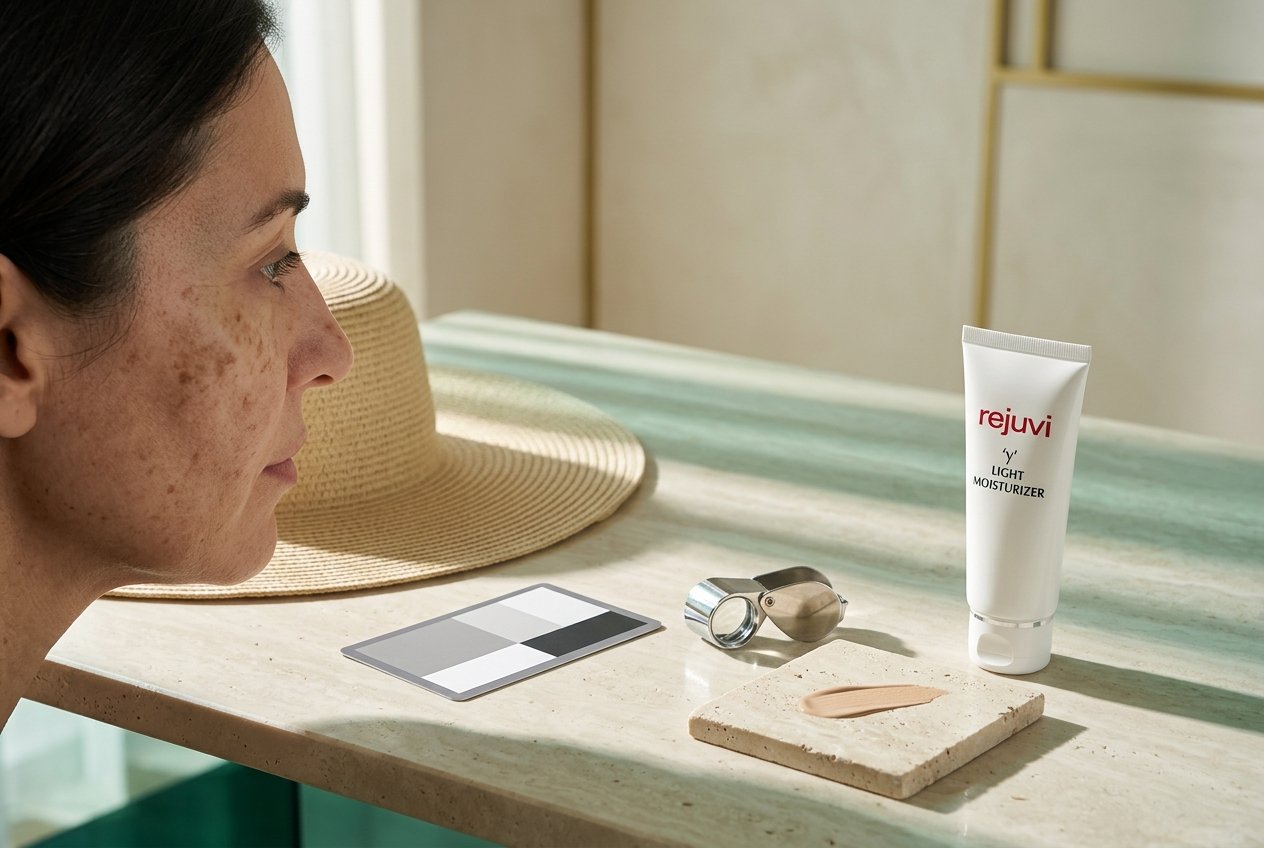
Pigmentation treatment in Istanbul should begin with a careful assessment of what the colour change is, what may be driving it, how deeply the pigment appears to sit, and how readily your skin develops new marks after irritation. “Dark spots” and “uneven tone” are visual descriptions, not one diagnosis. A flat brown mark left after acne, a symmetrical mask-like patch suggestive of melasma, a sun-related spot, a raised lesion, and a changing mole may look similar in a photograph while requiring very different decisions. The safest plan is therefore not to choose the strongest peel, laser, light device, or brightening product first. It is to decide whether the concern belongs in cosmetic care at all, whether a dermatologist should examine it, and which combination of daily protection, home care, and professional options has a reasonable risk–benefit balance for that individual.
This guide explains that decision process for people researching pigmentation treatment in Istanbul. It does not diagnose a mark from a description or image, and it does not promise permanent removal. Pigment disorders often behave as chronic or recurrent conditions. Sunlight, visible light, heat, hormones, inflammation, friction, acne, eczema, medications, and overly aggressive treatment can all influence colour. A good consultation separates these factors, documents a baseline, and sets a staged plan rather than treating every brown area as the same target.
Pigmentation treatment in Istanbul: the short answer
For most people, the useful first step is an assessment followed by consistent photoprotection and a tolerable home routine. Professional options may then include superficial chemical exfoliation, selected facials for surface care, microneedling in carefully chosen cases, or medical laser and light procedures under an appropriately qualified clinician. The correct category depends on the likely cause, pigment depth, skin tone, current inflammation, prior reactions, pregnancy status, medications, and the ability to follow aftercare. No single procedure is best for every type of pigmentation.
People with melasma or post-inflammatory hyperpigmentation should be especially cautious about “one-session” claims. Both conditions can darken after irritation, and melasma commonly recurs. Evidence supports broad-spectrum photoprotection as a foundation; studies also suggest that tinted formulations containing iron oxides can add visible-light protection that may matter in melasma and skin that pigments easily. Procedures can be useful additions, but they do not replace trigger control, maintenance, or diagnosis. For a detailed explanation of relapse, rebound and new PIH, read why pigmentation comes back after treatment. If a spot is new, changing, asymmetric, bleeding, crusting, painful, or unlike your other marks, cosmetic treatment should pause until a dermatologist evaluates it.
Why “dark spots” is not a treatment diagnosis
Melanin is made by melanocytes and transferred to surrounding skin cells. More visible colour can result from increased melanin production, altered distribution, a larger number or greater activity of melanocytes, pigment dropping deeper after inflammation, or a completely different process that merely appears brown. Lighting, surface dryness, redness, vascular change, shadows from texture, makeup, and camera processing can also change how even the complexion looks. This is why a colour reading or photograph can document appearance but cannot independently identify every lesion.
The phrase hyperpigmentation means that an area looks darker than nearby skin. It can be epidermal, dermal, or mixed. Epidermal pigment is generally closer to the surface and may respond more predictably to topical care and superficial procedures. Dermal pigment is deeper and often slower or harder to improve. Mixed patterns are common. Depth is not reliably determined by guesswork alone, and a device reading should be interpreted alongside history and clinical examination.
Uneven tone may also combine several processes. Someone can have freckles, post-acne marks, melasma, redness, and shadowing from acne scars at the same time. Treating the whole face as one uniform problem may over-treat normal skin while under-treating the dominant concern. A staged plan should name each visible component, decide which one matters most to the person, and identify which findings are safe to address cosmetically.
Common patterns that need to be separated
Post-inflammatory hyperpigmentation
Post-inflammatory hyperpigmentation, often shortened to PIH, follows inflammation or injury. Acne, eczema, scratching, burns, hair removal, procedures, and irritating products can all leave a flat mark after the active problem settles. The colour can range from tan to deep brown, grey-brown, or blue-grey depending on skin tone and pigment depth. PIH is not a scar, although a person may have both. A flat colour change behaves differently from a depressed or raised textural scar; our guide to acne scars versus post-acne marks explains that distinction in detail.
The first treatment principle is to control the inflammation that keeps producing new marks. Brightening a mark while acne, dermatitis, rubbing, or picking continues is like emptying water from a sink without turning off the tap. PIH often fades gradually, but deeper pigment can persist. Skin that develops PIH easily also needs conservative procedure settings and careful aftercare because irritation from the treatment itself can create new colour. Systematic reviews of PIH treatments report benefit from several topical and procedural approaches, but study quality and populations vary; this is not evidence that every method is interchangeable or risk-free.
Melasma
Melasma commonly appears as symmetrical brown or grey-brown patches, often on the cheeks, forehead, upper lip, or jawline. Hormonal influences, ultraviolet radiation, visible light, heat, genetics, and other factors may contribute. It is usually managed rather than permanently “erased.” Recurrence is common, particularly when maintenance and protection stop. The pattern can overlap with other pigmentation, so a professional should not label every facial patch melasma from an online photograph.
Melasma management is typically multimodal. Photoprotection and topical treatment are foundational. Chemical peels, microneedling, and selected laser or light procedures may be considered as adjuncts for carefully chosen patients, but international expert consensus places procedures after assessment and emphasizes caution. Aggressive energy or inflammation can worsen melasma or cause PIH. A treatment that produced a temporary brightening in another person may be unsuitable for a different skin tone or trigger profile. Our guide to BBL vs chemical peel for pigmentation explains the diagnosis, pigment-depth, skin-tone and trigger assessment that should come before either option.
Sun-related spots and freckles
Freckles often darken with sun exposure and may fade when exposure decreases. Solar lentigines, sometimes called sun or age spots, are usually more persistent and associated with cumulative exposure. They can respond to selected topical or procedural options, but an apparently isolated “sun spot” should not be treated blindly. Some skin cancers and precancerous lesions can be pigmented. A changing or atypical lesion needs medical examination before cosmetic removal, especially if it has irregular borders, multiple colours, symptoms, or recent growth.
Medication, hormonal and systemic associations
Some medications and medical conditions can change pigmentation. Pregnancy, hormonal therapy, endocrine disorders, nutritional problems, inflammatory disease, and drug reactions may be relevant depending on the pattern and history. A cosmetic clinic should not diagnose systemic disease, but it should recognize when a history is outside routine surface care and recommend medical review. Stopping a prescribed medicine without the prescriber is not an appropriate pigment strategy.
Texture, redness and shadows mistaken for pigment
Red or purple post-acne marks are not the same as brown PIH, although mixed colours occur. Enlarged pores, depressed scars, fine lines, and dehydration can create shadows that make tone look patchy. Treating shadow as melanin may disappoint because a peel cannot fill an atrophic scar and a pigment cream cannot remove vascular redness. Cross-polarized imaging, consistent lighting, touch, and clinical observation can help separate components, but medical diagnosis remains distinct from cosmetic imaging.
When a dark spot should be examined before cosmetic care
Do not cover or treat a suspicious lesion simply because pigmentation treatment is available. Arrange dermatology evaluation for a new or changing mole; a spot with asymmetry, irregular border, varied colour, growth, bleeding, crusting, persistent itching, pain, or failure to heal; a very dark lesion unlike your other marks; pigment beneath a nail without a clear injury; or any mark that worries you. The familiar ABCDE reminder—Asymmetry, Border irregularity, Colour variation, Diameter and Evolution—is helpful, but it is not a self-diagnosis rule and not every concerning lesion fits it.
Medical review is also sensible when pigmentation begins suddenly, is widespread, involves mucosa, follows a new medicine, appears with other symptoms, or has resisted an apparently appropriate routine. In these situations, “stronger treatment” is not the next logical step. Clarifying the cause is. Cosmetic providers should document the referral and avoid destructive treatment until the area is cleared.
What a useful pigmentation consultation should include
A thorough consultation is more than matching a photo to a menu. It should cover onset, progression, pregnancy and hormonal history, menstrual or contraceptive changes when relevant, medication and supplement use, acne or eczema, recent procedures, hair-removal habits, picking or friction, sun and heat exposure, occupation, travel, skincare products, prior brightening agents, prior adverse reactions, and realistic goals. It should also ask how much downtime and maintenance the person can accept. A plan that depends on strict aftercare is a poor plan if the person cannot follow it.
Examination should note distribution, symmetry, colour, border, surface, elevation, inflammation, scarring, and whether several patterns coexist. Standardized photographs can establish a baseline. The value of imaging is comparison under consistent conditions, not an automatic diagnosis. Our article on what professional skin analysis can and cannot tell you explains why device data must be interpreted rather than treated as a verdict.
The consultation should produce a working plan with boundaries: what appears suitable for cosmetic support, what needs a dermatologist, what triggers to reduce, what daily protection is required, what product or procedure will be introduced first, when progress will be reviewed, and what signs mean stop. If no one can explain why a specific procedure fits the suspected pattern, postponing treatment is reasonable.
Skin tone changes the risk discussion
All skin tones develop pigmentation, but skin with more active melanogenic responses can be more prone to visible PIH after irritation. Fitzpatrick phototype is sometimes used to discuss sun response, yet it is not a complete measure of ethnicity, pigment behaviour, or procedure risk. A person’s own history—marks after acne, burns, waxing, or previous treatments—can be more informative than a single category. Recent tanning also matters because it changes how skin absorbs light and responds to procedures.
Risk assessment should influence peel strength, energy choice, treatment density, number of passes, pre-treatment preparation, test spots, recovery intervals, and the threshold for referral. “Suitable for darker skin” is not a universal property of a device. Safety depends on wavelength or chemical, parameters, cooling, operator competence, diagnosis, site, and aftercare. Conservative treatment may take longer, but trying to force speed through inflammation can delay progress by creating new pigmentation.
Photoprotection is treatment, not an optional extra
Ultraviolet exposure can darken existing pigment and undermine improvement. Daily broad-spectrum sunscreen is therefore part of treatment. Choose a product you can apply generously and repeat when exposure, sweating, swimming, or wiping makes reapplication necessary. Hats, shade, sunglasses, clothing, and planning around intense exposure reduce reliance on sunscreen alone. Window and travel exposure can matter, especially for a person working beside glass or spending long periods outdoors.
Visible light may contribute to melasma and pigmentation in some darker phototypes. Randomized studies have found that tinted sunscreens with iron oxides can provide additional visible-light protection compared with untinted UV-only products in relevant populations. This does not mean every tint suits every complexion or that makeup alone is adequate. It means the photoprotection conversation may need to include visible light, product tint, adequate film formation, and actual daily use.
Heat is a reported trigger for some people with melasma, although individual responses vary. Istanbul summers, seaside exposure, outdoor dining, hot exercise, saunas, and hammams may complicate timing. Avoiding all normal life is neither realistic nor necessary; the plan should identify the person’s reproducible triggers and choose a season and procedure intensity compatible with their routine.
A calm home routine before procedures
A pigmentation routine should not become a contest to use the most acids. Start with a gentle cleanser, moisturizer appropriate to the skin, and dependable daytime protection. Add one targeted active at a time so benefit and irritation can be judged. If the barrier is stinging, peeling, burning, or inflamed, pause escalation. Irritation can worsen pigmentation and make a later procedure less predictable.
Commonly discussed topical ingredients include azelaic acid, retinoids, niacinamide, vitamin C derivatives, alpha hydroxy acids, kojic acid, cysteamine, arbutin and prescription combinations. Evidence, strength, formulation, stability, pregnancy suitability, and side effects differ. A list of ingredients is not a personalized prescription. Hydroquinone can be medically useful in some jurisdictions and under clinician supervision, but unregulated lightening products create safety risks. The US FDA warns consumers about non-approved over-the-counter products containing hydroquinone and products containing mercury; country rules differ, so obtain regulated products through appropriate medical channels rather than importing anonymous “bleaching” creams.
Retinoids can irritate and require pregnancy-related precautions. Acids can burn when layered or overused. “Natural” does not guarantee gentle: citrus oils, undiluted essential oils, abrasive scrubs, and homemade mixtures can trigger dermatitis followed by PIH. Patch testing cannot predict every reaction, but a cautious introduction and clear stop rule are safer than starting several potent products together.
How long should home care be tried?
Pigment changes slowly because skin turnover, inflammation control, and melanin distribution do not reset overnight. A reasonable review interval depends on the diagnosis and product, but photography under the same lighting every four to eight weeks is more informative than daily mirror checking. Early goals may be fewer new marks, less contrast, better tolerance, and stable protection rather than total clearance.
If there is no improvement, first check adherence, product amount, ongoing triggers, and whether the working diagnosis is correct. Constantly changing products can obscure the answer. Worsening, irritation, spread, or a new atypical feature should prompt reassessment rather than automatic escalation.
Professional options: what each category is trying to do
Surface-care facials
Hydrating or cleansing facials may make the surface look fresher by improving hydration, removing superficial debris, and supporting a comfortable routine. They do not diagnose melasma or remove deep dermal pigment. They may be useful when dullness and dryness contribute to uneven appearance, provided the protocol avoids irritating a pigment-prone skin. Marketing words such as “glow,” “brightening,” or “detox” do not define a medical mechanism.
Brand-specific cosmetic products can be part of surface care only when the exact formula and suitability are checked. A mesoestetic, Rejuvi, Schrammek, London Multiactiv, or MBR label does not by itself prove that a product treats a specific pigment disorder or that it is stocked at a particular clinic. Ask for the product name, active ingredients, purpose, expected sensation, and aftercare. Cosmetic surface support must not be presented as a substitute for dermatology when a lesion or melasma requires medical management.
Superficial chemical peels
Chemical peels use a controlled chemical injury to alter part of the epidermis and sometimes deeper tissue, depending on agent, concentration, pH, formulation, coats, contact time, and technique. Superficial peels may assist selected epidermal pigmentation and improve surface texture. They are not all equivalent: glycolic, lactic, mandelic, salicylic, Jessner-type, and proprietary blends differ. A product name without protocol details is not enough to compare intensity.
Peels can also cause burns, prolonged redness, infection, PIH, hypopigmentation, or scarring, especially if the skin is inflamed, recently tanned, incorrectly prepared, or treated too aggressively. Consensus reviews describe peels as adjunctive or second-line options in melasma rather than a stand-alone cure. Pre-treatment priming may be recommended in some protocols, while active irritation may require delay. The person performing the peel should explain the endpoint, neutralization if relevant, expected peeling, sun restrictions, and contact plan for complications.
Microneedling
Microneedling creates controlled microchannels and is better known for texture and scar indications. In pigmentation care, it may be used selectively to support delivery or combination protocols, but it is not automatically appropriate for every dark spot. Needling inflamed acne, active infection, dermatitis, or a suspicious lesion is inappropriate. Depth, device, cartridge sterility, technique, and adjunct products matter; unapproved substances should not be introduced through needled skin.
Because needling is an inflammatory procedure, a person prone to PIH needs a conservative assessment. The aim is controlled repair, not visible trauma for its own sake. If texture is the primary concern, our existing microneedling versus fractional CO2 laser comparison explains the different decision factors for acne scars; it should not be used to assume that either procedure is a first-line pigment treatment.
Laser and light procedures
Lasers and intense pulsed light systems target chromophores with specific wavelengths and pulse characteristics. Some devices can improve selected lentigines or vascular and pigment components. Melasma is more complicated: expert reviews describe variable benefit, frequent recurrence, and risk of PIH or rebound, particularly with poorly selected parameters or skin. “Laser” is not one treatment, and a device platform is not evidence that a particular handpiece or setting is suitable.
Before energy treatment, ask for the suspected diagnosis, device and wavelength, operator qualification, experience with comparable skin tones, test-spot policy, eye protection, recent tanning restrictions, antiviral or infection considerations, recovery expectations, and management plan if the area darkens. BBL is a branded broad-band light platform, not a generic synonym for every pigmentation treatment. Until a provider’s exact device and authorization are verified, a general article should not imply availability.
Medical topical and systemic options
Dermatologists may prescribe combinations that are not available in cosmetic practice. Depending on diagnosis and individual risk, these may include prescription hydroquinone, retinoids, corticosteroid-containing triple combinations for limited courses, azelaic acid, cysteamine, or other agents. Oral tranexamic acid is discussed in melasma literature but carries potential thrombotic and other risks and requires medical screening; it is not a casual beauty supplement. Pregnancy, breastfeeding, clotting history, migraine, hormonal medication, and other factors change the discussion.
The role of a cosmetic provider is to stay within scope: coordinate rather than duplicate medical treatment, avoid contraindicated procedures, and document products so the dermatologist can see the full plan. A combined pathway may be safer than trying to solve a complex pigment disorder in one setting.
A practical comparison of pigmentation options
| Option | Main role | May suit | Important limits |
|---|---|---|---|
| Daily photoprotection | Reduce UV and, with suitable tint, visible-light stimulation | Almost every pigmentation plan | Needs adequate amount and consistent reapplication; not instant removal |
| Barrier-supportive routine | Reduce irritation and improve tolerance | PIH-prone, dry or reactive skin | Supports treatment but may not directly clear established deep pigment |
| Targeted topical agents | Influence melanin pathways, turnover or inflammation | Selected PIH, melasma or sun-related colour | Results are gradual; irritation and pregnancy restrictions vary |
| Superficial peel | Controlled exfoliation and epidermal renewal | Selected superficial pigment with stable skin | Burn and PIH risk; not a cure for deep pigment or suspicious lesions |
| Microneedling | Controlled repair, sometimes an adjunct | Selected mixed texture/pigment plans | Inflammatory; not first choice for every spot or active condition |
| Laser or light | Target selected pigment or vascular components | Well-defined indications under qualified care | Device-specific; recurrence and PIH risk; melasma needs caution |
| Dermatology assessment | Diagnosis, prescriptions and lesion evaluation | Suspicious, complex, sudden, widespread or resistant pigmentation | Essential before cosmetic treatment when diagnosis is uncertain |
Why stronger is not always better
Pigmentation treatment has a paradox: the inflammation used to create improvement can also stimulate new pigment. The safest effective dose is therefore more valuable than the most dramatic endpoint. Frosting, heavy peeling, pinpoint bleeding, intense redness, or prolonged heat are not universal proof that a treatment worked. They may be expected endpoints in specific protocols, but outside those protocols they can signal excessive injury.
Stacking procedures—such as a strong peel, needling, and energy treatment in a short period—can make it impossible to identify which step caused irritation. It also compresses recovery time. A staged plan gives the skin and clinician feedback. If a conservative session produces no adverse pigmentation and the diagnosis remains sound, later adjustments can be considered. If darkening occurs, the plan can pause without having compounded several injuries.
Preparing for a pigmentation procedure
Preparation depends on the procedure, but several principles recur. Avoid tanning and disclose recent sun exposure. List prescription and non-prescription products, including retinoids, exfoliating acids, benzoyl peroxide, steroids, essential oils, and home devices. Tell the provider about cold sores, keloids, poor wound healing, pregnancy, breastfeeding, isotretinoin history, anticoagulants, immunosuppression, allergies, and prior pigment changes after treatment. Do not conceal a reaction because you want the appointment to proceed.
Do not copy another person’s “pre-peel” routine. Stopping or starting products too early or too late can affect safety, and prescription medicines require prescriber guidance. If the skin is burning, peeling, sunburned, infected, or actively flaring, postponement may be the most professional decision. The provider should confirm written aftercare, emergency contact, and the products you will use during recovery before treatment begins.
Aftercare and the first two weeks
Follow the procedure-specific instructions. In general, use a gentle cleanser, bland moisturizer, and the advised sunscreen; avoid picking flakes, scrubbing, waxing, or adding unapproved actives. Heat, intense exercise, swimming, steam, and makeup restrictions vary by procedure. More is not better: repeated cleansing and constant product application can irritate recovering skin.
Expected redness or dryness should trend toward improvement. Contact the treating provider promptly for increasing pain, marked swelling, blisters, pus, spreading redness, eye symptoms, a sharply demarcated burn, or unexpected darkening. Seek urgent medical care for severe symptoms. Photographs taken at consistent times can help the provider assess progression, but they do not replace examination when symptoms are concerning.
How to plan treatment around Istanbul travel
Visitors should not schedule an unfamiliar aggressive procedure immediately before a flight, wedding, photography session, beach trip, hammam, or intense sightseeing. Istanbul involves outdoor walking, reflective water, seasonal heat, and variable travel routines. Recovery is easier when you have shade, appropriate products, and time for follow-up. A clinic should not encourage a procedure whose aftercare conflicts with your itinerary.
Ask whether an in-person review is required and what happens if you leave the city. Obtain the exact procedure name, device or peel, lot or product details when relevant, settings or treatment record, photographs, aftercare, and contact route. If follow-up will occur elsewhere, request a concise summary that another clinician can understand. Price comparisons should include consultation, products, number of sessions, follow-up, and complication care—not only the promotional session fee.
Questions to ask an Istanbul clinic
- What is the working explanation for my pigmentation, and what cannot be diagnosed in this setting?
- Does any spot need dermatology review before cosmetic treatment?
- Is the pigment thought to be epidermal, dermal, mixed, vascular, or partly textural?
- How does my history of marks after acne or irritation affect risk?
- What is the exact product, peel, device, wavelength, or cartridge?
- Who performs the procedure and what is their qualification and experience with my skin tone?
- What is the conservative starting plan and why?
- Would a test spot be useful, and when would it be reviewed?
- What home care and photoprotection are required before and after?
- What results are realistic, over what time, and what maintenance is likely?
- What are the risks of PIH, hypopigmentation, burn, scarring, infection, or recurrence?
- Which symptoms require a message, examination, or urgent care?
- How are baseline and progress documented?
- What happens if the treatment makes the pigmentation darker?
- Can I receive a written treatment record for follow-up outside Istanbul?
Red flags in pigmentation marketing
Be cautious with promises of “permanent whitening,” guaranteed removal in one session, identical plans for every skin tone, secret mixtures, unlabelled decanted products, treatment without history, or refusal to identify a device. Before-and-after photographs can be altered by lighting, exposure, makeup, angle, or post-processing. They should illustrate possibilities, not establish your diagnosis or guarantee an outcome.
Another red flag is treating every reaction as “purging” or proof that pigment is “coming to the surface.” Burning, blistering, and worsening pigment are not goals. A responsible provider defines expected effects and stop signs before treatment. They are willing to defer treatment, refer, or say that a low-risk home plan is more appropriate.
Building a differential assessment without over-diagnosing
A structured assessment begins with morphology: is the area flat or raised, uniform or varied, sharply defined or blurred, symmetrical or isolated? The next question is chronology. Marks that follow a pimple, burn, scratch, waxing session, or flare of eczema suggest an inflammatory pathway. Patches that developed gradually across both cheeks during pregnancy or hormonal change suggest a different pattern. A single evolving lesion does not belong in either shortcut. Chronology cannot prove a diagnosis, but it prevents the consultation from starting with a device menu.
Distribution adds context. Melasma commonly affects sun-exposed facial zones in recognizable patterns. PIH tends to map to the location of preceding inflammation. Frictional pigmentation follows repeated rubbing or pressure. Cosmetic contact reactions may correspond to where a product is applied. A dermatologist may use dermoscopy, Wood’s lamp examination, laboratory tests, or biopsy when the history and visible pattern do not settle the question. A cosmetic provider should understand these tools exist and refer rather than imitating their conclusions.
Colour offers clues but is not a depth meter. Brown pigment may be more epidermal; grey or blue-grey can suggest dermal pigment, yet lighting and skin tone alter perception. Red-brown marks can mix vascular and melanin components. An imaging report that labels a numeric “pigment score” can track the same face over time, but the number should not be converted into a medical diagnosis or a promise that a certain percentage will disappear.
Finally, assessment should identify what is still active. Treating residual colour is different from treating the cause that keeps producing colour. Ongoing acne, eczema, folliculitis, picking, hair-removal irritation, mask friction, or photosensitizing products can make a brightening program look ineffective. The first measurable success may be that fewer new marks appear. That is a clinically meaningful change even before old pigment fades.
Topical ingredients: a more detailed risk–benefit map
Azelaic acid
Azelaic acid has anti-inflammatory and keratinization effects and can inhibit tyrosinase activity. It is used in acne, rosacea-related care, melasma, and PIH depending on formulation and jurisdiction. Concentration and vehicle affect both efficacy and tolerability. Tingling during early use can occur, but persistent burning, scaling, or dermatitis is a reason to reassess. Because it can address both acne activity and residual colour, it may be useful when those concerns coexist, yet it is not a substitute for investigating an atypical lesion.
Retinoids
Retinoids influence cell turnover, comedones, collagen signalling, and the distribution of epidermal pigment. Prescription tretinoin and over-the-counter retinoid products are not equivalent. Improvement takes time, and irritation can create the very PIH the routine is meant to reduce. Introduce a tolerable frequency, support the barrier, and avoid using several irritating exfoliants on the same nights without professional guidance. Pregnancy and conception planning require specific advice; people should not rely on social-media reassurance.
Hydroquinone and prescription combinations
Hydroquinone reduces melanin synthesis and remains an important medical treatment in selected pigment disorders. Duration, concentration, cycling, and monitoring matter. Irritant dermatitis and rare exogenous ochronosis are among the reasons unsupervised indefinite use is unsafe. Fixed triple-combination creams may pair hydroquinone with a retinoid and corticosteroid for melasma under prescription, but the steroid component makes prolonged casual use particularly inappropriate. An unlabeled cream from an informal seller provides no reliable assurance of concentration, contamination, or authenticity.
Niacinamide
Niacinamide is often chosen because it can support barrier function while modestly influencing pigment transfer. It fits best as a supportive ingredient rather than a dramatic bleaching agent. High-strength formulas are not automatically better; flushing or irritation can occur depending on product and impurities. In a complex routine, a moderate niacinamide moisturizer may improve adherence more than an additional aggressive serum.
Vitamin C
Vitamin C formulations vary widely in derivative, concentration, pH, packaging, oxidation stability, and skin feel. L-ascorbic acid requires an acidic formulation and may sting; derivatives may be gentler but have different evidence. A brown, oxidized product should not be assumed effective. Vitamin C can complement sunscreen as an antioxidant, but it cannot correct ongoing inflammation or protect against exposure when sunscreen use is inadequate.
Alpha and beta hydroxy acids
Glycolic, lactic, mandelic, and salicylic acids can influence surface turnover and, in the case of salicylic acid, oily follicular congestion. The percentage printed on a label does not fully predict strength: pH, buffering, vehicle, and contact time matter. Leave-on acids used at home are not the same as professional peels. Combining them with retinoids, scrubs, benzoyl peroxide, or post-procedure skin increases the chance of irritation. A routine should count total irritant load rather than evaluating each product in isolation.
Cysteamine, kojic acid, arbutin and tranexamic acid products
Cysteamine is used in some topical pigment programs and has a characteristic odour and application protocol. Kojic acid and arbutin target pigment pathways but can irritate or sensitize some skin. Topical tranexamic acid appears in cosmetic and compounded products; oral tranexamic acid is a different medical decision with systemic risk. The shared lesson is that an ingredient name does not define the full product, evidence, or safety profile. Ask who recommended it, what concentration is used, and how response will be monitored.
Choosing between a peel, microneedling, and an energy device
Start by naming the primary target. If the concern is superficial epidermal mottling with stable, tolerant skin, a conservative peel may have a logical role. If depressed scars and texture are primary while colour is secondary, microneedling may be considered after inflammation is controlled. If a dermatologist identifies discrete sun-related lesions or another device-responsive target, a specific laser or light platform may be reasonable. Melasma complicates every branch because heat and inflammation may trigger recurrence or PIH.
Next, evaluate reversibility. A topical can be stopped; a superficial peel cannot be removed after the endpoint has passed; energy delivered by a device cannot be taken back. The less reversible the intervention, the stronger the case for a clear diagnosis, conservative settings, test spot, and experienced operator. A clinic should be able to describe what it would do differently for someone with a history of prolonged dark marks after skin treatments.
Consider the recovery environment. A technically appropriate procedure can become a poor choice when the person will be in strong sun, cannot avoid picking, lacks access to aftercare, or must travel immediately. Consider the measurement plan as well. If baseline photographs, endpoint, and review date are absent, repeated sessions may continue on habit rather than evidence.
Combination therapy should be sequential and justified. A dermatologist may intentionally combine modalities based on evidence and experience, but a commercial bundle is not the same as a medical combination plan. Each step should have a role, a timing rationale, and a rule for stopping. When improvement plateaus, reassessing the diagnosis is more useful than automatically adding another injury.
How test spots help—and what they cannot prove
A test spot applies the planned product or energy to a small, representative area and allows time to observe healing. It can reveal immediate intolerance, blistering, excessive inflammation, or delayed colour change. For pigment-prone skin, the review period must be long enough to capture delayed PIH; a test that looks normal after ten minutes cannot rule out a problem that appears days later.
Test spots have limits. Facial zones differ, one small area may not predict full-face response, and later sun exposure or aftercare can change the outcome. A good test is not permission to use maximum settings. It is one data point that supports conservative treatment. The treatment record should include the exact site, settings or product, date, and photographs so the result is interpretable.
Monitoring progress without being misled by photographs
Smartphone cameras automatically adjust white balance, exposure, sharpening, and high dynamic range. Bathroom lights and window direction can make pigment look better or worse. For useful comparison, use the same camera, distance, angle, background, time of day, and neutral lighting; remove makeup and avoid taking “after” photos immediately after hydration or a bright procedure light. Do not use beauty mode.
Measure more than colour. Count new inflammatory lesions and new marks, note the area and contrast of existing patches, record symptoms, product tolerance, and days of unprotected exposure. A plan that lightens one patch but causes dermatitis elsewhere is not a net success. Patient-reported confidence and willingness to maintain the routine also matter, because an intolerable plan will not be followed.
Intervals should match biology. Weekly photographs can document reactions, but judging pigment efficacy every few days encourages unnecessary changes. Agree on a review point—often several weeks for home care and a procedure-specific interval—then keep the routine stable unless a safety issue arises. If the same standardized images show no meaningful change after an adequate trial, reconsider diagnosis, adherence, formulation, and treatment intensity.
Special situations that change the plan
Pregnancy and breastfeeding
Pregnancy can trigger melasma and changes the safety profile of medications and elective procedures. Emphasize sun and visible-light protection, gentle cleansing, and pregnancy-compatible moisturization. Ingredient and procedure decisions should be reviewed by the obstetric and dermatology teams. Because hormonally influenced pigmentation may change after pregnancy, aggressive treatment during pregnancy can offer poor value even apart from safety.
Active acne
When acne is active, preventing new lesions often prevents new pigment more effectively than spot-treating old marks. A dermatologist may combine acne and PIH treatment, but a cosmetic procedure should not inflame pustules or delay effective acne care. Picking is a modifiable trigger; practical strategies such as hydrocolloid covers and simplified routines may reduce manipulation.
Eczema, sensitivity and barrier damage
Inflamed or eczematous skin needs control before brightening escalation. Pigment often follows scratching and dermatitis, so restoring comfort and reducing flare frequency are pigment interventions. Fragrance, essential oils, acids, and frequent product switching can maintain inflammation. A bland routine may look less exciting but can be the most rational first phase.
Recent isotretinoin or other medical treatment
Rules about procedures after isotretinoin have evolved and depend on procedure type, dose, timing, healing history, and current evidence. Do not apply an old universal waiting period or ignore the medicine entirely. The prescriber and procedure clinician should coordinate. Immunosuppression, photosensitizing medicines, anticoagulants, and a history of keloids likewise require individual review.
Herpes simplex and infection risk
Procedures around the mouth or larger facial areas can reactivate herpes in susceptible people. A history of cold sores should be disclosed because antiviral prophylaxis may be considered medically. Active bacterial, fungal, or viral infection is a reason to defer elective treatment. Sterile cartridges and clean technique reduce risk but do not make an active infection safe to treat.
Men with beard-area pigmentation
Ingrown hairs, folliculitis, close shaving, and friction can create recurrent beard-area PIH. A pigment peel without changing the hair-removal trigger may give temporary improvement followed by new marks. The plan may need shaving modification, acne or folliculitis treatment, and consideration of medically appropriate hair-reduction strategies before aggressive brightening.
Four example planning scenarios
Scenario 1: flat marks after acne
A person has brown macules exactly where pimples healed, plus several active inflammatory lesions. There are no changing moles or raised lesions. The first plan should reduce active acne, discourage picking, establish photoprotection, and introduce a tolerable ingredient that can support both acne and PIH. A strong full-face peel at the first visit may add inflammation without controlling the source of new marks. Once acne is stable and the routine is tolerated, a conservative superficial procedure might be discussed.
Scenario 2: symmetrical cheek patches after pregnancy
A person reports patches on both cheeks that darken every summer and intensified during pregnancy. The pattern may suggest melasma, but diagnosis still belongs to a qualified clinician. A plan would prioritize broad-spectrum and visible-light-aware photoprotection, trigger history, and pregnancy or breastfeeding status. Topical medical options may follow. Procedures are adjuncts, not a cure, and any consultation should explain recurrence and maintenance before selling sessions.
Scenario 3: one rough brown spot that is changing
A single lesion has become darker and crusts intermittently. This is not a cosmetic peel case. Treatment should stop until dermatology assessment establishes what the lesion is. Photographing it with a skin-analysis device or covering it with a brightening serum does not answer the safety question. Referral is the successful outcome of the cosmetic consultation.
Scenario 4: uneven tone after repeated home acids
A person layers glycolic acid, a retinoid, vitamin C, a scrub, and an at-home peel. The face stings and looks patchier. Adding another brightener is unlikely to help. The immediate plan is to stop irritants, support the barrier, use tolerable protection, and reassess after inflammation settles. If colour remains, targeted care can restart slowly. This scenario shows why a simpler routine can outperform a long ingredient list.
What realistic success looks like
Success is not necessarily a poreless, uniformly filtered face. It may be lighter contrast, fewer new spots, more stable melasma through summer, tolerance of a routine, or the ability to use less concealer. Improvement can be partial and still worthwhile. Agree on the priority area and a scale that matters to the person rather than promising total facial “whitening,” a concept that is both medically misleading and socially harmful.
Maintenance is part of success. A person who stops protection after a peel and returns to the same triggers may lose gains. A maintenance plan can include ongoing sunscreen, one or two tolerated actives, seasonal reviews, and carefully spaced procedures only when needed. The plan should become simpler over time, not permanently dependent on escalating treatment.
Stopping is also a valid endpoint. If the skin is repeatedly irritated, the diagnosis remains uncertain, or the psychological burden of constant monitoring outweighs modest cosmetic benefit, pause. A clinician can help reset expectations or evaluate body-image concerns. Ethical care supports informed choice, including the choice not to treat.
A pre-treatment safety checklist
Use this checklist as a conversation prompt, not as self-clearance for a procedure. First confirm that the target is a flat, assessed pigment concern and not a suspicious or undiagnosed lesion. Record whether it is new, changing, symptomatic, or different from other marks. If the answer is yes, defer cosmetic treatment. Confirm the recent skin state: no sunburn, open wound, infection, cold-sore outbreak, uncontrolled dermatitis, or severe acne flare. Note recent tanning and any plan for intense sun, heat, swimming, or travel during recovery.
Write down every prescription, supplement, topical active, and home device. Include retinoids, exfoliating acids, benzoyl peroxide, bleaching creams, steroid combinations, antibiotics, isotretinoin, anticoagulants, photosensitizing medicines, and products obtained without labels. Disclose pregnancy, breastfeeding, conception planning, clotting history, migraine, keloid tendency, immune conditions, diabetes, poor healing, allergies, and prior reactions. This list may not prohibit treatment, but it can change the procedure, timing, or need for medical approval.
Ask the provider to document the exact plan: treatment name, product or device, chemical and concentration or wavelength and settings where appropriate, target area, operator, expected endpoint, recovery period, and review date. Confirm whether a test spot is advisable. Photograph the baseline under reproducible conditions. Obtain written instructions for cleansing, moisturizing, photoprotection, active-product pauses, makeup, exercise, heat, shaving, and what to do if a reaction occurs.
Finally, make sure the plan has a stopping rule. Examples include unexpected severe pain, blistering, grey or white colour change during treatment, spreading redness, infection signs, or delayed darkening. Clarify who will assess these problems and whether an in-person review is available. A plan without complication support is incomplete, even if the treatment itself is inexpensive.
How to read treatment claims critically
When a clinic cites a study, check whether the research concerns the same diagnosis, skin tone, product, device, settings, and outcome. A trial of tinted sunscreen for melasma does not prove that every tinted cosmetic treats all dark spots. A study of a dermatologist-operated laser does not establish the safety of an unknown device at a beauty salon. Evidence can support a principle while remaining too indirect to justify a particular package.
Absolute before-and-after percentages deserve scrutiny. Ask how pigmentation was measured, when the photograph was taken, how many participants completed follow-up, and whether recurrence was tracked. Short-term brightening immediately after exfoliation is not the same as sustained reduction in melanin. Likewise, a high satisfaction score does not reveal uncommon burns or PIH unless adverse events were systematically recorded.
Marketing may use scientific words without operational details: “medical grade,” “cellular renewal,” “detox,” “melanin reset,” or “AI diagnosis.” These phrases do not identify an active ingredient, regulatory status, treatment depth, or diagnostic method. Ask for plain language. What is applied or delivered? What tissue is affected? What benefit is expected? What can go wrong? How will success be measured? If the answers remain vague, do not let the terminology create false certainty.
Product authenticity also matters. Professional packaging, batch numbers, expiry dates, sealed containers, and instructions should be visible. A branded bottle in a photograph is not proof that the product used on the day is genuine or appropriate. For compounded prescriptions, the prescriber and dispensing pharmacy should be identifiable. For devices, the model, handpiece, maintenance, and operator training should be clear. These checks do not guarantee a result, but they reduce avoidable uncertainty.
Choosing a provider in Istanbul
Choose by scope and transparency rather than by neighbourhood, influencer visibility, or a single discount. A pigmentation provider should know when cosmetic surface care is appropriate, when medical treatment is required, and when an individual lesion must not be touched. They should identify the exact person performing each step, the professional boundaries of that role, and the clinician responsible for prescriptions or medical devices. The consultation should occur before payment for a non-refundable package whenever possible.
Look for continuity. Pigmentation rarely fits a one-day transaction, so ask who reviews photographs, adjusts home care, and handles delayed darkening. International visitors need written records and a remote contact route, but remote review cannot replace urgent local care when a significant burn or infection occurs. A responsible Istanbul clinic will explain this limitation instead of promising that messaging alone covers every complication after departure.
Language clarity is part of informed consent. If the consultation or consent form is not in a language you understand, request interpretation or translated written information. You should be able to repeat the intended benefit, common risks, alternatives, recovery, and stop signs in your own words. Do not proceed because a companion, hotel concierge, or sales coordinator says the treatment is routine.
Finally, verify that the proposed plan matches the concern documented at assessment. A person seeking help for PIH after acne should not be automatically moved into a generic anti-ageing package. A person with suspected melasma should hear about recurrence and protection before energy devices. A person with a changing lesion should leave with a referral, not a stronger peel. This alignment between problem, evidence, and scope is a better quality signal than luxury décor.
Myths vs facts about pigmentation treatment
Myth 1: Dark spots are all the same problem
Fact: PIH, melasma, lentigines, freckles, vascular marks, texture shadows, and pigmented lesions can overlap visually. Treatment depends on cause and risk, not colour alone.
Myth 2: A device scan can diagnose every mark
Fact: Imaging may document distribution and change. It does not replace clinical examination, dermoscopy, biopsy, or medical assessment when a lesion is atypical.
Myth 3: The strongest peel gives the fastest safe result
Fact: A stronger injury can create PIH, burns, or scarring. The appropriate depth is the least aggressive plan likely to help the identified problem.
Myth 4: Laser permanently cures melasma
Fact: Melasma is often recurrent. Lasers may be adjuncts for selected resistant cases, but recurrence and treatment-induced pigmentation remain important risks.
Myth 5: Sunscreen only matters on beach days
Fact: Regular exposure accumulates. Daily photoprotection and practical shade habits support pigment control, including during city life and travel.
Myth 6: Higher SPF alone answers every protection question
Fact: Broad-spectrum coverage, adequate application, reapplication, behaviour, and sometimes visible-light protection matter. A high number used thinly is not the same as a reliable routine.
Myth 7: Tinted sunscreen is just makeup
Fact: Some tints contain iron oxides that can reduce visible-light transmission. Evidence supports this as a useful component for melasma and pigment-prone skin, though shade and formulation must be practical.
Myth 8: Natural brighteners cannot irritate
Fact: Plant extracts, citrus, essential oils, and homemade acids can cause irritant or allergic dermatitis followed by darker marks.
Myth 9: Peeling means pigment is leaving
Fact: Flaking reflects surface injury or turnover. Deep pigment may remain, and excessive peeling can worsen colour.
Myth 10: If a treatment worked for a friend, it will work for me
Fact: Diagnosis, skin tone, trigger pattern, medication, device parameters, and aftercare change both benefit and risk.
Myth 11: One product can erase every mark
Fact: Products have specific mechanisms and limitations. Control of inflammation and light exposure may matter as much as a targeted ingredient.
Myth 12: Recurrence means the clinician failed
Fact: Some disorders, especially melasma, are biologically recurrent. A good plan discusses maintenance and triggers before treatment.
Frequently asked questions
1. What is the best pigmentation treatment in Istanbul?
There is no single best treatment. The best plan is the one matched to a credible diagnosis, pigment depth, skin tone, trigger history, medical status, and tolerance for downtime. It may begin with sunscreen and topical care rather than a procedure. A suspicious lesion requires dermatology, not cosmetic treatment.
2. Can pigmentation be removed permanently?
Some isolated lesions may respond durably, but “permanent removal” is not a realistic blanket promise. PIH can recur if inflammation returns, and melasma commonly relapses. Maintenance, trigger control, and photoprotection influence durability.
3. How many sessions will I need?
The number depends on diagnosis, modality, response, and risk. Any fixed session promise made before examining the skin should be treated cautiously. A staged plan with review points is safer than selling a long package without evidence of tolerance.
4. Is a chemical peel good for pigmentation?
A superficial peel may help selected epidermal pigmentation and surface texture. It can also cause PIH or burns. Agent, pH, concentration, contact time, preparation, and operator matter. Melasma generally needs a broader plan rather than peel-only care.
5. Is laser better than a peel?
They are different categories, not a simple ranking. A laser or light device may target a specific chromophore; a peel creates controlled chemical exfoliation. Diagnosis, skin tone, device parameters, pigment depth, and recurrence risk determine whether either is sensible.
6. Can microneedling remove dark spots?
Microneedling may be an adjunct in selected pigmentation plans, especially when texture is also relevant, but it is not a universal spot remover. It creates inflammation and can cause PIH. Active disease, infection, and suspicious lesions are reasons to avoid needling.
7. Is BBL the same as laser?
No. BBL is a branded broad-band light technology; IPL and laser systems also differ. Ask for the exact platform, filter or wavelength, operator, indication, and settings. Do not assume a clinic offers a device unless it is explicitly verified.
8. Can Hydrafacial treat melasma?
A hydrating or exfoliating facial may improve surface feel and temporary radiance, but it does not diagnose or cure melasma. Aggressive exfoliation may irritate pigment-prone skin. Melasma should be managed with a diagnosis-based plan and appropriate medical input.
9. What is the difference between melasma and PIH?
PIH follows inflammation or injury and mirrors the affected area. Melasma often forms symmetrical facial patches influenced by light, hormones, heat, and genetics. They can coexist, and examination is needed when the pattern is uncertain.
10. Are brown acne marks scars?
Flat brown marks are usually pigment changes rather than textural scars. Depressed or raised scars alter the skin surface. A person can have both, requiring different goals and methods.
11. Why did my pigmentation get darker after treatment?
Inflammation, excessive energy or peel depth, sun exposure, heat, picking, infection, or an incorrect diagnosis can contribute. Contact the treating provider; do not immediately add more acids or repeat the procedure. Significant pain, blistering, or spreading symptoms require prompt medical assessment.
12. Should I use hydroquinone?
Hydroquinone can be an effective prescription option for selected disorders under medical supervision. Unregulated or anonymous lightening products are unsafe. Regulations vary by country; discuss concentration, duration, monitoring, and alternatives with a dermatologist.
13. Can I use retinol before a peel?
Sometimes retinoids are paused, while in other medical protocols they form part of preparation. The answer depends on product, strength, skin tolerance, and peel. Follow written instructions from the treating professional and prescriber rather than a generic timetable.
14. Is vitamin C enough for dark spots?
Vitamin C may support antioxidant and brightening routines, but stability, formulation and tolerance vary. It is not enough for every diagnosis and cannot replace sun protection or lesion assessment.
15. Does niacinamide fade pigmentation?
Niacinamide may help barrier function and influence pigment transfer in some formulations. Improvement is gradual and modest compared with exaggerated marketing. It may be useful in a multi-step plan if tolerated.
16. Does azelaic acid help PIH?
Azelaic acid is used for acne, inflammation, melasma and PIH in appropriate formulations. It can sting or irritate, and strength matters. A clinician can help integrate it without overloading the routine.
17. Do I need tinted sunscreen?
Not everyone does, but people with melasma or visible-light-sensitive pigmentation may benefit from a tolerable iron-oxide tint. Choose a shade and texture you can apply adequately; cosmetic elegance affects adherence.
18. Can I treat pigmentation during pregnancy?
Photoprotection and gentle supportive care remain important, but several active ingredients and procedures require pregnancy-specific review. Do not assume “topical” means safe. Discuss the plan with the obstetric and dermatology teams.
19. Can I have treatment while I have active acne?
Active inflammation can keep producing PIH and may change procedure safety. Control of acne often comes first. A gentle surface-care plan may coexist, but aggressive pigment procedures over inflamed lesions can be counterproductive.
20. How soon before an event should I book?
Do not try a new peel, laser, or needling procedure immediately before an event. The required buffer depends on treatment and prior tolerance. Begin with consultation and a conservative plan weeks or months ahead, not a last-minute rescue.
21. Can I visit a hammam after treatment?
Heat, steam, friction, and communal water exposure may conflict with early recovery. Follow the procedure-specific restriction and postpone the hammam until the barrier has recovered and the provider clears it.
22. Can dark skin have laser pigmentation treatment?
Yes, selected devices and parameters can be used by experienced clinicians, but darker skin may have a higher PIH risk. Device, wavelength, pulse, cooling, diagnosis, test spot, and operator experience are critical. “Safe for all skin” is too broad without these details.
23. What if I am leaving Istanbul the next day?
Choose assessment or a low-risk plan rather than an unfamiliar aggressive procedure. Confirm remote contact, obtain records, and understand where you can seek care at home. Lack of follow-up may be a reason to defer treatment.
24. How do I compare clinic prices?
Compare the entire pathway: consultation, diagnosis or referral, exact product/device, session count, home products, follow-up, management of reactions, and qualifications. A low session price can be poor value if the indication is wrong or follow-up is absent.
25. When should I see a dermatologist instead of a cosmetic clinic?
See a dermatologist for a new or changing lesion, uncertain diagnosis, widespread or sudden pigmentation, symptoms, medical associations, resistant melasma, prescription treatment, or complications. Cosmetic care should complement—not delay—appropriate medical assessment.
26. Can products from a professional brand guarantee better results?
No. Brand reputation does not replace formula review, diagnosis, tolerance, and correct use. Ask for the exact product and active ingredients. A product appearing in an editorial image does not prove it is prescribed, stocked, or suitable for you.
27. Should treatment hurt to work?
No. Some procedures cause expected warmth, tingling, or discomfort, but severe pain is not a success marker. The provider should define the expected sensation and stop criteria. Report escalating pain immediately.
28. Can exfoliating every day speed fading?
Daily aggressive exfoliation often damages the barrier and can worsen PIH. Frequency must match the ingredient, formulation, skin and other treatments. Consistency with a tolerable plan is more useful than chasing visible peeling.
29. How will I know whether treatment is working?
Use standardized photographs and review new-mark frequency, contrast, area, symptoms and tolerance over meaningful intervals. Day-to-day lighting is misleading. Improvement without new irritation is more valuable than a brief post-procedure brightness.
30. What should a written plan contain?
It should name the working concern, exclusions or referral needs, daily protection, products with instructions, procedure details, expected course, risks, aftercare, stop signs, review date, and maintenance. It should also state uncertainty honestly.
A decision pathway you can use
Step 1: screen. If the mark is changing, raised, symptomatic, atypical, or medically unexplained, choose dermatology before cosmetic treatment. Step 2: classify the visible concern. Separate flat brown pigment from redness, texture, scarring, and active inflammation. Step 3: stabilize. Build tolerable cleansing, moisturizing and photoprotection; control acne or dermatitis. Step 4: document. Take standardized baseline photographs and record products and triggers. Step 5: select one measured intervention. Add a topical or conservative procedure appropriate to the working diagnosis. Step 6: review. Assess benefit, irritation, new marks and adherence before escalation. Step 7: maintain. Continue protection and an agreed maintenance plan because recurrence risk rarely ends with the last session.
Evidence and source notes
This guide prioritizes current clinical and regulatory sources. A 2024 systematic review examined treatments for PIH in skin of colour, while another systematic review summarized PIH treatment outcomes across modalities. Randomized trials support iron-oxide-containing tinted photoprotection for visible-light-induced pigmentation and melasma. Recent international consensus on melasma emphasizes multimodal management, photoprotection, cautious procedural use, and maintenance. The FDA’s consumer warnings address risks from unapproved skin-lightening products containing hydroquinone or mercury. These sources support principles; they do not prescribe an individual treatment or prove that a specific clinic device is suitable.
- Treatment of Post-Inflammatory Hyperpigmentation in Skin of Colour: A Systematic Review
- Post-inflammatory hyperpigmentation: a systematic review of treatment outcomes
- Near-visible light and UV photoprotection in melasma: randomized trial
- Iron-oxide formulations against visible-light-induced pigmentation
- International expert consensus on melasma management
- Chemical peels in melasma: consensus recommendations
- Lasers in melasma: consensus recommendations
- FDA warning on skin products containing mercury and/or hydroquinone
Final perspective
Pigmentation treatment in Istanbul is safest when the plan is built around diagnosis, prevention, and measured escalation. The most useful consultation may conclude that a dermatologist should examine a lesion, that active inflammation needs control, or that three months of consistent protection is more important than an immediate procedure. That is not a failure to treat; it is treatment planning.
Expect gradual change, honest uncertainty, and maintenance. Ask what problem each step is meant to solve, what evidence supports it, what risks are specific to your skin, and what will happen if the colour worsens. A trustworthy provider will not reduce all dark spots to one device, will not promise permanent whitening, and will not pressure you to proceed when assessment points elsewhere.