
Why pigmentation comes back is rarely explained by one failed product or one ineffective procedure. Dark patches can reappear because pigment is a visible response to a system that remains biologically active: melanocytes can still react to ultraviolet radiation, visible light, heat, hormones, inflammation, friction, medication, and fresh skin injury. A treatment may remove or disperse part of the existing pigment without removing the tendency to make more. That distinction—clearing pigment versus controlling the drivers of pigment—is the key to realistic expectations.
This guide explains recurrence rather than prescribing a universal treatment. “Pigmentation” is an umbrella term, not a diagnosis. Melasma, post-inflammatory hyperpigmentation, solar lentigines, freckles, drug-related pigmentation, and a changing pigmented lesion do not behave in the same way. If a spot is new, changing, asymmetric, bleeding, persistently itchy, unusually dark, or different from the rest, it needs medical assessment rather than cosmetic lightening. If you are pregnant, breastfeeding, taking medication, or managing a skin condition, treatment choices also need individual review.
For readers comparing professional options, see our separate overview of pigmentation treatment in Istanbul. If the problem is uncertainty about what the marks actually are, begin with a professional skin analysis. This article stays focused on recurrence: why improvement may fade, why some pigment returns in the same pattern, why other pigment is newly formed, and how a maintenance strategy can reduce—but not promise to eliminate—the risk.
Why pigmentation comes back after it looks clear
Skin colour is produced through a dynamic process. Melanocytes manufacture melanin inside organelles called melanosomes and transfer those pigment packets to surrounding keratinocytes. Treatments can reduce melanin production, accelerate the removal of pigment-containing surface cells, alter pigment distribution, or target selected pigment with energy. Yet the melanocytes usually remain. They are not a stain-removal problem; they are living cells responding to signals from their environment.
That is why the word “return” can describe several different events:
- Residual pigment becoming visible again: deeper or incompletely cleared pigment can become more apparent after temporary brightening fades.
- Reactivation of the same condition: melasma may flare when light, hormones, heat, or other triggers stimulate a susceptible pigment network.
- New post-inflammatory pigment: acne, eczema, irritation, picking, waxing, burns, or an overly aggressive procedure can create a fresh inflammatory signal.
- New cumulative sun damage: additional lentigines or uneven tone can form with ongoing exposure even when earlier spots were successfully treated.
- Contrast changes: surrounding skin may tan or lighten, making a stable mark seem darker or lighter.
The practical consequence is important: recurrence does not automatically prove that nothing worked. It may mean the original pigment was partly reduced while the biological trigger continued. It may also mean the diagnosis was incomplete, the plan was too short, the maintenance phase was absent, or the treatment itself created irritation. A careful review asks what returned, where it returned, when it returned, and what happened in the weeks before it became visible.
Start with the diagnosis, not the colour
Two brown patches can look similar and require different reasoning. Melasma commonly forms symmetric, irregular patches on the cheeks, forehead, upper lip, nose, or jawline. Post-inflammatory hyperpigmentation follows inflammation or injury and usually maps to where acne, dermatitis, a burn, friction, or a procedure occurred. Solar lentigines are discrete spots associated with cumulative ultraviolet exposure. Freckles often darken with sun and lighten with reduced exposure. Some medications and systemic conditions can alter pigmentation. Pigmented skin cancers and atypical moles can also be mistaken for “sun spots.”
A clinician may assess pattern, symmetry, colour, surface texture, history, and trigger chronology. Dermoscopy or other examination may help, but no device should be presented as a perfect depth scanner. Wood’s lamp findings can be informative in selected cases, although they do not replace clinical judgment and are not equally useful in every skin tone. When the diagnosis is uncertain or a lesion has warning signs, referral to a dermatologist is the safe next step.
A recurrence review should document at least:
- the original diagnosis and whether it was clinically confirmed;
- the exact treatment, dose or settings, frequency, and duration;
- how quickly the skin improved and how long the improvement lasted;
- whether the returning pigment is in the identical distribution;
- new acne, rashes, irritation, rubbing, hair-removal, or procedures;
- sun, outdoor, travel, window-side, or heat exposure;
- hormonal changes, pregnancy, contraception, or medication changes;
- products added, stopped, layered, or used more often;
- photographs taken under comparable light, angle, and camera settings.
This history often reveals that “the same pigmentation came back” is actually a mixture of persistent melasma, fresh PIH from irritation, and increased contrast after sun exposure. Treating that mixture as one uniform target can lead to escalation when simplification is needed.
Melasma behaves like a chronic relapsing condition
Melasma is a classic reason pigmentation returns. It is influenced by genetic susceptibility, ultraviolet and visible radiation, hormonal factors, and complex signalling among epidermal and dermal cells. Vascular and structural changes may contribute. The condition can improve substantially, but it often requires ongoing control rather than a one-time “removal.” The American Academy of Dermatology notes that melasma can return, especially when skin is exposed to sunlight without protection. Clinical maintenance studies also document relapse after successful initial treatment.
This chronicity changes the goal. An honest plan does not promise permanent eradication. It aims to reduce contrast, shorten flares, avoid treatment-induced worsening, and make control sustainable. A person whose melasma improves by 70% and remains stable with a tolerable maintenance routine may have a better long-term result than someone who pursues rapid near-clearance through repeated irritation and then rebounds.
Melasma can fluctuate even when the routine is unchanged. Seasonal light, a sunny holiday, pregnancy, hormonal therapy, occupational exposure, and inconsistent sunscreen use can shift the balance. Some people notice flares after heat-heavy activities, although heat is not a simple universal cause and should not be used to ban normal life. The aim is to identify reproducible personal triggers without turning skincare into an impossible list of restrictions.
Research on maintenance reinforces the principle that an induction phase and a maintenance phase are different. In one study of triple-combination cream, relapse patterns were influenced by prior severity and maintenance scheduling. That does not make prescription triple therapy suitable for self-directed continuous use; it contains potent agents and requires medical supervision. It does show why stopping everything the moment colour improves can be followed by recurrence. Maintenance must be selected for the individual, safe for long-term use, and reviewed when circumstances change.
Post-inflammatory hyperpigmentation can recur because inflammation recurs
Post-inflammatory hyperpigmentation, or PIH, is pigment left after inflammation or injury. Acne is a common trigger, but eczema, allergic reactions, insect bites, burns, friction, hair removal, picking, and cosmetic procedures can all be involved. Inflammation releases signals that increase melanocyte activity and pigment transfer. If the epidermal–dermal junction is disrupted, pigment can also enter the dermis, where clearance is slower.
A modern review of post-inflammatory pigmentation describes interacting pathways involving local inflammation, ultraviolet exposure, and communication among keratinocytes, melanocytes, and dermal fibroblasts. This explains why treating only the visible brown colour can fail. If acne continues, dermatitis remains uncontrolled, or a routine repeatedly stings and peels, the skin receives fresh instructions to make pigment.
PIH is often more persistent and noticeable in darker skin tones, but it can affect any skin tone. Deeper inflammation and disruption can create longer-lasting pigment. The colour may offer clues—more superficial pigment often appears light to dark brown, while deeper pigment may look grey-brown or blue-grey—but colour alone cannot map depth with certainty.
The recurrence strategy is therefore two-track: reduce the source of inflammation and manage existing pigment without causing more inflammation. For acne-related marks, active acne usually deserves priority. For eczema-related pigment, barrier care and disease control matter more than aggressive exfoliation. For friction-related darkening, changing the mechanical trigger can be more important than adding another acid. When a procedure caused PIH, repeating it at the same intensity without understanding the reaction is not a logical maintenance plan.
Ultraviolet radiation can restart pigment production
Ultraviolet A reaches the earth throughout daylight hours and penetrates glass more effectively than UVB. UVB varies more with season, latitude, altitude, and time of day and is strongly associated with sunburn. Both can influence pigment biology. Exposure can darken existing melanin, increase melanogenesis, and aggravate conditions such as melasma and PIH.
Photoprotection is not merely an aftercare rule for the first week after a procedure. For recurring pigment, it is part of treatment architecture. A broad-spectrum, water-resistant SPF 30 or higher is a common baseline recommendation, but the label alone does not guarantee adequate real-world protection. Under-application, missed areas, rubbing, sweating, swimming, and long intervals without reapplication can reduce protection. Shade, hats, clothing, and timing complement sunscreen rather than competing with it.
People often report, “I wear SPF every day, so sun cannot be the reason.” The more useful questions are: How much is applied? Is it broad-spectrum? Does it cover the hairline, temples, ears, upper lip, and sides of the face? Is it reapplied during sustained outdoor exposure? Is the person sitting beside a bright window for hours? Is the formula comfortable enough to use consistently? A theoretically excellent product that is rarely applied is less protective than a suitable product used correctly.
Photoprotection also has to coexist with tolerability. A sunscreen that burns, causes dermatitis, or triggers acne can indirectly worsen PIH. Fragrance, vehicle, tint, finish, and compatibility with other products matter. The “best” sunscreen is not simply the highest number; it is an effective, broad-spectrum product that the individual can apply adequately and repeat reliably.
Visible light matters, especially in melasma-prone skin
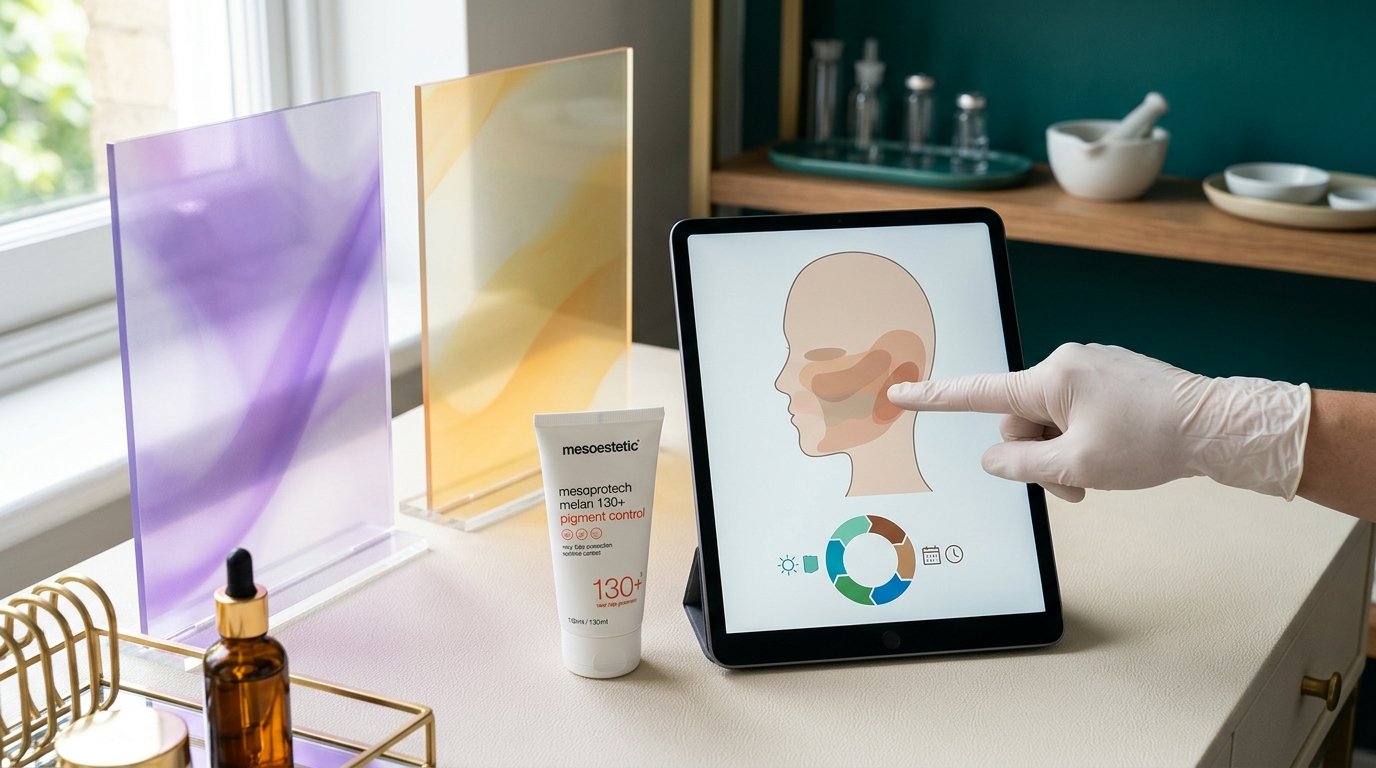
Visible light is not the same as ultraviolet radiation. Standard broad-spectrum claims primarily address UVA and UVB. Controlled studies have shown that visible light can contribute to pigmentation, particularly in darker phototypes and in melasma. Randomized trials comparing UV-only sunscreen with formulas that also attenuate shorter visible wavelengths have found better pigment outcomes with iron-oxide-containing tinted protection in studied melasma populations.
This does not mean all indoor screens are a dominant cause of melasma. The intensity and dose from ordinary phones and computers are generally very different from sunlight. The practical evidence is strongest for visible light from the sun. Fear-based advice to avoid every screen is not supported by the same level of clinical evidence. A more proportionate strategy is to consider a tinted sunscreen containing iron oxides when melasma or recurrent dark spots are a concern, especially during significant daylight exposure.
Tint selection matters. A product that leaves an unacceptable cast may be underused. The tint should blend with the person’s skin tone and fit their routine. Makeup can add pigment coverage, but it should not automatically be assumed to provide tested UV protection. If a tinted sunscreen is layered with makeup, the sunscreen still needs an adequate, even application and time to set according to its directions.
Hormonal signals can keep melasma biologically active
Melasma is associated with hormonal influences, including pregnancy and some hormonal medications, although the relationship varies among individuals. Hormones do not act in isolation; they interact with genetic susceptibility and light exposure. A flare during pregnancy is not proof that every future pigment change will be hormonal, and a person should not stop contraception or another prescribed medicine without discussing benefits and risks with the prescribing clinician.
When recurrence follows a medication change, pregnancy, postpartum period, or fertility treatment, that timing belongs in the assessment. The plan may need to emphasize safe supportive care and strict photoprotection while postponing ingredients or procedures that are inappropriate in pregnancy or breastfeeding. “Natural” does not automatically mean safe, and over-the-counter brightening blends can contain undeclared or unsuitable ingredients in some markets.
For hormonally influenced melasma, the goal may be long-term control rather than total clearance during a period of active hormonal change. This is not therapeutic failure; it is a realistic response to an ongoing driver.
Heat may be a personal amplifier, but it is not a universal diagnosis
Some people with melasma report worsening after intense heat exposure, cooking environments, saunas, or vigorous outdoor activity. Biological hypotheses include vascular and inflammatory signalling, but heat is harder to quantify than sunlight and the evidence is less definitive. It should be treated as a possible individual amplifier rather than a blanket explanation.
A practical approach is to look for reproducible patterns. If pigment repeatedly worsens after specific high-heat exposures despite strong photoprotection, the person can discuss reasonable modifications: ventilation, shorter exposure, cooling breaks, or moving exercise to a cooler time. The objective is not to pathologize normal warmth or prohibit exercise. It is to reduce avoidable extremes while preserving health and quality of life.
Irritation can turn a brightening routine into a pigment trigger
A common recurrence cycle begins with urgency. Pigment becomes visible, so the person adds a retinoid, multiple acids, a scrub, a strong vitamin C product, and a brightening serum at once. The skin becomes tight, red, itchy, or persistently stingy. Inflammation rises, barrier function falls, and new PIH can develop. The person then increases treatment intensity because the marks look darker.
More sensation is not proof of more effectiveness. Mild, temporary dryness may occur with some evidence-based actives, but persistent burning, swelling, crusting, or worsening discoloration is not an expected price of progress. Tolerability is particularly important in pigment-prone skin because the adverse event can reproduce the problem being treated.
A recurrence review should inventory total irritation load rather than judging each product separately. Two products may be tolerated on their own but problematic when layered nightly. Frequency, amount, cleansing, climate, shaving, and procedures all add to the load. Simplifying the routine, restoring comfort, and reintroducing one intervention at a time can be more effective than adding another “corrective” step.
Procedures can improve pigment—and can also provoke it
Chemical peels, lasers, light devices, microneedling, radiofrequency, and other procedures may have a role in selected pigment conditions. None is universally appropriate, and all require diagnosis, parameter selection, aftercare, and realistic risk discussion. Inflammation is part of how many procedures create change. If the inflammatory dose exceeds what the skin tolerates, PIH, prolonged redness, hypopigmentation, or rebound darkening can occur. Before repeating a procedure, compare the assessment factors in our guide to BBL vs chemical peel for pigmentation.
The risk is not defined by the device name alone. Wavelength, fluence, pulse characteristics, density, depth, number of passes, cooling, operator experience, skin condition, phototype, recent sun exposure, and aftercare all matter. Marketing labels such as “gentle,” “non-invasive,” or “medical grade” do not replace those specifics.
When pigment returns after a procedure, escalation should not be automatic. First determine whether the original condition relapsed or the treatment caused PIH. Photographs and timing help. Pigment that appears after a period of redness, crusting, or irritation may require a different response from pigment that slowly returns in the classic melasma distribution months later.
Repeated low-fluence laser approaches have been studied for melasma, but recurrence and adverse pigment changes remain concerns. Energy-based treatment is often considered an adjunct to, not a replacement for, photoprotection and maintenance. Any provider promising that one session will permanently remove hormonally or light-responsive pigmentation is oversimplifying the biology.
Depth and location influence how long pigment remains visible
Epidermal pigment can gradually move upward as keratinocytes turn over. Dermal pigment is handled differently: melanin may be taken up by macrophages and can persist much longer. Mixed patterns are common. This is one reason improvement can plateau and why a spot may look lighter without disappearing.
Depth should not be reduced to a sales claim from a camera or lamp. Imaging can improve documentation, but the output depends on the device and interpretation. A qualified clinical assessment combines history and examination. If the pigment is deep, aggressive surface exfoliation may add irritation without reaching the relevant compartment.
Time is therefore part of treatment. Skin turnover is not instantaneous, and dermal clearance can take many months. Comparing photographs every few days encourages false conclusions because lighting, hydration, and camera processing change appearance. Standardized monthly photographs are usually more informative than daily mirror inspection.
The difference between rebound, relapse, and new pigment
These terms are often used interchangeably, but separating them improves decision-making.
- Relapse means a condition improved and later became active again. Melasma commonly follows this pattern.
- Rebound suggests worsening after treatment withdrawal or an adverse treatment response. The term should be used carefully because not every recurrence is pharmacologic rebound.
- New pigment means a new inflammatory or exposure event produced additional discoloration.
- Persistent pigment never fully cleared; it only became less visible.
- Optical contrast changed because surrounding skin tone or surface dryness changed.
Why does the label matter? Persistent deep pigment may call for patience and revised expectations. A melasma relapse calls for trigger and maintenance review. New PIH calls for control of the inflammatory source. Rebound after inappropriate steroid use or another harmful product may require medical management. Treating all five situations with the same stronger peel is unsafe reasoning.
Why stopping treatment immediately after improvement can lead to relapse
Many pigment plans have an intensive phase and a maintenance phase. The intensive phase aims to reduce visible pigment. The maintenance phase aims to hold the gain while reducing cumulative irritation and exposure risk. These phases may use different products, frequencies, or clinical follow-up. Maintenance is not necessarily “the same strong treatment forever.” In fact, some agents have duration limits, cycling requirements, or monitoring needs.
Abruptly stopping every effective measure can remove several layers of control at once. If sunscreen becomes inconsistent, an anti-inflammatory acne plan ends, and a prescribed pigment-suppressing therapy stops on the same week, recurrence is unsurprising. Conversely, continuous unsupervised use of a potent formula can create irritation or other adverse effects. The sensible middle ground is a clinician-designed step-down plan.
A maintenance discussion should answer: Which driver remains active? Which intervention is safe for ongoing use? What frequency preserves benefit without chronic irritation? What early sign should trigger review? What circumstances—pregnancy, travel, seasonal change, medication, a planned procedure—require modification? A plan without these answers is an induction course, not a complete recurrence strategy.
Maintenance does not mean chasing perfect skin
Maintenance works best with a measurable, humane goal. A goal such as “reduce contrast and prevent major seasonal flares” can guide decisions. “Never see a brown pixel again” cannot. Pigment is part of normal skin biology, and the face is continually exposed to light, heat, friction, products, and inflammation.
Perfection-seeking can itself increase risk. Repeated spot treatment, daily magnified inspection, and frequent switching lead to more irritation and less interpretable results. A stable routine that delivers moderate improvement with minimal inflammation may outperform a sequence of dramatic short-term interventions.
Quality of life matters. Melasma and PIH can affect confidence, but the treatment burden can also become distressing. If a routine is too expensive, painful, complex, or time-consuming to sustain, it is not a successful maintenance plan. The clinician and patient should decide what “controlled” means together.
A practical recurrence audit
When pigmentation returns, pause before buying a new treatment. Use a structured audit to find the most plausible driver.
1. Confirm the timeline
Write down when the original treatment began, when improvement became visible, when treatment changed, and when darkening was first noticed. A flare within days of burning or peeling suggests a different mechanism from gradual recurrence after a sunny month. Dates make memory more reliable.
2. Compare the map
Is the pigment in exactly the same symmetric facial distribution, or does it follow individual acne lesions, a waxing line, mask friction, or product application? Pattern is often more informative than shade. Standardized images help distinguish a diffuse flare from isolated new marks.
3. Review exposure rather than relying on “daily SPF”
Record outdoor time, travel, driving, window exposure, hats, sunscreen amount, and reapplication. Note whether the product was removed by sweating or wiping. This is not about blame; it identifies a controllable gap.
4. Review inflammation
Look for new acne, dermatitis, stinging, roughness, itching, scaling, picking, shaving irritation, hair-removal reactions, or friction. A clear-looking face can still have low-grade irritation. If a product consistently burns, do not treat the sensation as proof that it is breaking up pigment.
5. Review hormones and medicines
Document pregnancy, postpartum changes, contraception, fertility care, and new medications. Do not stop prescribed treatment independently. Bring the information to the relevant clinician so risks and alternatives can be discussed.
6. Review procedure parameters and recovery
Collect the procedure name, device, settings if available, operator, number of passes, immediate reaction, downtime, and aftercare. “I had laser” is not enough information because many technologies and settings sit under that label.
7. Check whether the original diagnosis still fits
A lesion that evolves, becomes raised, develops multiple colours, bleeds, or no longer resembles the original pattern requires medical reassessment. Cosmetic treatment should not delay evaluation of a suspicious lesion.
Build a maintenance routine around functions
Product names change, and not every ingredient suits every person. It is often more useful to define the functions a routine must perform.
Function 1: protect against relevant light
Use broad-spectrum sunscreen at an adequate amount, plus shade and clothing when exposure is significant. For melasma or visible-light-responsive pigment, consider a tolerable tinted formula with iron oxides. Reapply in line with exposure, sweating, and product instructions.
Function 2: keep the barrier comfortable
A gentle cleanser, appropriate moisturizer, and avoidance of unnecessary friction reduce inflammatory noise. Barrier care is not a cosmetic detour; it makes active treatment more tolerable and lowers the chance that irritation creates new marks.
Function 3: control the inflammatory source
For acne, dermatitis, or another recurring condition, the source needs its own evidence-based plan. Pigment treatment cannot compensate for uncontrolled inflammation. A dermatologist may coordinate acne and pigment care so that one plan does not worsen the other.
Function 4: use one or more appropriate pigment-modulating strategies
Depending on diagnosis, medical history, pregnancy status, and tolerance, a clinician may discuss ingredients such as azelaic acid, retinoids, hydroquinone, cysteamine, kojic acid, tranexamic acid, niacinamide, vitamin C, or combinations. These are not interchangeable. Evidence, formulation, concentration, irritation potential, and supervision requirements differ. Oral tranexamic acid, for example, is not a casual cosmetic supplement; it has contraindications and thrombotic risk considerations that require medical screening.
Function 5: define follow-up and an early-flare plan
Waiting until pigment is fully re-established can make management harder. A review schedule allows photographs, tolerability, adherence, and triggers to be assessed. An early-flare plan may involve returning to a previously approved frequency or seeking review—not improvising with stronger layers.
Ingredients that can help—and why they can fail
Recurrence is sometimes blamed on a single ingredient “stopping working.” Several other explanations are possible.
Hydroquinone
Hydroquinone reduces melanin synthesis and has substantial evidence for melasma and other hyperpigmentation when correctly prescribed. It is not suitable for indefinite, unsupervised use. Irritation, exogenous ochronosis with inappropriate prolonged use, and inconsistent compounded or unregulated products are concerns. If pigment returns after a course, the answer is not automatically continuous higher-strength use; diagnosis, maintenance, exposure, and safety need review.
Retinoids
Topical retinoids can influence cell turnover and pigment distribution and may support acne control. They can also irritate, especially when introduced too quickly or combined with multiple exfoliants. Pregnancy restrictions apply to topical retinoids. A recurrence during a retinoid routine may reflect continued triggers, underuse, poor tolerance, or new PIH from irritation rather than true resistance.
Azelaic acid
Azelaic acid has evidence for acne and hyperpigmentation and may be useful when inflammation and marks coexist. Tingling can occur, but persistent irritation should be addressed. Formulation and concentration influence tolerability. It is one option within a plan, not a guarantee against recurrence.
Tranexamic acid
Topical, intradermal, and oral approaches have been studied for melasma. The evidence and risk profile differ by route. Oral use requires medical assessment because of systemic contraindications and clotting considerations. Relapse after discontinuation has been documented in studies, underscoring that it is not a permanent cure.
Vitamin C and other antioxidants
Antioxidants may support a pigment plan, but stability, vehicle, concentration, and irritation matter. A serum that oxidizes, pills under sunscreen, or causes dermatitis will not deliver its theoretical benefit. Antioxidants complement, not replace, photoprotection.
Niacinamide
Niacinamide can support barrier function and may reduce melanosome transfer. It is generally well tolerated, though any formulation can irritate. It is best understood as a supportive maintenance ingredient rather than a rapid spot eraser.
Exfoliating acids
Alpha- and beta-hydroxy acids can improve surface texture and help selected epidermal pigment, but more frequent exfoliation is not synonymous with faster clearance. Overuse can produce the inflammation that drives PIH. Home peels with uncertain concentration or pH add avoidable risk.
Botanical and “natural” brighteners
Some plant-derived compounds have early evidence, while others rely mostly on marketing. Botanical does not mean non-irritating; fragrance and plant extracts can cause allergic contact dermatitis. Products obtained from poorly regulated sources may contain undisclosed steroids, mercury, or other harmful substances. Ingredient transparency and reputable manufacture matter.
Why sunscreen sometimes seems to “fail”
Sunscreen can reduce exposure without creating an impenetrable shield. Failure may reflect insufficient amount, incomplete coverage, no reapplication, a UV-only strategy in visible-light-sensitive melasma, or exposures that exceed how the product is used. It may also reflect a non-light driver such as inflammation or hormones.
Common practical gaps include:
- applying a thin cosmetic layer rather than the tested amount;
- missing the hairline, temples, ears, around the eyes, upper lip, and jaw;
- rubbing the product off with masks, tissues, towels, or hands;
- using the morning application through a long outdoor afternoon;
- assuming foundation alone provides reliable protection;
- using a product that causes irritation or acne and is therefore avoided;
- relying on sunscreen while seeking midday sun without shade or clothing.
A sunscreen audit should improve technique, not shame the user. Demonstrating amount and coverage is often more useful than recommending another expensive formula. If the product stings or looks unacceptable, changing vehicle or tint can improve adherence.
Seasonal recurrence: why autumn does not erase summer exposure
Pigment may become visible after the exposure that triggered it. Summer travel, outdoor exercise, and cumulative daylight can create a delayed or gradually noticed flare. When autumn arrives, people may reduce sunscreen because the air feels cooler even though UVA remains present. A recurrence in September or October may therefore reflect both summer exposure and weaker maintenance.
Seasonal plans can adapt without becoming inconsistent. In high-exposure months, reinforce hats, shade, reapplication, and tolerability. In lower-exposure months, continue daily protection and use the stable period to reassess maintenance. Procedures are sometimes scheduled when incidental sun exposure is easier to control, but calendar timing does not eliminate risk or replace aftercare.
Travel, altitude, water, and reflective environments
Travel changes exposure. Higher altitude increases ultraviolet intensity. Water, sand, snow, and pale surfaces can reflect radiation. Long outdoor days are different from a normal commute. Heat, sweating, and swimming reduce product persistence. A recurrence after a holiday may not mean the underlying treatment stopped working; it may mean the exposure dose changed dramatically.
Plan before travel: pack enough of a tolerated sunscreen, a hat, and gentle routine products; avoid experimenting with strong actives immediately before or during intense exposure; and follow reapplication directions. If a procedure is planned around travel, disclose the itinerary so timing can be reconsidered.
Friction, picking, and repeated micro-injury
Friction is an underestimated driver of pigment. Tight masks, helmet straps, habitual rubbing, aggressive cleansing brushes, repeated wiping, and clothing edges can sustain inflammation. Picking acne or scratching eczema pushes injury deeper and prolongs colour. Hair removal can create recurrent PIH when the method repeatedly irritates the same area.
The answer is not necessarily to stop every necessary device or grooming practice. It is to reduce pressure, improve fit, change technique, treat the condition causing itch or bumps, and allow recovery. If pigment follows a precise contact pattern, a mechanical or allergic trigger should be considered before a lightening procedure.
Acne control is pigment prevention
Every inflamed acne lesion can leave a mark. A routine that fades old marks while new lesions continue will appear to “fail” because pigment inventory is constantly replenished. Effective acne control may therefore deliver more long-term pigment benefit than a stronger brightener.
Picking adds mechanical injury, increases inflammation, and can increase scar risk. Occlusive cosmetics, irritating treatments, and inconsistent medication can complicate control. An integrated plan distinguishes flat post-acne marks from textural acne scars; colour treatments do not rebuild atrophic scars, and scar procedures may be delayed until active acne is stable.
Eczema and contact dermatitis can hide beneath pigment
After redness and scaling settle, eczema can leave brown or grey discoloration. If the allergen, irritant, or barrier problem remains, inflammation recurs and pigment deepens. Fragrance, preservatives, hair dye, nail products transferred to the face, and “brightening” botanicals can all be relevant in selected cases.
Itching is a clue. Pigment alone is usually not itchy; an active inflammatory process may be. Persistent itch, rash, or recurrent swelling warrants assessment. Patch testing may be considered when allergic contact dermatitis is suspected. Covering the colour with more actives while leaving dermatitis untreated can worsen the cycle.
When pigment appears darker after treatment
Several explanations are possible. Temporary crusting or bronzing may be expected after a specific procedure, but the provider should explain the normal timeline in advance. PIH may develop after inflammation. Melasma may flare because of light exposure or heat. A product may have caused dermatitis. The surrounding skin may have lightened faster, increasing contrast. Rarely, inappropriate prolonged use of certain agents can create paradoxical discoloration.
Do not automatically scrub, peel, or repeat the treatment. Contact the treating clinician, especially if there is pain, blistering, marked swelling, weeping, crusting, or rapid darkening. Early assessment can distinguish expected recovery from a complication. Photographs taken before treatment and at consistent intervals are valuable.
How long should improvement last?
There is no single durability figure. It depends on diagnosis, pigment depth, treatment, maintenance, skin tone, triggers, and adherence. A lentigo successfully targeted with an appropriate procedure may remain improved while new sun spots form elsewhere. Melasma can recur despite good care because predisposition persists. PIH can fade and stay clear if the inflammatory trigger does not return.
Ask providers for a range and the assumptions behind it. “Permanent” should be treated skeptically when used for melasma or ongoing inflammatory pigment. A useful consent conversation includes likely number of sessions, expected degree of improvement, recurrence risk, maintenance, downtime, PIH risk, and what happens if the response is weaker than expected.
How to measure progress without being misled
Lighting can change perceived pigmentation dramatically. Bathroom LEDs, window light, camera HDR, automatic white balance, makeup, and skin hydration all alter images. Use the same room, time of day, distance, angle, camera, and no-filter setting. Avoid judging immediately after exercise or a hot shower, when redness changes contrast.
Track more than darkness. Record area, edge definition, new lesions, irritation, acne activity, treatment tolerance, and time spent on the routine. Improvement that comes with increasing sensitivity is not necessarily sustainable. Monthly comparison is usually more meaningful than daily inspection.
Clinical scoring systems such as MASI or modified MASI are used in research and practice for melasma, but scores also have limitations and require consistent assessment. Consumer imaging can support documentation, not guarantee diagnosis or predict exact response.
Myths vs facts about recurring pigmentation
Myth: If pigment returns, the treatment did nothing
Fact: A treatment may have reduced existing pigment while the underlying trigger remained active. Duration of improvement, photographs, and trigger timing help determine whether there was a meaningful response.
Myth: One strong laser can permanently cure melasma
Fact: Melasma is commonly chronic and relapsing. Energy-based procedures may help selected patients but can also cause PIH or rebound. Maintenance and photoprotection remain important.
Myth: Higher SPF means visible light is fully covered
Fact: SPF primarily reflects UVB protection. Broad-spectrum addresses UVA, while visible-light attenuation often requires pigments such as iron oxides in a tinted formulation.
Myth: Computer screens are the main reason melasma returns
Fact: Sunlight delivers a much larger visible-light dose in ordinary life. Current clinical evidence supports attention to sunlight rather than fear of normal device use.
Myth: Peeling means pigment is leaving
Fact: Peeling is a sign of surface shedding or irritation, not a direct measure of pigment clearance. Excess inflammation can worsen PIH.
Myth: Natural brighteners cannot irritate
Fact: Botanical ingredients, essential oils, and fragrance can cause irritant or allergic dermatitis. “Natural” does not predict safety.
Myth: Darker skin cannot have sun damage
Fact: Melanin provides some natural protection but does not prevent UV injury, pigment disorders, photoaging, or skin cancer.
Myth: If a product worked once, more of it will work faster
Fact: Higher frequency can cross the tolerance threshold, create inflammation, and cause new pigment. Use should follow evidence and professional guidance.
Myth: All brown spots are cosmetic
Fact: New or changing pigmented lesions can require medical evaluation. Cosmetic treatment should not obscure or delay diagnosis.
Myth: Maintenance is a sign of dependency
Fact: Ongoing control is expected for chronic relapsing conditions. The important distinction is safe, reviewed maintenance versus unsupervised indefinite use of potent agents.
A decision framework when pigmentation returns
Use the following sequence to avoid reflexively repeating the last procedure.
- Screen for red flags. A new, evolving, asymmetric, bleeding, ulcerated, or distinctly different lesion needs medical assessment.
- Name the likely pigment condition. Separate melasma, PIH, lentigines, freckles, medication-related change, and other causes.
- Identify the event. Decide whether this is persistent pigment, relapse, treatment-related PIH, or new pigment.
- Stabilize active inflammation. Address acne, dermatitis, irritation, friction, infection, or picking before escalating pigment treatment.
- Audit light protection. Examine quantity, coverage, visible-light strategy, reapplication, clothing, and real exposure.
- Assess tolerance. A routine that burns or peels continually needs redesign.
- Review maintenance. Determine what stopped, what should continue, and what requires medical monitoring.
- Set a time horizon. Choose a reasonable reassessment date and standardized photography.
- Escalate selectively. Add a procedure or prescription only when diagnosis, risk, and aftercare support it.
This order prevents a common mistake: attacking colour before removing the signal that creates it. It also makes consultations more efficient because the clinician receives a clear timeline and product history.
Questions to ask before repeating a procedure
- What diagnosis are we treating, and what features support it?
- Did the previous pigment truly clear, or did contrast temporarily improve?
- Could the previous treatment have caused PIH?
- What device, wavelength, peel, concentration, depth, and settings are proposed?
- How are my skin tone, recent sun exposure, and history of PIH reflected in the plan?
- What improvement range is realistic, and over what period?
- What are the risks of worsening pigment or hypopigmentation?
- What preparation and aftercare reduce those risks?
- What maintenance begins after improvement?
- What is the plan if pigment darkens rather than lightens?
A good consultation can answer these without guaranteeing an outcome. If the explanation relies entirely on a branded device name or before-and-after photographs, ask for the diagnosis and recurrence strategy.
When to pause active treatment
Pause and seek advice when the skin develops persistent burning, marked redness, swelling, blistering, weeping, crusting, severe itching, or rapid darkening. Also pause before layering a new strong active onto skin recovering from a peel, laser, sunburn, or dermatitis flare. “Pushing through” inflammation can convert a manageable routine into prolonged PIH.
Pregnancy, breastfeeding, a new medical diagnosis, or a new medicine can also require reassessment. Some pigment treatments are inappropriate, and systemic therapies can carry important contraindications. A safe pause does not erase all progress; it protects the skin while the plan is updated.
When professional or medical assessment is especially important
Seek dermatologic assessment for a new or changing isolated pigmented lesion, pigmentation accompanied by systemic symptoms, widespread sudden change, pigment involving mucosa, suspected medication reaction, treatment-resistant patches with an uncertain diagnosis, or complications after a procedure. A clinician should also review recurrent melasma when over-the-counter routines are causing irritation or when prescription or procedural options are being considered.
Professional aesthetic assessment can support documentation, routine design, and referral, but it should not claim to diagnose every lesion or replace a dermatologist. Scope clarity is part of safe pigment care.
Frequently asked questions
1. Why did my pigmentation return after laser?
Laser may reduce selected pigment, but it does not necessarily remove the tendency to make pigment. Melasma can reactivate with light or hormones, and post-inflammatory hyperpigmentation can occur if treatment inflammation exceeds tolerance. The timing and pattern matter. Gradual return in the original melasma distribution differs from new darkening after redness or crusting. Ask the treating clinician to review the diagnosis, device and settings, recovery, photographs, sun exposure, and maintenance before repeating treatment.
2. Can pigmentation come back after a chemical peel?
Yes. A peel can accelerate removal of superficial pigment, but melasma or an inflammatory trigger may persist. An overly strong peel, excessive frequency, picking, or inadequate aftercare can create PIH. The result depends on peel type, concentration, pH, contact time, skin preparation, phototype, and aftercare. Recurrence does not mean a stronger peel is automatically needed.
3. Is melasma permanent?
Melasma is often chronic and relapsing. It may lighten substantially, remain quiet for long periods, or flare with sunlight, hormones, and other triggers. “Permanent” is not a useful binary label. The practical goal is durable control with photoprotection, tolerable maintenance, and selective treatment. Some people experience improvement when a hormonal trigger changes, but future behaviour cannot be guaranteed.
4. Why does pigmentation return in exactly the same place?
The distribution may reflect a persistent condition such as melasma, the site of repeated inflammation, or residual pigment that never fully cleared. Fixed exposure patterns—friction, hair removal, picking, or a contact reaction—can also affect the same location repeatedly. An exact map plus timing helps distinguish reactivation from a new event.
5. Why are my dark spots worse in summer?
Longer, stronger daylight and more outdoor activity can increase UV and visible-light exposure. Heat, sweating, swimming, and wiping can reduce sunscreen persistence. Travel may add altitude and reflective environments. A summer plan usually needs more than a morning application: shade, clothing, adequate sunscreen, reapplication, and a tolerable routine matter.
6. Can pigmentation return even if I use SPF 50?
Yes. No sunscreen blocks every photon, and real-world use may differ from test conditions. Amount, evenness, reapplication, rubbing, and missed areas matter. Standard SPF does not describe visible-light protection. Hormones and inflammation may also drive pigment. SPF 50 is helpful, but it is one part of a broader strategy.
7. Do I need tinted sunscreen?
Not everyone does, but tinted sunscreen containing iron oxides can be useful for melasma and visible-light-related pigmentation. Randomized studies have found benefits when visible-light attenuation was added to UV protection in melasma populations. Choose a tint and vehicle you can apply adequately. A dermatologist can help when the diagnosis or product choice is uncertain.
8. Does blue light from my phone cause pigmentation to return?
Ordinary device exposure is not equivalent to sunlight. The most clinically relevant visible-light dose usually comes from the sun. Current evidence does not justify panic about routine phone or laptop use. Prioritize daylight photoprotection; consider tinted protection for melasma rather than reorganizing life around screens.
9. Can heat make melasma worse?
Some people report reproducible flares with intense heat, and vascular or inflammatory mechanisms are plausible. Evidence is less clear than for sunlight. Track personal patterns and use reasonable cooling or ventilation when a link is consistent. Avoid extreme restrictions and remember that outdoor heat often comes with light exposure.
10. Why did a brightening product make my marks darker?
The formula may have caused irritant or allergic dermatitis, producing new PIH. Layering several actives, using too much, or applying to recently treated skin increases risk. Stop the suspected irritant and seek advice if burning, swelling, crusting, or persistent darkening occurs. Do not try to correct inflammation with another acid or scrub.
11. Is peeling necessary for pigmentation to fade?
No. Visible peeling is not a measure of melanocyte suppression or safe progress. Some effective treatments cause little or no peeling. Excessive peeling can damage the barrier, create inflammation, and worsen PIH. Judge a plan by standardized change and tolerability over time, not by sensation or shedding.
12. Can I use hydroquinone forever to prevent recurrence?
Do not use hydroquinone indefinitely without medical supervision. Duration, strength, cycling, and maintenance depend on diagnosis and risk. Chronic inappropriate use can cause complications, including exogenous ochronosis. A clinician may recommend a supervised course and a different long-term maintenance strategy.
13. Can oral tranexamic acid prevent melasma from returning?
Oral tranexamic acid has evidence for selected melasma patients, but relapse can occur after discontinuation. It is an off-label systemic treatment in many settings and requires screening for contraindications and clotting risk. It is not appropriate for self-medication or every patient. Photoprotection and maintenance remain necessary.
14. Why do acne marks keep replacing the ones that fade?
Active acne is continually creating new inflammation. A pigment-focused routine may be working on old marks while new lesions add more. Treating acne, reducing picking, and choosing non-irritating products are core pigment-prevention steps. Flat marks and indented scars are different problems and should not be treated as one.
15. Can waxing or threading cause recurring pigmentation?
Yes, if the method repeatedly irritates or injures the skin. Heat, traction, product reactions, and post-procedure sun exposure can contribute. Review technique, timing around active products, aftercare, and alternatives. Persistent upper-lip or jaw pigmentation also warrants assessment for melasma or dermatitis rather than assuming hair removal is the only cause.
16. Does pregnancy-related melasma go away after birth?
It may improve when hormonal conditions change, but it can persist or recur. Sun and visible-light protection remain important. Treatment during pregnancy and breastfeeding needs medical guidance because some common pigment agents are inappropriate. Avoid unregulated lightening products and do not assume “natural” formulas are automatically safe.
17. Can birth control cause melasma recurrence?
Hormonal contraception may be associated with melasma in susceptible individuals, but the relationship is not identical for everyone. Do not stop contraception without speaking to the prescribing clinician. A shared decision can consider pigment impact alongside contraceptive benefits, risks, and alternatives.
18. How soon after treatment can pigmentation come back?
There is no universal interval. PIH after a procedure may become apparent over days to weeks. Melasma can flare after significant exposure or gradually over months. Studies of discontinued melasma therapies have documented relapse within weeks or months in some groups. The timeline is a diagnostic clue, not a guarantee.
19. Is returning pigment always deeper than before?
No. It may be new epidermal pigment, persistent dermal pigment, a mixture, or simply more visible contrast. Colour can suggest depth but cannot prove it. A clinical assessment is more reliable than assuming darker means deeper and responding with stronger treatment.
20. Can I prevent pigmentation from ever returning?
No plan can promise zero recurrence. You can reduce risk by confirming the diagnosis, controlling inflammation, using effective photoprotection, avoiding unnecessary irritation, maintaining an appropriate regimen, and responding early to flares. Honest prevention is risk reduction, not a guarantee.
21. Should I repeat the procedure that worked last time?
Only after reviewing why pigment returned and how the skin responded. Repetition may be reasonable for selected lentigines or a previously successful plan, but it may be wrong after procedure-induced PIH or a melasma flare. The original device name is insufficient; settings, recovery, and current skin condition matter.
22. What if pigmentation returns while I am still using treatment?
Check adherence, exposure, diagnosis, irritation, active inflammation, and hormonal or medication changes. The treatment may be underpowered, poorly tolerated, incorrectly targeted, or overwhelmed by a new trigger. Do not double the dose without guidance. A review can adjust the plan while preventing cumulative irritation.
23. Why is one side of my face darker?
Asymmetry can reflect driving or window exposure, sleeping position and friction, unilateral dermatitis, product transfer, or an uneven pigment condition. It can also signal that the diagnosis is not classic melasma. Compare exposure and habits, then seek assessment if the pattern is new, evolving, or localized to a suspicious lesion.
24. Can stress cause pigmentation to return?
Stress is not a simple direct cause, but it can affect sleep, picking, eczema, acne, medication adherence, and routine consistency. Hormonal and inflammatory pathways are being studied, yet blaming stress alone can miss treatable drivers. Address the observable pathways while supporting general wellbeing.
25. Does diet cause melasma recurrence?
No specific food has been proven to be the universal cause of melasma. A balanced diet supports health, but restrictive “pigment detoxes” lack good evidence and can be harmful. If a food consistently triggers dermatitis or another diagnosed condition, manage that condition with professional guidance rather than using broad elimination diets.
26. Can vitamin deficiencies cause facial pigmentation?
Some systemic and nutritional conditions can affect pigmentation, but common melasma and PIH should not be diagnosed as deficiency from appearance alone. Widespread change, mucosal involvement, fatigue, weight change, or other symptoms deserve medical assessment. Do not take high-dose supplements based only on a cosmetic concern.
27. Are home remedies safe for recurring dark spots?
Lemon juice, baking soda, undiluted essential oils, and abrasive scrubs can irritate or burn skin and worsen PIH. “Kitchen” origin does not make a substance skin-safe. Use products formulated for skin with transparent ingredients, and seek advice for persistent or uncertain pigmentation.
28. Can melasma and PIH occur together?
Yes. A person with melasma can also develop acne marks or procedure-related PIH. Mixed pigment explains why one area responds differently from another. The plan should identify each component and avoid treating the entire face at the intensity needed for one isolated problem.
29. Why does my pigment look grey rather than brown?
Grey or blue-grey colour may suggest deeper dermal pigment, but lighting, skin tone, vascular colour, and surface products influence appearance. Certain disorders and medication reactions can also look grey. A clinical evaluation is appropriate, especially if the change is widespread or new.
30. When should I see a dermatologist rather than book another facial?
Choose dermatologic assessment for a new or changing lesion, uncertain diagnosis, widespread sudden pigmentation, persistent itch or rash, complications after treatment, pregnancy-related treatment questions, suspected medication effects, or pigment that repeatedly worsens despite careful care. A facial may support skin comfort, but it cannot replace diagnosis of a potentially medical lesion.
A realistic long-term plan
Early warning signs that a flare is beginning
Recurrence is easier to manage when it is recognized before contrast becomes pronounced. Early signs can include a faint return at the outer edge of a previous patch, gradual darkening after a high-exposure week, new marks following acne, or increasing sensitivity before visible PIH develops. Melasma may look slightly more noticeable at the upper lip, forehead, or cheekbones under consistent light. These observations are useful only when they are compared under the same conditions; changing bathroom bulbs or camera settings can imitate a flare.
An early sign is a prompt to review the plan, not to double every active. Check whether sunscreen application changed, whether a new product stings, whether acne or eczema is active, and whether travel, heat, hormones, or medication changed. Return to the previously agreed maintenance instructions or contact the clinician. If there is pain, blistering, swelling, crusting, or a rapidly changing isolated lesion, seek assessment rather than treating it as an ordinary flare.
Adherence is a design problem, not a character test
Long-term pigment control depends on repeatable behaviour, but inconsistency often reflects a plan that does not fit real life. A sunscreen may be cosmetically unacceptable, a six-step morning routine may not fit work, or a prescription may cause enough irritation that the person quietly reduces it. Good follow-up asks what was actually usable and redesigns the plan accordingly.
Reduce friction by assigning each product a clear purpose, choosing the fewest effective steps, and writing down frequency. Separate everyday maintenance from high-exposure days and from short, supervised intensive phases. A simple routine used for months is usually more protective than an elaborate routine used for a week. Honest discussion of cost, texture, makeup compatibility, cultural practices, facial hair, and working conditions improves adherence without blame.
Recurrence patterns by pigment type
Melasma
Melasma most often returns as a familiar, often symmetric haze or patch rather than as one sharply isolated dot. Recurrence can follow increased daylight, inconsistent maintenance, a hormonal shift, or irritation. The border may become more apparent before the entire area darkens. Because melasma can contain epidermal, dermal, vascular, and inflammatory features, one treatment rarely controls every component. Maintenance usually emphasizes light protection, low-irritation pigment regulation, and timely review rather than frequent rescue procedures.
Post-inflammatory hyperpigmentation
PIH returns where inflammation returns. New individual marks usually correspond to new acne lesions, eczema patches, ingrown hairs, picking, friction, or procedures. When marks appear in a product-shaped or contact-shaped pattern, irritation or allergy should move high on the list. When they appear after every breakout, acne control is the preventive priority. The old marks may still be fading while new ones form, so a simple “before and after” comparison can underestimate progress unless lesion activity is also tracked.
Solar lentigines
A treated lentigo may remain clear, partially recur, or sit beside newly formed sun spots. This can create the impression that the exact lesion returned when cumulative photodamage is continuing across the surrounding skin. Discrete spots should be examined before treatment, especially when one is changing or unlike the others. Photoprotection reduces new damage but cannot promise that no future lentigines will appear.
Freckles
Freckles are genetically influenced and commonly darken with sunlight. They may lighten when exposure falls and reappear seasonally. This expected responsiveness is different from treatment failure. Attempting to erase a strong genetic tendency with repeated aggressive procedures can create more risk than benefit.
Medication- or disease-associated pigmentation
When a medicine or medical condition contributes to pigment, cosmetic treatment alone may have limited durability. The distribution may be diffuse, involve mucosal sites, or coincide with other symptoms. A medical history and medication timeline are essential. Never stop a prescription independently; the relevant clinician can weigh the pigment effect against the medicine’s purpose and consider alternatives where appropriate.
A twelve-week observation plan after a recurrence
This framework is not a prescription. It is a way to collect useful evidence while avoiding chaotic changes.
Weeks 1–2: calm and document
Take standardized photographs and list every current product, medicine, procedure, and exposure change. If the skin is irritated, simplify to a gentle cleanser, tolerated moisturizer, and appropriate photoprotection while seeking advice. Do not introduce several brighteners simultaneously. Record itch, sting, scale, acne, and exact distribution.
Weeks 3–4: confirm the target
Review whether the pattern behaves like melasma, PIH, a discrete lentigo, or something that needs medical examination. If an inflammatory condition is active, prioritize its control. Confirm sunscreen amount and coverage. For melasma, discuss whether visible-light protection is relevant. Establish a single primary outcome, such as reduced contrast or fewer new marks.
Weeks 5–8: judge tolerance before intensity
If an evidence-based active has been selected, assess comfort and consistency rather than rushing to maximum frequency. Watch for cumulative dryness, burning, or dermatitis. Continue comparable photographs. A routine that is tolerated four nights per week may be more useful than a theoretically stronger routine abandoned after ten days.
Weeks 9–12: review trend and next step
Compare the full series, not a single good or bad day. Count new inflammatory lesions, note pigment area and contrast, and assess treatment burden. If there is no improvement, verify adherence and diagnosis before escalation. If there is improvement, define maintenance rather than stopping everything. If there is worsening, identify whether it follows inflammation, exposure, or a treatment reaction.
What a high-quality pigment follow-up should record
A useful follow-up is more than “better” or “worse.” It records diagnosis, distribution, baseline photographs, skin tone, active inflammation, products and frequency, prescription duration, procedures and parameters, adverse effects, exposure history, and patient goals. It should separate clinician observations from device estimates and patient-reported experience.
The record should also distinguish efficacy from durability. An intervention can create fast improvement with poor durability, slow improvement with excellent tolerance, or no meaningful response. Those are different outcomes. Cost, downtime, pain, and routine complexity belong in the assessment because they determine whether maintenance is realistic.
For procedures, consent should state the possibility of incomplete response, recurrence, PIH, hypopigmentation, and the need for repeat or maintenance care. For prescriptions, the record should include contraindications, monitoring, planned duration, and what happens after the intensive phase. This is the information needed to learn from recurrence rather than simply repeating the same step.
Ten additional questions people ask after pigment returns
31. Can moisturizer help pigmentation stay away?
Moisturizer does not directly cure every pigment disorder, but a comfortable barrier can reduce irritation and improve tolerance of evidence-based actives and sunscreen. That makes moisturizer an important supporting element. Choose a formulation suited to the skin and avoid assuming that tingling or fragrance adds efficacy.
32. Should I stop all actives when pigment returns?
Not automatically. Stop or reduce products that are causing significant irritation and seek guidance. A well-tolerated treatment may still be useful. The decision depends on the skin’s condition, the active, and the diagnosis. Simplifying temporarily is often safer than switching everything at once.
33. Can over-cleansing bring dark marks back?
Harsh or repeated cleansing can damage the barrier, provoke dermatitis, and worsen PIH. Cleansing should remove sunscreen, makeup, sweat, and debris without leaving persistent tightness or burning. Brushes and abrasive cloths add friction and are rarely necessary for pigment control.
34. Is vitamin C enough to prevent recurrence?
Vitamin C may support an antioxidant and pigment strategy, but it does not replace sunscreen, diagnosis, inflammation control, or maintenance. Stability and tolerance vary by formula. If it stings persistently or makes sunscreen difficult to apply, its place in the routine should be reconsidered.
35. Can I combine retinoid, vitamin C, acids, and hydroquinone?
Some clinicians design combination regimens, but unsupervised layering raises irritation risk. Timing, strength, vehicle, and individual tolerance matter. More ingredients do not guarantee more benefit. Introduce changes deliberately and follow professional instructions, particularly with prescription agents.
36. Will makeup hide recurrence without worsening it?
Makeup can reduce visible contrast and support confidence. Choose products that do not trigger dermatitis or acne, remove them gently, and avoid vigorous rubbing. Makeup is not automatically sunscreen; use tested photoprotection underneath unless the cosmetic itself is labelled and applied as a sunscreen.
37. Can pigmentation return after years of stability?
Yes. A new hormonal period, medication, inflammatory condition, procedure, or change in exposure can reactivate susceptibility. A long quiet interval does not make a new lesion automatically benign, so changing isolated spots still deserve assessment.
38. Why does recurrence look worse in photographs?
Phone cameras increase local contrast, sharpen edges, and adjust white balance. Side lighting and HDR can exaggerate texture and colour. Standardize conditions and compare several images. If the clinical pattern is concerning, rely on examination rather than camera processing.
39. Is a skin-analysis camera enough to diagnose recurrence?
No. Imaging can document patterns and support discussion, but output depends on the device, lighting, algorithm, and interpretation. It cannot reliably rule out a suspicious lesion or replace medical history and examination. Treat scores as measurements within a broader assessment, not as diagnoses.
40. What is the single most important step when pigmentation comes back?
Identify the driver before escalating treatment. That usually means confirming the diagnosis, checking for inflammation or a treatment reaction, and auditing real light exposure. Once the cause is clearer, maintenance can be made more precise and safer.
The most durable pigment plan is usually quieter than the marketing around it. Confirm what the pigment is. Control acne, eczema, friction, or another inflammatory source. Protect against UV and, when relevant, visible light. Use a small number of appropriate interventions at tolerable frequencies. Photograph consistently. Step down into maintenance instead of stopping everything. Review early when the pattern changes.
Recurrence should be treated as information. It tells you that a driver remains, the maintenance plan is incomplete, the skin was irritated, or the original diagnosis needs revision. The answer is rarely to attack the skin harder. It is to make the plan more precise.
This article is educational and does not diagnose or replace individualized medical care. Pigmented lesions that are new, changing, symptomatic, or different from the rest require professional assessment.
Clinical sources and further reading
- American Academy of Dermatology. Melasma: Self-care. Accessed 17 October 2026.
- American Academy of Dermatology. Melasma: Diagnosis and treatment. Accessed 17 October 2026.
- Castanedo-Cazares JP, et al. Near-visible light and UV photoprotection in the treatment of melasma: a double-blind randomized trial. Photodermatology, Photoimmunology & Photomedicine. 2014.
- Boukari F, et al. Prevention of melasma relapses with sunscreen combining protection against UV and short wavelengths of visible light: a prospective randomized comparative trial. Journal of the American Academy of Dermatology. 2015.
- Arellano I, et al. Preventing melasma recurrence: maintenance regimens with triple-combination cream. Journal of the European Academy of Dermatology and Venereology. 2012.
- Taylor SC, et al. Continuous therapy followed by maintenance therapy with triple-combination cream for melasma. Cutis. 2010.
- Davis EC, Callender VD. Postinflammatory hyperpigmentation: epidemiology, clinical presentation, pathogenesis and treatment. American Journal of Clinical Dermatology. 2010.
- Mar K, et al. Treatment of post-inflammatory hyperpigmentation in skin of colour: a systematic review. Journal of Cutaneous Medicine and Surgery. 2024.
- Lim HW, et al. Photoprotection for skin of all color: consensus and clinical guidance. Journal of the American Academy of Dermatology. 2022.
- American Academy of Dermatology. How to choose sunscreen. Accessed 17 October 2026.